Unit Plan 13 (Grade 7 PE): Invasion Tactics without Equipment
No-equipment invasion games build cuts, feints, angles, spacing, and containment through endzone play, shadowing drills, and quick reflections.

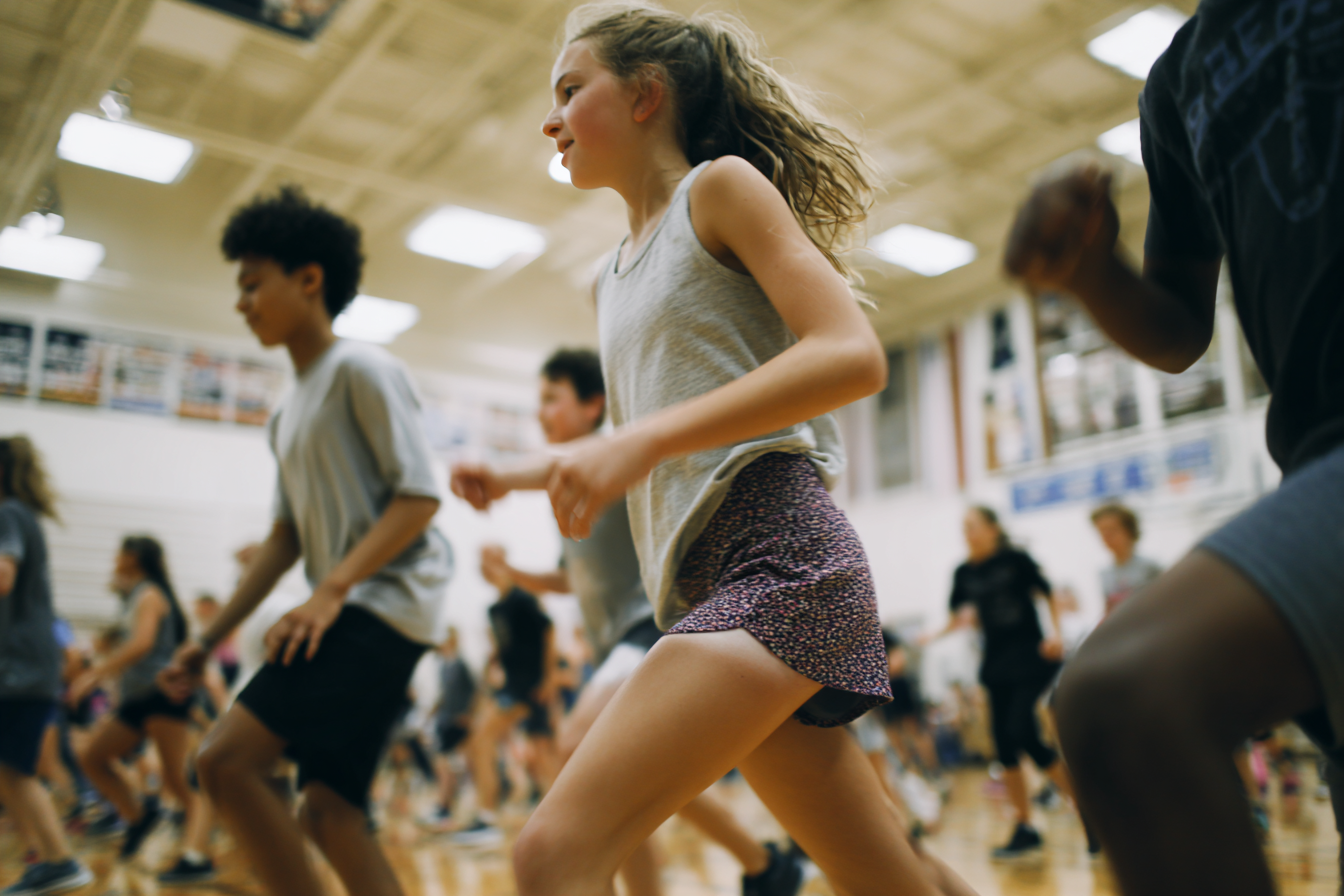
Focus: Develop offensive cuts, defensive containment, and smart movement decisions through no-equipment invasion games that emphasize reading opponents, using feints, and choosing effective angles.
Grade Level: 7
Subject Area: Physical Education
Total Unit Duration: 5 sessions (one week), 45–55 minutes per session
I. Introduction
In this Grade 7 Physical Education unit, students focus on the movement and decision-making skills that drive invasion games, but without needing a ball or other equipment. By removing equipment, students can pay closer attention to spacing, cutting, defensive slides, body control, and the constant reading of offensive and defensive cues. Through Endzone Movement Games, marking drills, and shadowing challenges, students learn how to attack open space, use feints to create separation, and stay in strong defensive position without overcommitting. The unit emphasizes that many of the most important invasion-game skills happen before a player ever touches the ball: recognizing space, choosing angles, staying balanced, and reacting to other players’ movement. By the end of the week, students should be able to explain how offensive and defensive movement principles transfer to sports such as soccer, basketball, handball, football, and ultimate.
Essential Questions
- How can players create an advantage in an invasion game using only movement, spacing, and timing?
- What body cues help an offensive or defensive player decide when to cut, contain, or recover?
- How do feints, angles, and pathways help attackers create separation?
- What does effective defensive containment and marking look like without overcommitting?
II. Objectives and Standards
Learning Objectives — Students will be able to:
- Perform locomotor skills such as sprinting, shuffling, cutting, backpedaling, and accelerating with control in invasion-style movement tasks.
- Maintain balance, stability, and body control while changing direction, changing levels, and reacting to defensive pressure.
- Use spatial awareness to move into open space, support offensive movement, and recover into strong defensive positions.
- Use pathways, feints, tempo changes, and angles to create separation or deny attacking space.
- Apply defensive concepts such as marking, containment, help positioning, and transition recovery.
- Stay actively engaged in repeated movement-based drills and games with minimal downtime.
Standards Alignment — Grade 7 PE (SHAPE America-based custom)
- PE:S1.7a – Locomotor Skills with Advanced Speed & Change of Direction Perform locomotor skills (e.g., sprinting, shuffling, skipping, bounding) with control while making rapid changes in direction, speed, and level in game situations.
- Example: In invasion games, a student sprints to space, plants and cuts sharply to lose a defender, then accelerates again to receive a pass.
- PE:S1.7b – Balance, Stability & Coordination in Complex Movement Sequences Maintain balance and body control during complex actions that include jumping, landing, rotating, dodging, and changing levels, even when contact or defensive pressure is present.
- Example: A student keeps control while planting off one foot, changing level, and cutting away from a defender while staying balanced.
- PE:S2.7a – Spatial Awareness & Tactical Positioning in Team Play Demonstrate consistent understanding of space and positioning by adjusting to teammates, opponents, and scoring areas in both offense and defense.
- Example: In endzone games, students spread out, time cuts into open lanes, and recover toward danger areas when defending.
- PE:S2.7b – Using Pathways, Levels, and Feints to Gain Tactical Advantage Use a variety of movement options—pathways, levels, tempo changes, and feints—to create separation, deny space, or disrupt an opponent’s strategy.
- Example: A student uses a shoulder fake and hesitation step before cutting into an open lane, or uses body angle to force an opponent away from a target area.
- PE:S2.7e – Defensive Strategies: Marking, Help Defense & Transition Implement defensive principles including marking, staying between opponent and goal, providing help defense, recovering in transition, and adjusting to changes in possession.
- Example: When the offense changes direction, a defender slides to contain, a nearby helper shifts toward danger space, and the group quickly resets shape.
- PE:S3.7a – Consistent Engagement in Moderate-to-Vigorous Activity Participate actively and consistently in moderate-to-vigorous physical activity for significant portions of class and show effort to reduce non-active time.
- Example: During small-sided games and circuits, students stay engaged by moving between plays, participating in all reps, and keeping transitions quick.
Success Criteria — Student Language
- I can sprint, shuffle, cut, and recover with control in invasion-style movement games.
- I can use feints, angles, and tempo changes to get open or defend better.
- I can read where space is opening and move there at the right time.
- I can defend by staying in front, containing movement, and recovering when the play changes.
- I can stay active and engaged during high-movement drills and games.