Unit Plan 14 (Grade 7 PE): Ultimate Frisbee — Tactics & Spirit of the Game
Grade 7 Ultimate Frisbee builds cutting, spacing, and throw timing while teaching self-officiating, respectful conflict resolution, and Spirit of the Game.

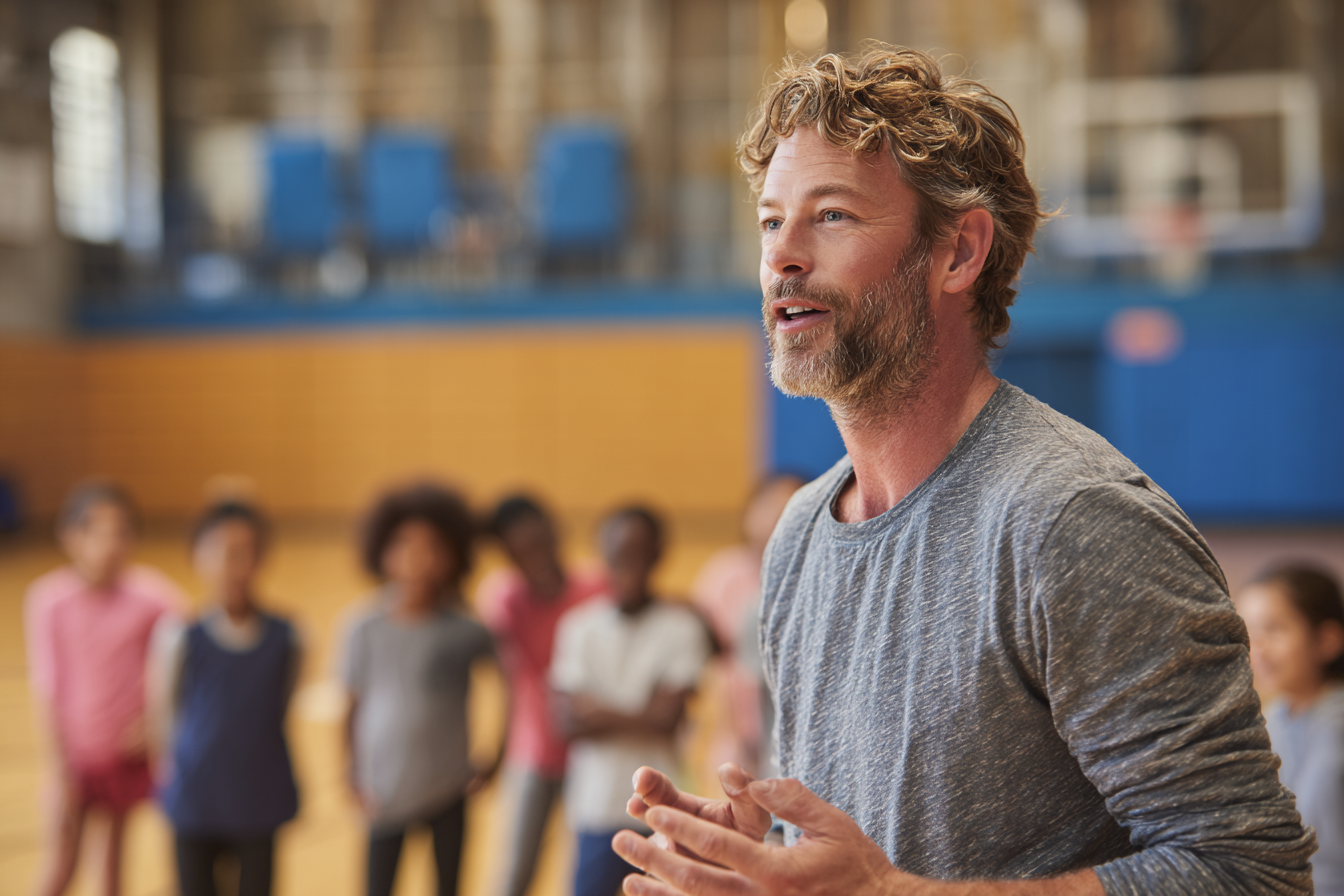
Focus: Develop advanced cutting, spacing, and throw timing in Ultimate Frisbee while practicing self-officiating, respectful conflict resolution, and the values of spirit of the game.
Grade Level: 7
Subject Area: Physical Education
Total Unit Duration: 5 sessions (one week), 45–55 minutes per session
I. Introduction
In this Grade 7 Physical Education unit, students build on basic Ultimate Frisbee skills by learning how team shape, timing, and decision-making create more effective offense and defense. Through throwing on the move, huck-and-cut drills, and 3v2 attacking patterns, students learn how to cut into open space, throw to a teammate’s path, and support play within simple vertical or horizontal stack structures. Because Ultimate relies on self-officiating, the unit also emphasizes spirit of the game, including honesty, sportsmanship, emotional control, and respectful conflict resolution. Students learn that successful Ultimate depends not only on throwing and catching skill, but also on communication, spacing, fair play, and the ability to handle competitive moments maturely. By the end of the week, students should be able to explain how movement and self-officiating work together to create strong, fair game play.
Essential Questions
- How do cutting patterns and spacing create better throwing options in Ultimate Frisbee?
- What makes a throw well-timed and easier for a teammate to catch in stride?
- How do vertical and horizontal stack ideas help organize offensive movement?
- What does spirit of the game look like when players must self-officiate and solve conflicts fairly?
II. Objectives and Standards
Learning Objectives — Students will be able to:
- Throw and catch a disc with increasing accuracy, timing, and control while moving and under defensive pressure.
- Combine cutting, receiving, pivoting, throwing, and defensive recovery smoothly during extended Ultimate play.
- Use spatial awareness to maintain offensive spacing, time cuts well, and defend effectively in small-sided and full-team games.
- Use pathways, feints, tempo changes, and angles to create separation from defenders or deny attacking space.
- Adjust the force, angle, and timing of throws based on distance, defensive pressure, and teammate movement.
- Apply simple offensive concepts such as vertical stack, horizontal spacing, clearing out, and throwing to space.
- Apply defensive concepts such as marking, staying between cutter and target space, helping, recovering, and transitioning after turnovers.
- Demonstrate self-control, sportsmanship, and fair self-officiating by resolving disagreements respectfully and keeping the game moving.
Standards Alignment — Grade 7 PE (SHAPE America-based custom)
- PE:S1.7c – Throwing & Catching with Accuracy in Competitive Play Throw and catch various objects with accuracy, appropriate force, and timing in competitive settings, including while defended, moving quickly, or under time constraints.
- Example: In Ultimate, a student throws a leading pass to a cutter running into open space and secures catches while defended.
- PE:S1.7f – Integrating Multiple Skills Fluidly During Extended Play Combine locomotor, manipulative, and stability skills in extended game play, maintaining control and appropriate technique even when fatigued or under pressure.
- Example: In a full game, a student cuts to space, catches on the move, pivots under pressure, and throws accurately to the next teammate.
- PE:S2.7a – Spatial Awareness & Tactical Positioning in Team Play Demonstrate consistent understanding of space and positioning by adjusting to teammates, opponents, and scoring areas in both offense and defense.
- Example: In 5v5 Ultimate, students recognize when to clear out, when to cut into space, and when to recover to protect a dangerous lane.
- PE:S2.7b – Using Pathways, Levels, and Feints to Gain Tactical Advantage Use a variety of movement options—pathways, levels, tempo changes, and feints—to create separation, deny space, or disrupt an opponent’s strategy.
- Example: A cutter uses a hesitation move and sharp angle change to get open, while a defender adjusts body angle to deny the inside lane.
- PE:S2.7c – Adjusting Effort, Force, Angle & Timing to Game Conditions Adapt effort level, force, angle, and timing of passes, shots, serves, and runs in response to defensive pressure, distance, and scoring/placement goals.
- Example: In Ultimate, a student uses a softer short throw under pressure, a firm leading pass to a cutter, or a deeper throw into space depending on the defense.
- PE:S2.7d – Offensive Strategies: Creating & Exploiting Opportunities Select and apply offensive strategies such as using screens, give-and-go, overlaps, switching fields, and recognizing mismatches to create scoring chances.
- Example: In Ultimate, students use stack spacing, clearing, and well-timed cuts to create easier throwing lanes and attacking chances.
- PE:S2.7e – Defensive Strategies: Marking, Help Defense & Transition Implement defensive principles including marking, staying between opponent and goal, providing help defense, recovering in transition, and adjusting to changes in possession.
- Example: After a turnover, students quickly find a mark, protect dangerous space, and recover to stop the next attacking throw.
- PE:S4.7c – Self-Control, Sportsmanship & Emotional Regulation in Competition Demonstrate self-control and positive sportsmanship in both winning and losing situations, managing frustration, and responding to mistakes constructively.
- Example: After a drop, turnover, or close call, a student stays calm, resets, and continues respectfully.
- PE:S4.7d – Resolving Conflicts & Self-Officiating Fairly Use respectful communication and agreed-upon strategies (replay, rock-paper-scissors, majority vote, rotating officials) to resolve conflicts and make impartial calls.
- Example: When players disagree on a sideline or foul call, they discuss briefly, choose a fair resolution, and restart play without arguing.
Success Criteria — Student Language
- I can throw and catch with better timing and accuracy in Ultimate Frisbee.
- I can use cuts, spacing, and clearing to help my team create open throwing lanes.
- I can use feints, angles, and tempo changes to get open or defend more effectively.
- I can defend by marking, recovering quickly, and protecting dangerous space.
- I can help self-officiate fairly and show spirit of the game during competition.