Unit Plan 36 (Grade 7 Vocal Music): Vocal Performance Day
Grade 7 choir culminating unit performing with accuracy, expression, and ensemble etiquette while reflecting on growth as singers and audience members.

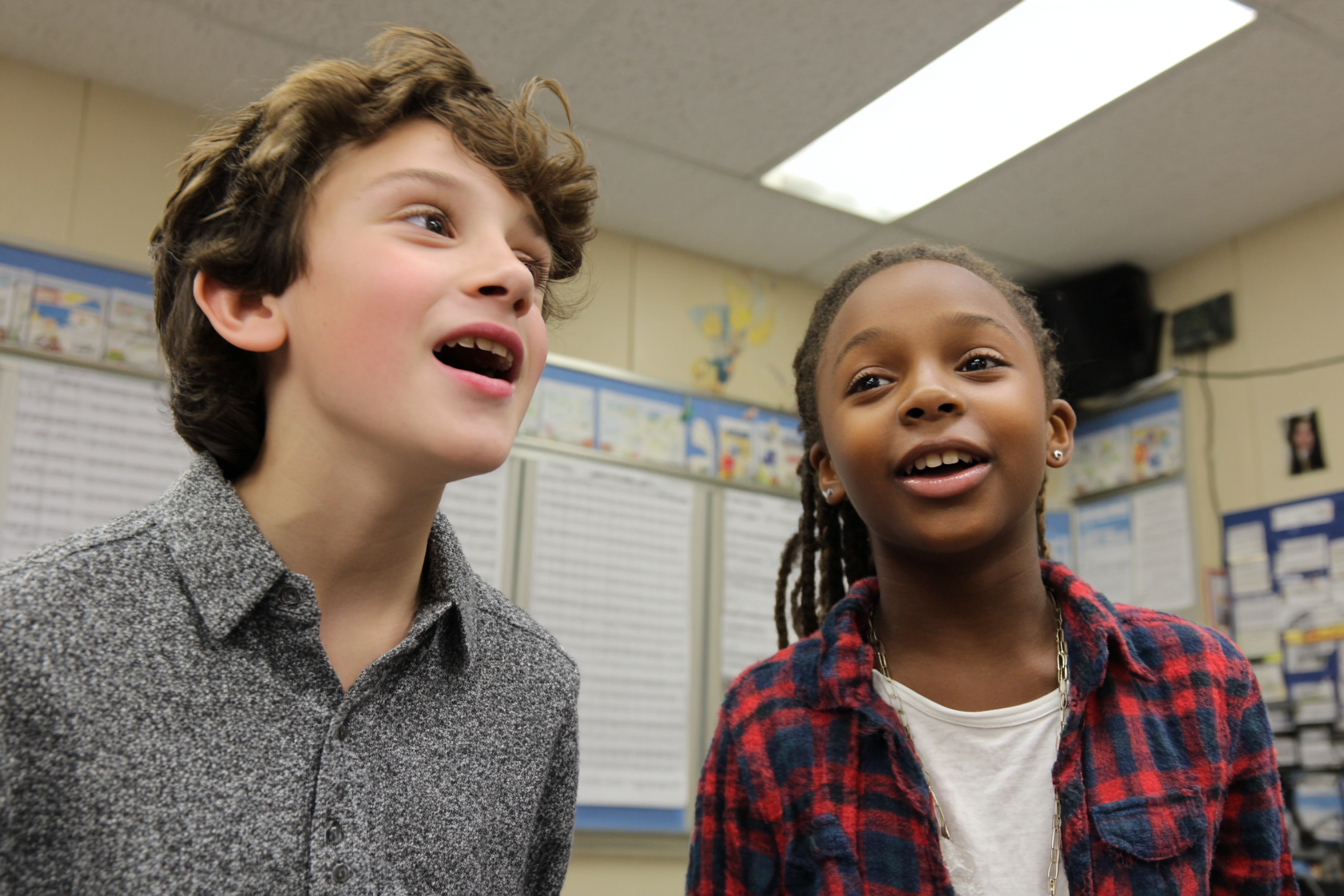
Focus: Perform vocal music demonstrating growth, musical accuracy, expression, and ensemble etiquette as both performers and audience members.
Grade Level: 7
Subject Area: Vocal Music (Choir • Performance • Reflection)
Total Unit Duration: 5 sessions (one week), 50–60 minutes per session
I. Introduction
In this culminating unit, students bring together everything they have learned about technique, expression, and collaboration to present a final vocal performance. They focus on performing with accurate pitch and rhythm, clear diction, expressive intent, and stylistic awareness, while also demonstrating professional rehearsal and performance etiquette. Before and after the performance, students reflect on their growth as individual singers and as an ensemble, considering how habits built all year long impact performance day.
Essential Questions
- What does it mean to perform with musical excellence and professional etiquette, not just “get through the song”?
- How do pitch, rhythm, diction, expression, and style work together to create a strong performance?
- What does respectful performance and audience behavior look and feel like in a choir setting?
- How can reflecting on a performance help us understand our growth and set goals for future musical experiences?
II. Objectives and Standards
Learning Objectives — Students will be able to:
- Perform concert repertoire with accurate pitch and rhythm, maintaining steady tempo and correct entrances/cutoffs.
- Sing with clear diction so that text is understandable and appropriately styled for the repertoire.
- Demonstrate expressive intent and stylistic awareness, using dynamics, phrasing, tone quality, and facial expression.
- Show appropriate performance etiquette (focused posture, watching the conductor, quiet transitions, respectful audience behavior).
- Collaborate with peers to maintain ensemble unity, including blend, balance, and togetherness.
- Reflect on their growth as singers by comparing early-year performance habits with performance-day behaviors and musical outcomes.
Standards Alignment — Grade 7 Vocal Music (custom, NAfME-style)
- VM:Pr6.7a — Perform vocal music with accurate pitch, rhythm, diction, and expressive intent, showing stylistic awareness.
- Example: Students perform a two-part piece with clear diction and dynamic contrast.
- VM:Pr6.7b — Demonstrate appropriate rehearsal and performance etiquette as singer and audience member, including respectful collaboration.
- Example: Students follow conductor cues, enter/exit professionally, and provide constructive peer feedback.
Success Criteria — Student Language
- I can perform our songs with accurate notes and rhythms and stay with the group.
- I can use clear diction and expressive singing that fits the style of the music.
- I can show strong performance etiquette—standing tall, watching the conductor, staying focused, and being a respectful audience member.
- I can work with my section and the full choir to keep our blend, balance, and timing together.
- I can explain at least one way I have grown as a singer and ensemble member this year.
III. Materials and Resources
Tasks & Tools (teacher acquires/curates)
- Final concert repertoire (scores and/or lyric sheets for all pieces).
- Concert space or performance location (stage, gym, auditorium, or classroom performance area).
- Recording device/app to capture the performance and/or dress rehearsal.
- Performance-Ready Checklist or rubric adapted for performance day (pitch, rhythm, diction, expression, etiquette).
- Simple program order for students (physical or projected).
- Anchor charts:
- “Performance Etiquette” (before stage, on stage, after performance, audience expectations).
- “Concert Day Reminders” (breath, posture, eyes up, listen, support each other).
- Reflection sheets for post-performance writing or surveys.
- Optional: risers, music stands, folders, concert attire guidance (as appropriate to the school).
Preparation
- Confirm performance logistics: location, time, setup, and transitions between pieces.
- Review any concert expectations (attire, arrival time, where to stand, where to exit).
- Prepare a brief spoken introduction script for students, if they will announce pieces.
- Set up recording equipment and test levels before performance day.
- Print or distribute reflection sheets for Session 5.
Common Misconceptions to Surface
- “The performance is just for the audience; my job is over after rehearsals.” → Performance is the moment to apply everything learned and show growth.
- “If I make one mistake, the whole performance is ruined.” → Mistakes happen; staying focused, musical, and professional matters more than perfection.
- “Only what we sing matters; how we stand and act doesn’t.” → Etiquette and stage presence strongly affect how the performance is received.
- “Audience etiquette doesn’t matter because the performers can’t see or hear me.” → Being a respectful audience member supports the performers and the overall experience.
Key Terms (highlight in lessons) performance, concert, stage presence, etiquette, pitch, rhythm, diction, expression, style, blend, balance, ensemble unity, reflection, growth
IV. Lesson Procedure
(Each day follows: Launch → Explore → Discuss → Reflect. Timing for a 50–60 minute block.)
Session 1 — Performance Expectations & Final Polishing (VM:Pr6.7a, VM:Pr6.7b)
- Launch (6–8 min)
- Ask: “What do we want our audience to notice and remember about our performance?”
- Review the Performance Etiquette and Performance-Ready Checklist anchor charts.
- Explore (22–25 min)
- Run through repertoire with limited stopping, focusing on:
- Entrances/cutoffs, posture, and watching the conductor.
- Quick corrections on any major pitch/rhythm or diction spots still needing work.
- Practice entering, standing, bowing/acknowledging, and exiting as they will on performance day.
- Run through repertoire with limited stopping, focusing on:
- Discuss (10–12 min)
- Whole group: Identify 2–3 key musical priorities (e.g., tuning on soft sections, consonants at ends of words) and 2–3 etiquette priorities (e.g., posture between pieces, quiet transitions).
- Reflect (5 min)
- Exit slip: “On performance day, one musical thing I will focus on is ___ and one etiquette habit I will show is ___.”
Session 2 — Dress Rehearsal & Recording (VM:Pr6.7a, VM:Pr6.7b)
- Launch (5–7 min)
- Briefly outline what a dress rehearsal is and why it matters (a full practice with performance mindset).
- Review concert order and any speaking roles.
- Explore (25–30 min)
- Conduct a full dress rehearsal run-through in performance formation with minimal stopping.
- Record at least one full piece or the entire run, if possible.
- Emphasize full performance behavior: focus, posture, watching conductor, polite audience behavior when listening to other groups (if applicable).
- Discuss (10–12 min)
- Listen back to a short excerpt from the recording.
- Students share quick observations: one musical strength, one area to polish, and one etiquette strength.
- Reflect (5 min)
- Exit slip: “From the dress rehearsal, I noticed that our choir did ___ well and we still need to improve ___ before the performance.”
Session 3 — Audience & Performer Etiquette Practice (VM:Pr6.7b)
- Launch (6–8 min)
- Ask: “How does being a respectful audience member show support for performers?”
- Review what audience etiquette looks like at a school concert (listening quietly, no side conversations, appropriate applause).
- Explore (22–25 min)
- Run a mini-concert simulation:
- Half the class performs a short excerpt while the other half practices audience behavior, then switch roles.
- Practice transitions between pieces and how to behave on stage while waiting.
- Optionally practice any spoken introductions students will give.
- Run a mini-concert simulation:
- Discuss (10–12 min)
- Debrief: How did it feel to perform for peers who were focused and respectful? How did it feel to be in the audience?
- Clarify any final questions about concert expectations.
- Reflect (5 min)
- Exit slip: “One way I can show respect as a performer is ___; one way I can show respect as an audience member is ___.”
Session 4 — Vocal Performance Day (VM:Pr6.7a, VM:Pr6.7b)
- Launch (5–7 min)
- Calm, brief pep talk: “We are ready because we have practiced our skills, etiquette, and teamwork.”
- Light warm-up focusing on breath, resonance, and key vowel/consonant work needed for the program.
- Explore (performance block and/or evening event)
- Final warm-ups and quick spot-checks of tricky entrances or transitions.
- Perform the concert (or in-class performance) with full focus on pitch, rhythm, diction, expression, style, and etiquette.
- If possible, record the performance for later reflection.
- Discuss (in brief after performance, or at next available moment)
- Quick whole-group debrief:
- “What felt strong?”
- “Where did you feel the group working together the most?”
- Quick whole-group debrief:
- Reflect (short written or verbal)
- Students complete a quick “Performance Snapshot”:
- “One moment I’m proud of is ___ because ___.”
- “One thing I want to remember for future performances is ___.”
- Students complete a quick “Performance Snapshot”:
Session 5 — Post-Performance Reflection & Celebration (All Standards)
- Launch (6–8 min)
- Ask: “What does our performance tell us about how we’ve grown this year?”
- If recorded, let students know they’ll hear or see parts of the performance today.
- Explore (22–25 min)
- Play short segments of the performance recording.
- Students complete a Performance Reflection Sheet that asks them to:
- Identify at least one musical strength (pitch, rhythm, diction, expression, style).
- Identify at least one example of good ensemble etiquette they observed.
- Name at least one personal area of growth and one area they still want to improve in future choirs.
- Discuss (10–12 min)
- Whole group or small groups: share highlights and celebrate growth.
- Teacher points out specific examples of VM:Pr6.7a and VM:Pr6.7b observed during the performance.
- Reflect (5 min)
- Final reflection prompt: “This performance showed that I have grown in ___, and next time I perform in a choir I want to work on ___.”
V. Differentiation and Accommodations
Advanced Learners
- Invite them to take on leadership roles (section leader, student conductor for warm-ups, or student MC introducing a piece).
- Ask them to listen for more subtle details (e.g., stylistic nuances in tone or phrasing) and share observations after the performance.
- Encourage deeper written reflections comparing this performance to an earlier one, noting specific areas of technical and expressive growth.
Targeted Support
- Provide a concise concert checklist with icons (posture, eyes on conductor, breath, smile, stillness).
- Use brief, repeated reminders before and during the concert (“Feet planted, shoulders relaxed, eyes up”).
- Pre-teach key transitions (where to walk, where to stand) and practice them multiple times to reduce anxiety.
- Allow proximity support (standing near a confident peer) for students who need extra security on stage.
Multilingual Learners
- Clarify key performance and etiquette terms using visuals and gestures (bow, clap, still, watch).
- Provide short sentence frames for reflections, such as:
- “I felt proud when we ___.“
- “The audience responded when ___.”
- Allow reflections to be drafted in the home language and then summarized in English.
- Support understanding of song texts with simple translations or summaries, so students can connect expression to meaning.
IEP/504 & Accessibility
- Adjust performance roles as needed (e.g., seated positions, less physically demanding staging) while still including students meaningfully.
- Provide visual cues for performance order and transitions (large-font program, color-coded cards).
- Allow alternative ways to participate (e.g., assisting with programs or announcements) if a full performance is not possible.
- Offer quiet space and clear routines for students who experience performance anxiety, including brief check-ins before going on stage.
VI. Assessment and Evaluation
Formative Checks (daily)
- Session 1 — Exit slips show students can identify specific musical and etiquette goals for performance day.
- Session 2 — Dress rehearsal observations show students applying performance criteria; quick reflections note strengths and next steps.
- Session 3 — Simulation activities demonstrate appropriate performer and audience etiquette.
- Session 4 — Teacher observes performance behaviors and musical outcomes, noting evidence of VM:Pr6.7a and VM:Pr6.7b.
- Session 5 — Reflection sheets show students can describe strengths, growth, and future goals in relation to the performance.
Summative — Performance & Reflection (0–2 per criterion, total 10)
- Musical Accuracy (VM:Pr6.7a)
- 2: Performs with mostly accurate pitch and rhythm; entrances/cutoffs are secure and tempo is steady.
- 1: Some noticeable pitch/rhythm issues, but the piece remains mostly together and recognizable.
- 0: Frequent errors significantly disrupt the performance.
- Diction & Expression (VM:Pr6.7a)
- 2: Text is clear and understandable; dynamics, tone, and phrasing effectively communicate expressive intent and style.
- 1: Some words or phrases are clear and some expression is present, but consistency or stylistic fit is uneven.
- 0: Diction is unclear and little expressive intent is evident.
- Ensemble Etiquette & Unity (VM:Pr6.7b)
- 2: Demonstrates strong stage presence, follows conductor cues, maintains quiet focus, and collaborates respectfully; ensemble shows good blend and balance.
- 1: Etiquette is generally appropriate but with occasional lapses (e.g., minor talking, uneven focus or unity).
- 0: Frequent etiquette issues or lack of cooperation that distract from the performance.
- Audience Etiquette (VM:Pr6.7b)
- 2: When in the audience, consistently models respectful listening, appropriate applause, and supportive behavior.
- 1: Mostly respectful, with a few minor lapses in attention or behavior.
- 0: Often inattentive or disruptive as an audience member.
- Reflection on Growth
- 2: Clearly explains how they have grown as a singer and ensemble member, citing specific examples from the performance or year.
- 1: Mentions growth, but explanation is brief or lacks specific examples.
- 0: Provides little or no meaningful reflection on growth.
Feedback Protocol (TAG)
- Tell one strength (e.g., “Your section’s focus and posture made the performance look very professional.”).
- Ask one question (e.g., “What helped you stay together on the soft ending of the last piece?”).
- Give one suggestion (e.g., “Next time, think about projecting your consonants a bit more in the fast lyrics.”).
VII. Reflection and Extension
Reflection Prompts
- What moment from our performance are you most proud of, and why?
- How did your performance habits (posture, focus, watching the conductor) compare to earlier in the year?
- In what ways did you see our choir working as a team during the performance?
- If you could give advice to next year’s choir before their performance day, what would you tell them?
Extensions
- Performance Comparison: Compare this performance to an earlier recording from the year, noting specific areas of growth in tone, accuracy, and etiquette.
- Future Choir Goals: Students write a short letter to their “future choir self” about what they want to remember and work on in the next year of singing.
- Concert Reflection Display: Create a hallway or classroom display with short quotes from student reflections celebrating ensemble achievements and goals.
Standards Trace — When Each Standard Is Addressed
- VM:Pr6.7a — Sessions 1–4 (polishing accuracy and expression; dress rehearsal; performance simulation; final concert performance with attention to pitch, rhythm, diction, expressive intent, and stylistic awareness; Session 5 reflection on musical growth using examples from the performance).
- VM:Pr6.7b — Sessions 1–4 (reviewing and practicing performance etiquette, concert transitions, and stage presence; modeling respectful audience behavior during simulations and actual performance; Session 5 reflection on performer and audience etiquette and its impact on the concert experience).