Unit Plan 26 (Grade 7 Vocal Music): Vocal Storytelling
Create vocal storytelling pieces using text and musical elements to express scenes and personal identity, and explain how choices communicate meaning.

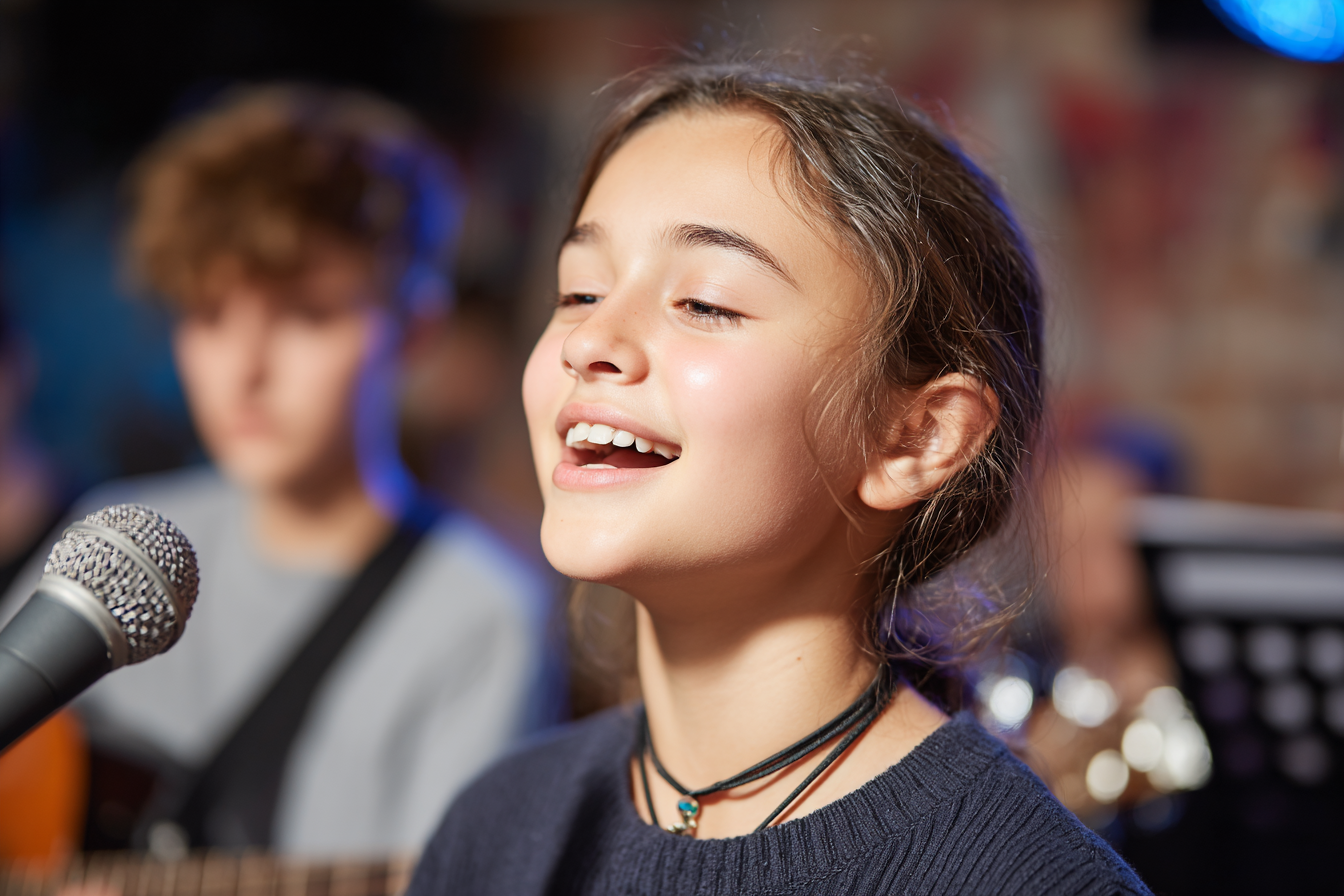
Focus: Create vocal music that supports stories or scenes, and explain how musical elements and text choices communicate expressive intent connected to personal identity and experiences.
Grade Level: 7
Subject Area: Vocal Music (Choir • Creativity • Connections)
Total Unit Duration: 5 sessions (one week), 50–60 minutes per session
I. Introduction
In this unit, students become vocal storytellers, designing short vocal pieces that bring characters, scenes, or personal moments to life. Drawing on music they love and stories that matter to them, they explore how melody, rhythm, dynamics, text, and tone can work together to communicate a clear mood or message. Students then create and present a brief vocal story piece, explaining how their musical and text choices connect to both the story and their own identity as singers.
Essential Questions
- How can vocal music help tell a story, show emotion, or bring a scene to life?
- In what ways do text choices (lyrics, repeated words, key phrases) and musical elements (melody, rhythm, dynamics, tone) communicate expressive intent?
- How do my identity, interests, and experiences influence the stories I want to tell through music and the style I choose?
- What does it mean to share a vocal creation that feels authentic to who I am and what I want an audience to feel or understand?
II. Objectives and Standards
Learning Objectives — Students will be able to:
- Identify how musical elements (melody, rhythm, dynamics, articulation, tone) and text can work together to tell a story or support a scene.
- Choose a story, moment, or theme that connects to their identity, interests, or experiences and plan a short vocal piece to express it.
- Create and rehearse a brief vocal storytelling piece (solo or small group) that combines original or adapted text with purposeful musical choices.
- Present their vocal story to the class and describe how musical and text decisions communicate expressive intent.
- Explain how their personal identity, interests, or experiences influenced the story they chose and the way they set it to music.
- Offer and receive supportive feedback focused on clarity of story, expressive intent, and alignment of music and text.
Standards Alignment — Grade 7 Vocal Music (custom, NAfME-style)
- VM:Cr3.7b — Present a final vocal creation and describe how musical elements and text choices communicate expressive intent to an audience.
- Example: Students perform their song and explain how dynamics and articulation match the lyric meaning.
- VM:Cn10.7a — Explain how personal identity, interests, and experiences influence musical choices and goals as a singer.
- Example: Students write a reflection connecting their favorite genres to performance goals (tone, style, expression).
Success Criteria — Student Language
- I can create a short vocal piece that clearly supports a story, scene, or emotion.
- I can explain how my lyrics or text and my musical choices (melody, rhythm, dynamics, tone) fit together to show my expressive intent.
- I can connect my vocal storytelling project to who I am, what I like, or what I’ve experienced.
- I can present my piece with enough clarity and confidence that an audience understands what I wanted them to feel or picture.
- I can give and receive feedback that focuses on story clarity, expression, and musical choices.