Unit Plan 19 (Grade 8 Art): Advanced Drawing Techniques
Grade 8 drawing unit refining shading, value contrast, and realism through media experimentation to communicate form, texture, and mood effectively.

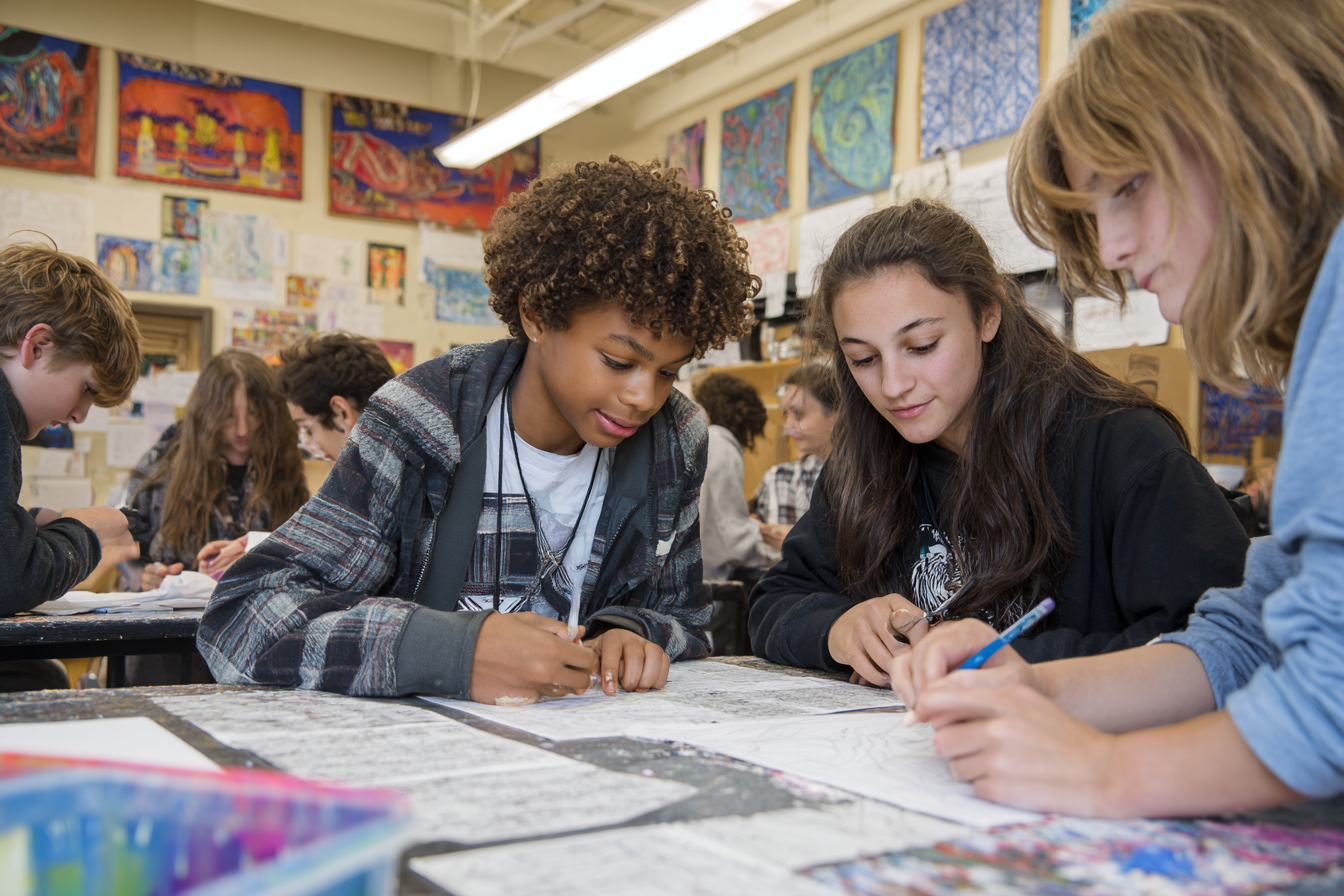
Focus: Refine shading, value contrast, and realism techniques through structured practice and experimentation with drawing media to better communicate form, texture, and mood.
Grade Level: 8
Subject Area: Art (Visual Arts • Drawing • Technique & Realism)
Total Unit Duration: 5 sessions (one week), 50–60 minutes per session
I. Introduction
In this unit, students deepen their drawing skills by focusing on advanced shading, value contrast, and realistic rendering. Through guided exercises and small studies, they experiment with different drawing tools—such as graphite, charcoal, and ink—and techniques like hatching, cross-hatching, stumping/blending, and erasing for highlights. Students practice turning flat shapes into three-dimensional forms, capturing light and shadow accurately, and suggesting texture (metal, fabric, wood, skin). By the end of the unit, each student chooses the materials and techniques that best match their artistic intent to create a refined drawing study.
Essential Questions
- How do shading and value contrast make drawings look more three-dimensional and realistic?
- In what ways can different drawing materials and techniques (graphite, charcoal, ink; blending, hatching, etc.) change the mood and clarity of a drawing?
- How can I use light, shadow, and texture to communicate what a surface feels like (smooth, rough, shiny, soft)?
- What does it mean to experiment with drawing processes and then choose the one that best fits my artistic intent?
- How can I use advanced drawing techniques to make viewers notice what I want them to see first in my artwork?
II. Objectives and Standards
Learning Objectives — Students will be able to:
- Create value scales using at least two drawing media (e.g., graphite and charcoal), demonstrating a smooth transition from light to dark.
- Apply shading techniques (blending, hatching, cross-hatching, stippling) to basic forms (spheres, cubes, cylinders) to show believable light and shadow.
- Experiment with drawing textures (metal, fabric, wood, organic surfaces) and compare how different media and marks communicate those surfaces (VA:Cr2.8b).
- Analyze the effects of high vs. low contrast in drawing and use contrast intentionally to create focal points and realism.
- Develop a small advanced drawing study (e.g., still life, object, or reference-based subject) using the materials and techniques that best express their artistic intent (VA:Cr2.8b).
- Reflect on their experiments and explain why they chose specific media and techniques for their final drawing.
Standards Alignment — 8th Grade (NCAS-Aligned)
- VA:Cr2.8b — Experiment with materials, techniques, and processes to determine which best communicate artistic intent.
- Example: Students compare graphite, charcoal, and ink hatching for shadows before choosing the one that best fits their desired mood and level of realism.
Success Criteria — Student Language
- I can use different drawing tools (graphite, charcoal, ink, etc.) to show a full range of values from light to dark.
- I can shade simple forms so they look three-dimensional, with clear light, midtones, and shadows.
- I can experiment with different mark-making techniques and explain which ones work best for my drawing goals.
- I can show texture and surface (like metal, fabric, or wood) using line, value, and contrast.
- I can choose the materials and techniques that best fit my intent for a final drawing and explain my choices.