Unit Plan 4 (Grade 8 Art): Composition & Visual Hierarchy
Grade 8 art unit on visual hierarchy—students use emphasis, balance, and contrast to guide attention, organize compositions, and communicate clear meaning.

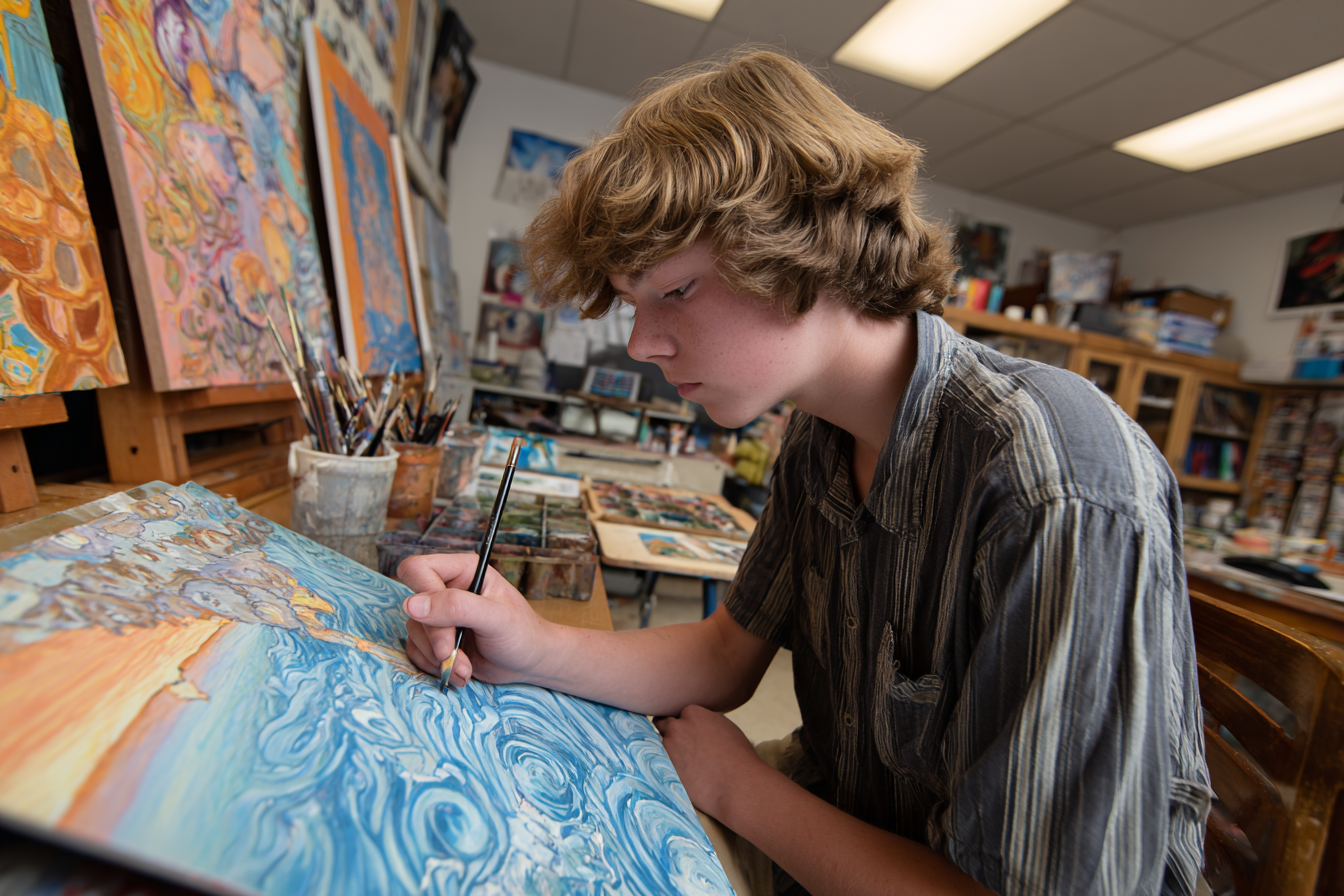
Focus: Design compositions that use emphasis, balance, and contrast strategically to create clear visual hierarchy—guiding the viewer’s eye to what matters most.
Grade Level: 8
Subject Area: Art (Visual Arts • Design & Composition • Visual Communication)
Total Unit Duration: 5 sessions (one week), 50–60 minutes per session
I. Introduction
Students build on their understanding of elements and principles by focusing on composition and visual hierarchy—the order in which a viewer notices information. They study posters, book covers, and artworks to see how emphasis, balance, and contrast direct attention to a focal point, then to secondary information. Through thumbnail studies and a focused composition project, students practice planning where the eye goes first, second, and third, using space, size, contrast, and placement with intention.
Essential Questions
- What is visual hierarchy, and how does it help the viewer know where to look first?
- How can I use emphasis, balance, and contrast to guide the viewer’s eye through a composition?
- How do choices about placement, size, and spacing affect clarity and impact in a design?
- What is the difference between a composition that feels organized and intentional and one that feels random or confusing?
- How can planning for visual hierarchy improve all of my future artworks, from posters to illustrations to abstract designs?
II. Objectives and Standards
Learning Objectives — Students will be able to:
- Define composition and visual hierarchy and identify focal points and reading paths in existing images (posters, covers, artworks).
- Analyze how emphasis, balance, and contrast influence where the viewer looks first and how their eye travels across a composition.
- Create thumbnail compositions that experiment with different hierarchies, focal points, and arrangements of elements.
- Plan and organize a final composition that uses emphasis, balance, and contrast intentionally to support a specific message or mood (VA:Cr2.8a).
- Produce a finished piece (poster, concept illustration, or abstract design) that shows a clear visual hierarchy (primary, secondary, and tertiary information).
- Explain in writing or discussion how their composition choices support meaning and direct viewer attention.
Standards Alignment — 8th Grade (NCAS-Aligned)
- VA:Cr2.8a — Plan and organize artistic work by applying elements of art and principles of design intentionally to support meaning.
- Example: Students use contrast, emphasis, and balance to guide viewer attention in a poster or composition focused on a chosen message.
Success Criteria — Student Language
- I can point to the focal point in my own work and explain how I made it stand out.
- I can describe how balance and contrast affect where the viewer’s eye goes in a composition.
- I can plan and draw thumbnails that show different visual hierarchies (what’s most important vs. less important).
- I can create a finished composition where the viewer can tell what is most important, next most important, and background.
- I can explain how my composition choices support the message or mood I wanted to communicate.