Unit Plan 22 (Grade 8 Art): Portfolio Review & Self-Evaluation
Grade 8 art reflection unit where students evaluate portfolio work using craftsmanship, composition, originality, and communication to set goals for artistic growth.

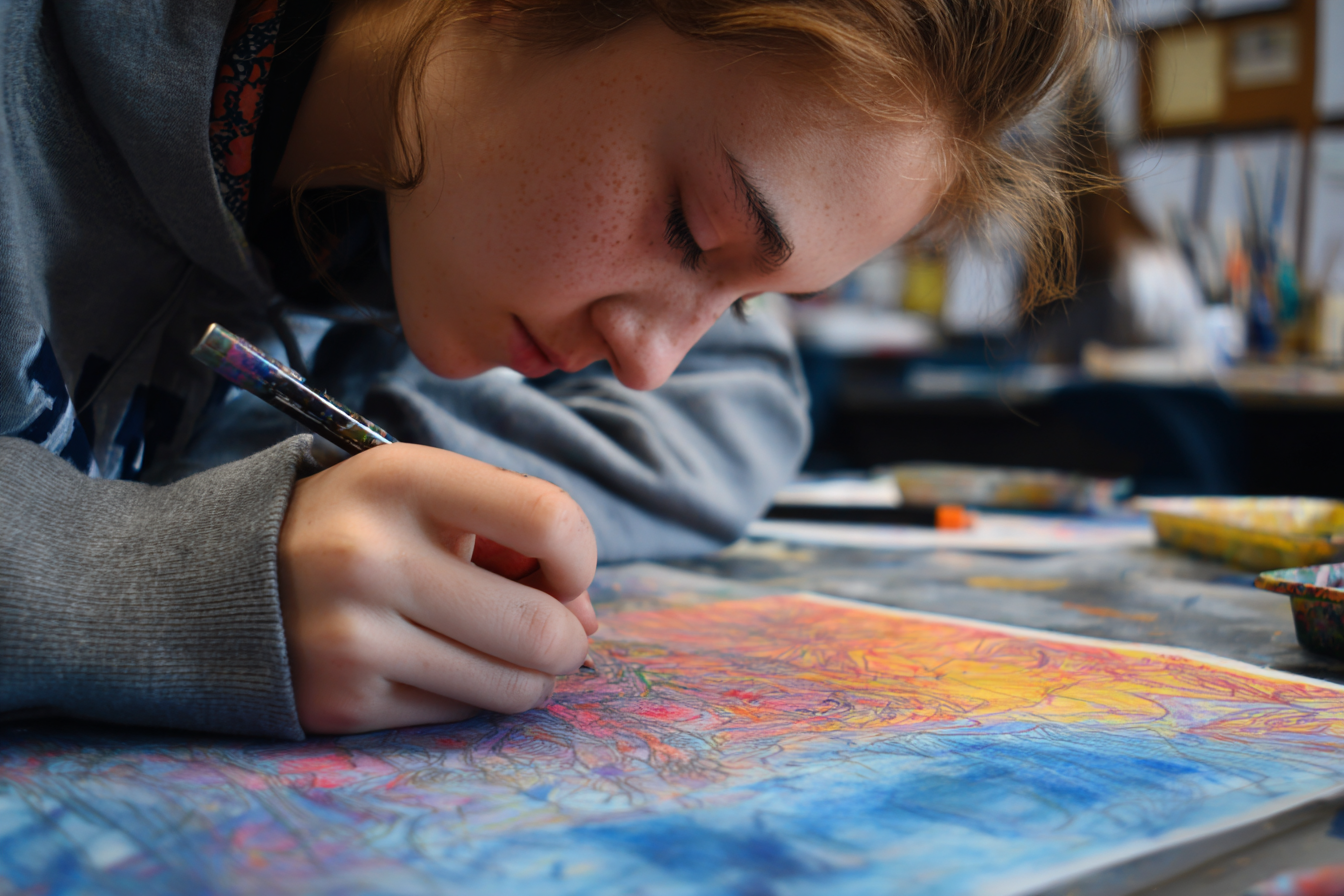
Focus: Evaluate personal artwork using established criteria such as craftsmanship, composition, originality, and effectiveness of communication, and use self-evaluation to set future growth goals.
Grade Level: 8
Subject Area: Art (Visual Arts • Reflection & Critique • Portfolio Development)
Total Unit Duration: 5 sessions (one week), 50–60 minutes per session
I. Introduction
In this unit, students step back from making new artwork to focus on looking at and thinking about the work they’ve already created. They learn how to use clear criteria—like craftsmanship, composition, originality, and communication—to evaluate artwork fairly and thoughtfully. After practicing with sample pieces, students apply these criteria to their own portfolios, writing evidence-based self-evaluations and setting specific goals for improvement. By the end of the unit, students will have a clearer picture of their strengths, areas for growth, and the next steps they want to take as artists.
Essential Questions
- Why is it important for artists to evaluate their own work using clear criteria instead of just saying “it’s good” or “it’s bad”?
- How can criteria like craftsmanship, composition, originality, and communication help us talk about art more precisely?
- What does it mean to give evidence-based feedback about an artwork?
- How can honest self-evaluation help us recognize both strengths and areas for growth as artists?
- How can I turn what I notice in my portfolio into concrete goals and action steps for future art projects?
II. Objectives and Standards
Learning Objectives — Students will be able to:
- Describe and use established evaluation criteria (craftsmanship, composition, originality, communication) when looking at artwork.
- Practice evaluating sample artworks with a rubric, supporting ratings with specific visual evidence (VA:Re9.8a).
- Select key pieces from their own portfolio and evaluate them using the same rubric and vocabulary.
- Write a self-evaluation that explains their strengths and areas for growth using evidence from their artwork.
- Set specific, achievable goals for future art-making based on their self-evaluation (e.g., improve value contrast, explore more original concepts).
- Participate in a peer conference where they share reflections, receive feedback, and revise or refine their goals.
Standards Alignment — 8th Grade (NCAS-Aligned)
- VA:Re9.8a — Evaluate artwork using established criteria such as craftsmanship, composition, originality, and effectiveness of communication.
- Example: Students use a rubric to critique peer or personal artwork and provide evidence-based feedback linked to each criterion.
Success Criteria — Student Language
- I can explain what craftsmanship, composition, originality, and communication mean when judging artwork.
- I can use a rubric to evaluate a piece of art and back up my ratings with specific visual details.
- I can look at my own portfolio and identify strengths and areas to improve using the same criteria.
- I can write a self-evaluation that is honest, specific, and focused on growth—not just praise or criticism.
- I can set clear goals for my future artwork and explain what steps I will take to reach them.