Unit Plan 21 (Grade 8 Art): Texture & Surface Design
Grade 8 texture and surface design unit where students use actual and implied texture to communicate meaning, applying elements of art and principles of design to plan swatches, compose intentionally, and create a cohesive final artwork.

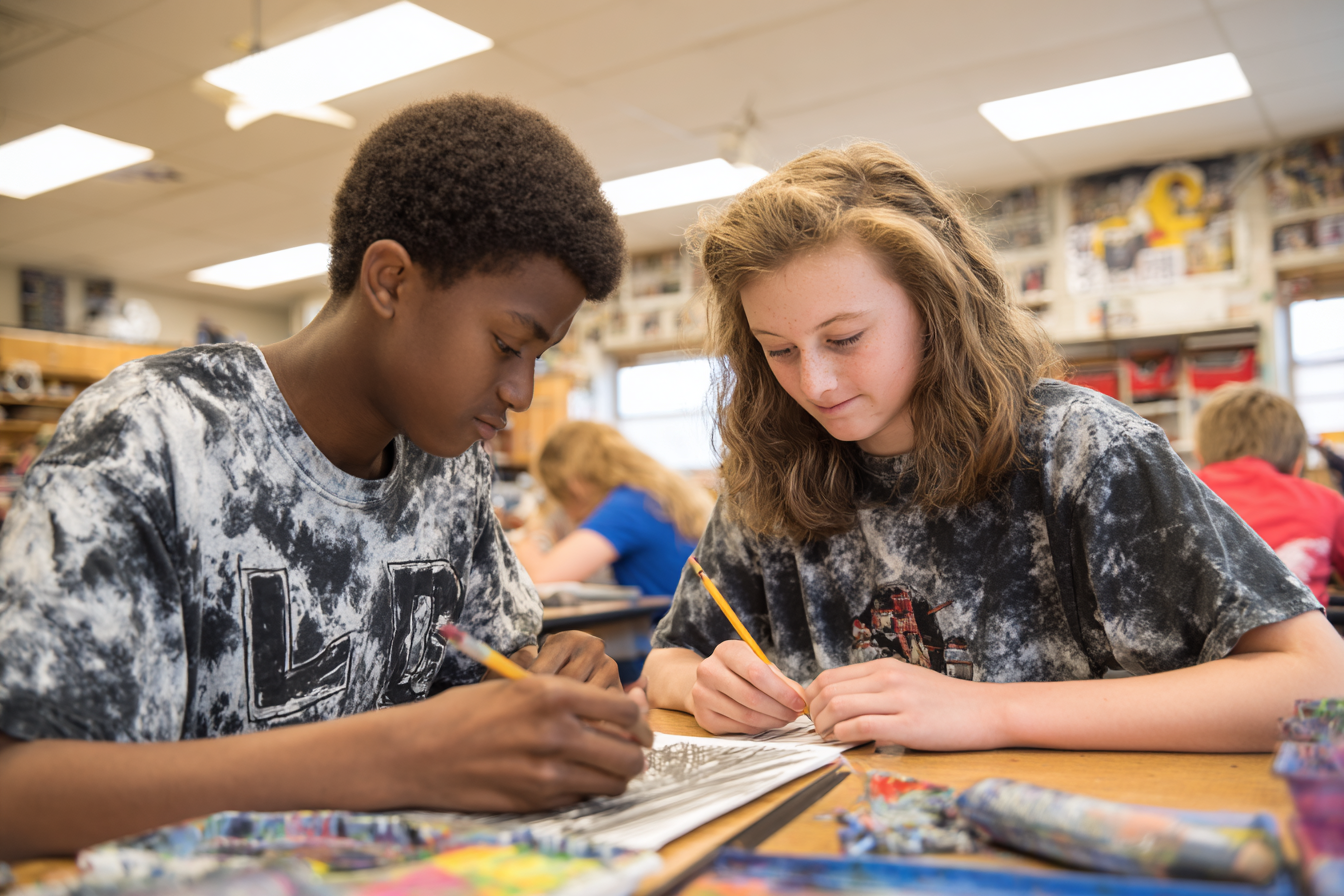
Focus: Use texture and surface design intentionally to enhance visual communication, emphasizing how the elements of art and principles of design support meaning.
Grade Level: 8
Subject Area: Art (Visual Arts • Design & Surface • Intentional Texture)
Total Unit Duration: 5 sessions (one week), 50–60 minutes per session
I. Introduction
In this unit, students explore texture and surface design as powerful tools for communicating ideas and emotions. They learn the difference between actual texture (how something feels when touched) and implied texture (how something looks like it would feel), and experiment with patterns, marks, and layered surfaces. Students then plan and organize compositions so texture and surface details are placed intentionally—guiding the viewer’s eye, creating emphasis, and supporting a clear visual message. By the end, they create a texture-focused artwork where surface choices reinforce meaning instead of just decorating the page.
Essential Questions
- How can texture and surface design change the way an artwork feels and what it communicates to the viewer?
- What is the difference between actual texture and implied texture, and how can artists use both intentionally?
- How do the elements of art (line, shape, color, value, texture) and principles of design (emphasis, contrast, rhythm, unity) work together to organize surface details?
- What makes the use of texture feel planned and meaningful instead of random or distracting?
- How can I design a surface so that viewers know where to look first and what to feel or think about my subject?
II. Objectives and Standards
Learning Objectives — Students will be able to:
- Identify and describe examples of actual texture and implied texture in artworks and everyday objects.
- Create a series of texture and surface design swatches using varied marks, patterns, and materials (e.g., pen, pencil, collage, relief) to explore options.
- Plan a small composition where texture placement and surface design support a clear focus and meaning, using elements and principles intentionally (VA:Cr2.8a).
- Organize an artwork so texture, pattern, and surface contrast create emphasis, rhythm, and unity.
- Produce a final texture & surface design piece in which surface choices (smooth vs. rough, dense vs. open, simple vs. complex) support a chosen mood or idea (VA:Cr2.8a).
- Reflect on their process, explaining how their planning decisions about texture and surface helped communicate their intent.
Standards Alignment — 8th Grade (NCAS-Aligned)
- VA:Cr2.8a — Plan and organize artistic work by applying elements of art and principles of design intentionally to support meaning.
- Example: Students use contrast and emphasis in texture and pattern to guide viewer attention in a surface design composition.
Success Criteria — Student Language
- I can tell the difference between actual texture and implied texture and find examples in art and objects around me.
- I can design texture and pattern swatches that show different surface ideas (rough, smooth, busy, calm).
- I can plan where texture will go in my artwork so it supports a clear focal point and message.
- I can explain how my use of texture, contrast, and repetition helps organize my composition and guide the viewer’s eye.
- I can describe how my surface design choices help communicate a mood or idea in my finished piece.