Unit Plan 10 (Grade 8 Band): Advanced Music Reading
Grade 8 band unit on reading complex notation, rhythms, meters, and expressive markings with sight-reading strategies for accurate, musical performance.

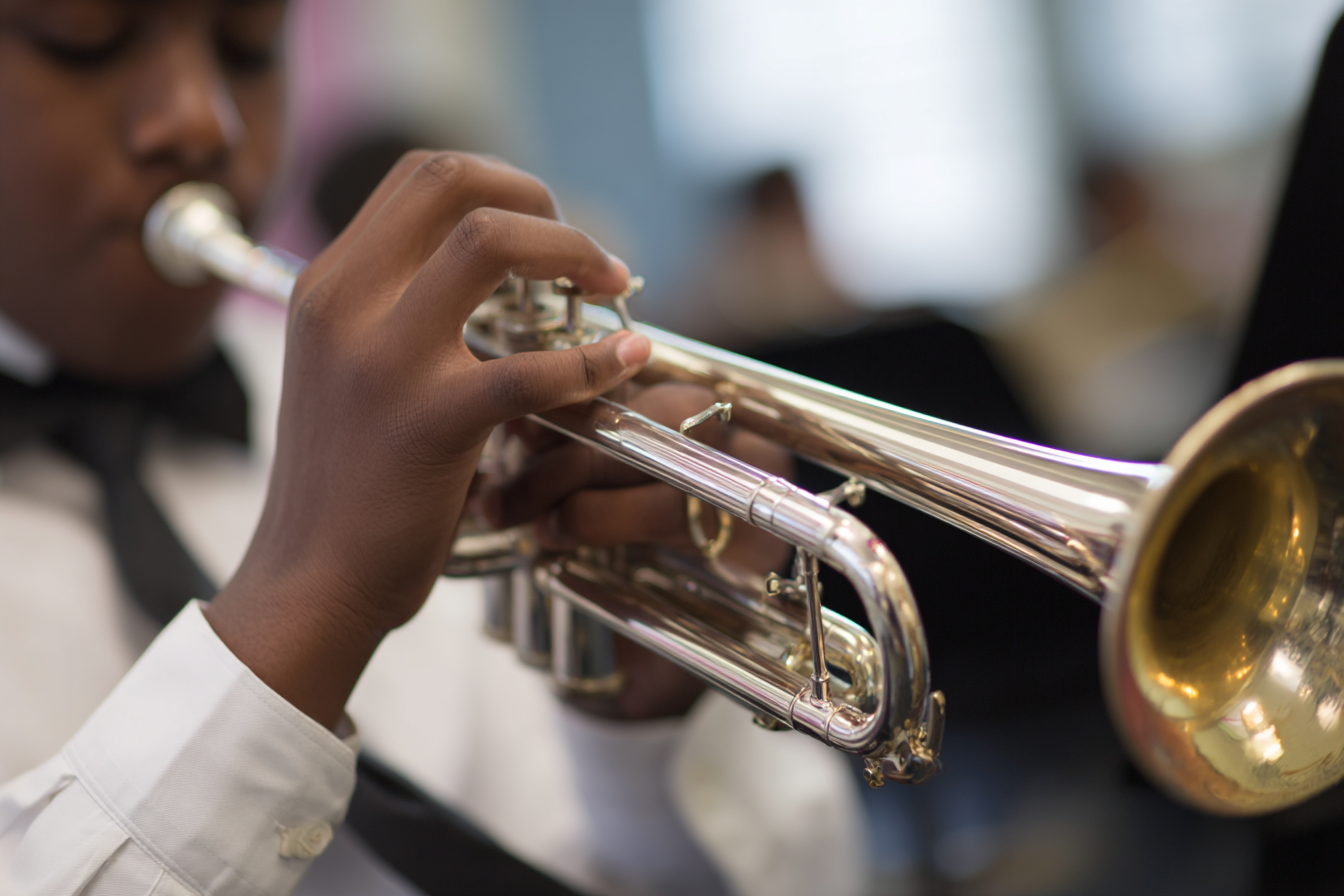
Focus: Read and perform increasingly complex notation, rhythms, key signatures, and expressive markings, using strategies to decode new band music accurately and musically.
Grade Level: 8
Subject Area: Band (Music Literacy • Sight-Reading • Expression & Notation)
Total Unit Duration: 5 sessions (one week), 50–60 minutes per session
I. Introduction
Students move beyond basic note reading to develop advanced music literacy skills that help them quickly understand new band pieces. They review and extend knowledge of key signatures, time signatures (including 6/8 and cut time), syncopated rhythms, accidentals, and expressive markings. Through guided sight-reading, rhythm decoding, and score-marking strategies, students learn how to analyze before they play, reducing errors and increasing confidence. By the end of the unit, students apply these skills directly to current repertoire and short sight-reading examples.
Essential Questions
- What strategies help me read new music accurately the first time instead of guessing?
- How do key signatures, time signatures, and accidentals affect what I see and hear on the page?
- How can I decode complex rhythms (syncopation, ties, 6/8, cut time) and keep a steady pulse?
- How do expressive markings (dynamics, articulations, tempo changes) guide my interpretation of the music?
- How does stronger music reading make me a more confident and independent band musician?
II. Objectives and Standards
Learning Objectives — Students will be able to:
- Identify and apply key signatures (up to 4 sharps/4 flats) and accidentals in their parts while maintaining correct pitch.
- Read and perform increasingly complex rhythms, including syncopations, ties over the bar line, dotted rhythms, 6/8 meter, and cut time patterns.
- Interpret expressive markings (dynamics, articulations, tempo changes, style indications) and incorporate them into their performance of new music.
- Use pre-reading strategies (scan key/time signatures, mark accidentals, speak/count rhythms) before playing a new piece or excerpt.
- Sight-read short grade-appropriate band excerpts with reasonable accuracy in pitch, rhythm, and expression.
- Reflect on their own reading strengths and weaknesses and identify at least one strategy that improves their music reading.
Standards Alignment — 8th Grade Band (custom, NAfME-style)
- BD:Pr4.8b — Read and perform increasingly complex band music using standard notation, including varied key signatures, rhythms, and expressive markings.
- Example: Students perform music with accidentals and syncopated rhythms accurately.
Success Criteria — Student Language
- I can name and apply the key signature and time signature before I start playing.
- I can count and clap complex rhythms (including syncopation and dotted patterns) before playing them.
- I can notice and follow accidentals, dynamics, articulations, and tempo markings in my part.
- I can use a step-by-step process (look, count, mark, then play) when I see new music.
- I can sight-read a short excerpt with mostly accurate notes and rhythms and some musical expression.
- I can explain one reading strategy that helps me feel more confident with new music.