Unit Plan 7 (Grade 8 Band): Articulation & Style
Grade 8 band unit on articulation and style—students apply legato, staccato, marcato, accents, slurs, and tenuto while analyzing how articulation, tone color, instrumentation, and style shape musical meaning.

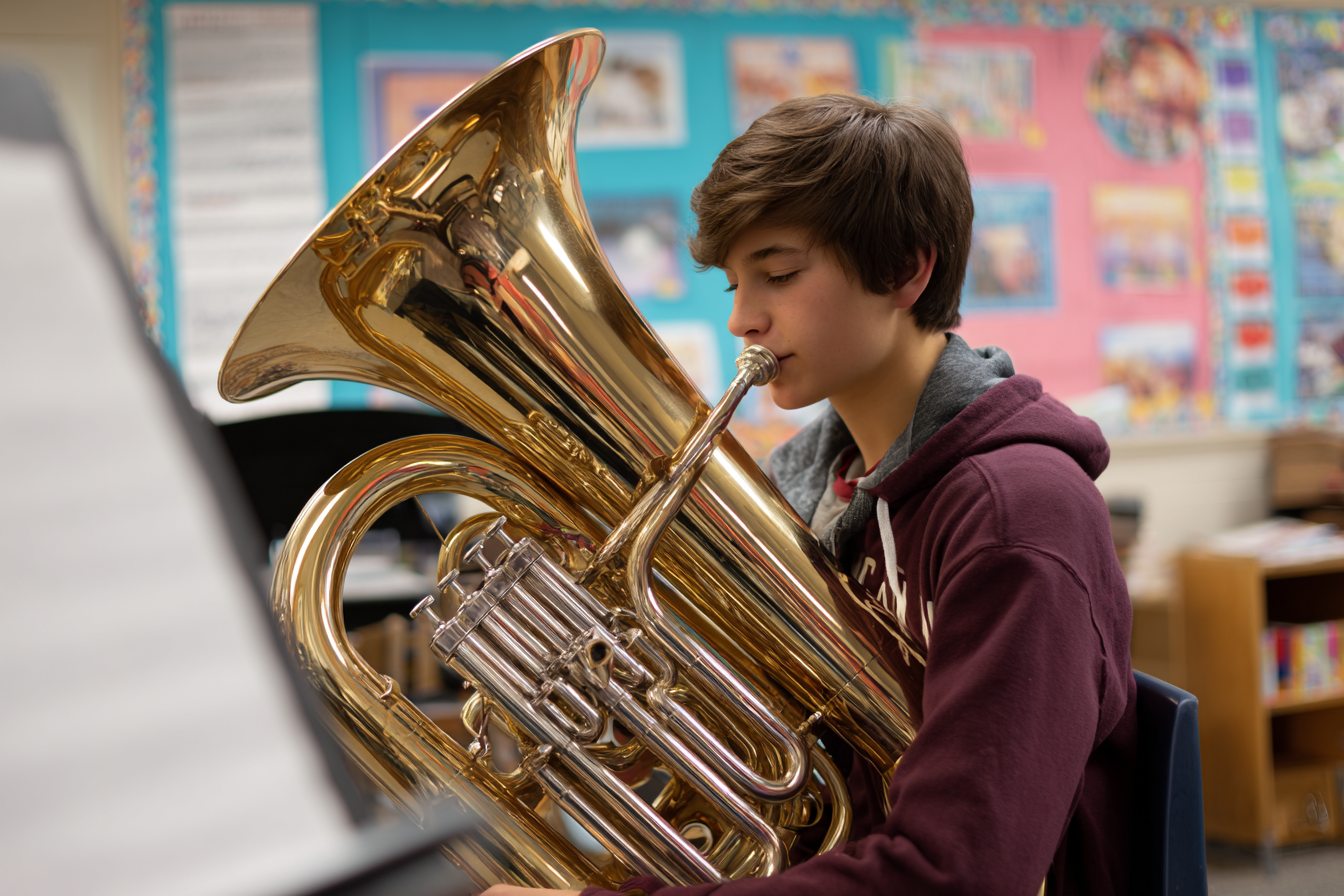
Focus: Apply articulations (legato, staccato, marcato, accents, slurs) to match musical style and character, and explain how articulation, tone color, and style shape the meaning of band music.
Grade Level: 8
Subject Area: Band (Interpretation • Articulation & Style • Listening & Analysis)
Total Unit Duration: 5 sessions (one week), 50–60 minutes per session
I. Introduction
Students build on their tone and rhythm skills by focusing on articulation and style—how each note is started, shaped, and released to fit the music’s character. They learn to distinguish and perform legato, staccato, marcato, accented, and slurred articulations, and to connect them with styles such as march, lyrical, and fanfare. Through listening, comparison, and performance, students discover how articulation, dynamics, phrasing, tempo, and instrumentation work together to create meaning in band music.
Essential Questions
- How do articulation choices (legato, staccato, accents, etc.) change the character and mood of a passage?
- How do articulation, dynamics, phrasing, tempo, and style work together to shape our interpretation of a piece?
- In what ways do instrumentation and tone color affect how articulations sound in different sections (woodwinds, brass, percussion)?
- How can we match our articulation and style to the composer’s markings and the conductor’s interpretation?
- What habits will help us apply consistent, style-appropriate articulations in all of our band music, not just exercises?
II. Objectives and Standards
Learning Objectives — Students will be able to:
- Define and demonstrate the basic articulations (legato, staccato, marcato, accent, slur, tenuto) on their instrument in isolation and in context.
- Explain how articulation, dynamics, phrasing, tempo, and style combine to create different interpretations of the same passage.
- Perform short excerpts in at least two contrasting styles (e.g., march vs. lyrical) and adjust articulation to fit each style appropriately.
- Listen to recordings and live performance examples and describe how articulation, tone color, and style contribute to the meaning and mood of the music.
- Apply accurate, consistent articulations to current repertoire, matching section and full ensemble style.
- Create and complete a brief “Style Snapshot” for one piece, identifying its key articulation and style features and how they shape performance choices.
Standards Alignment — 8th Grade Band (custom, NAfME-style)
- BD:Pr4.8c — Explain and demonstrate how articulation, dynamics, phrasing, tempo, and style influence interpretation in band music.
- Example: Students perform the same passage legato and marcato, explaining which fits the style.
- BD:Re7.8b — Explain how instrumentation, tone color, articulation, and style contribute to meaning in band music.
- Example: Students explain how brass and woodwind tone colors create contrast in a march.
Success Criteria — Student Language
- I can name and perform basic articulations (legato, staccato, marcato, accents, slurs, tenuto) on my instrument.
- I can explain how changing articulation, dynamics, and tempo changes the mood and style of a passage.
- I can match my articulation to a given style (march, lyrical, fanfare, etc.) and stay consistent with my section.
- I can listen to a piece and describe how articulation, tone color, and instrumentation shape its meaning.
- I can apply accurate articulations to our band music and explain why those choices fit the style.
- I can fill out a Style Snapshot that clearly describes how we should play a piece to match its character.