Unit Plan 1 (Grade 8 Band): Band Culture & Leadership
Grade 8 band unit on rehearsal expectations, leadership roles, professionalism, and shared responsibility to build a focused, collaborative ensemble culture.

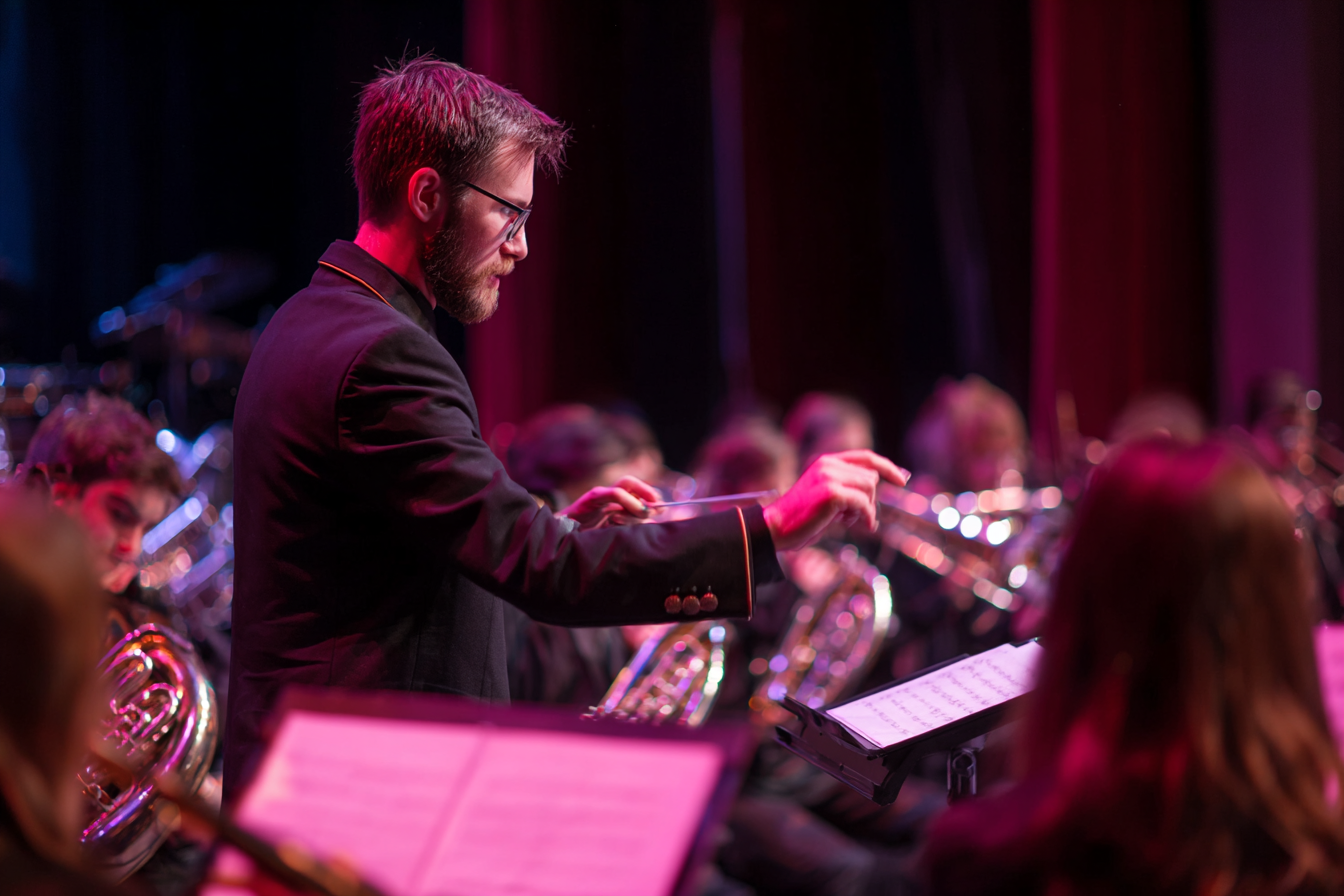
Focus: Establish rehearsal expectations, leadership roles, and ensemble responsibility so that students demonstrate professionalism, focus, and shared ownership of the band’s success.
Grade Level: 8
Subject Area: Band (Ensemble Skills • Rehearsal Technique • Leadership & Connections)
Total Unit Duration: 5 sessions (one week), 50–60 minutes per session
I. Introduction
Students begin the year by shaping the culture of the 8th grade band. Rather than just being told rules, they participate in defining rehearsal expectations, exploring leadership roles (section leaders, equipment managers, mentors), and practicing behaviors that support a focused, respectful, and productive ensemble. They connect their own interests, experiences, and goals to their identity as band musicians and emerging leaders, considering how their choices impact both personal growth and the group’s success.
Essential Questions
- What does a professional, focused band rehearsal look, sound, and feel like?
- How can individual leadership and responsibility make the entire ensemble stronger?
- In what ways do my personal interests and goals shape the kind of band member and leader I want to be?
- How can we support each other in rehearsal through positive collaboration, peer feedback, and shared expectations?
- What habits and systems do we need in place now to help us reach our performance goals later in the year?
II. Objectives and Standards
Learning Objectives — Students will be able to:
- Describe and help create clear rehearsal expectations for focus, participation, and behavior in 8th grade band.
- Demonstrate professionalism in rehearsal (on-time setup, posture, attention to the conductor, appropriate responses to feedback).
- Identify and practice leadership roles within the band (e.g., section leader, equipment leader, attendance/cleanup helper, peer mentor).
- Collaborate respectfully with peers by giving and receiving constructive feedback and modeling positive rehearsal habits.
- Reflect on how their personal interests, past experiences, and future goals connect to their role in band and to potential leadership opportunities.
- Contribute to a short Band Culture & Leadership Agreement that outlines shared responsibilities and commitments for the ensemble.
Standards Alignment — 8th Grade Band (custom, NAfME-style)
- BD:Pr6.8b — Demonstrate leadership, focus, and professionalism in rehearsal and performance, including respectful collaboration and peer support.
- Example: Students lead section warm-ups and model rehearsal expectations.
- BD:Cn10.8a — Explain how personal interests, experiences, and goals influence musical choices, growth, and leadership as a band musician.
- Example: Students reflect on how band participation supports their confidence or leadership skills.
Success Criteria — Student Language
- I can explain what professional rehearsal behavior looks like and show it in class.
- I can take on a leadership role (small or large) and support my section or the full band.
- I can collaborate respectfully, including giving and receiving feedback without putting others down.
- I can say how my own interests and goals connect to being in band and how I might grow as a leader.
- I can help create and follow a Band Culture & Leadership Agreement that supports our ensemble.
III. Materials and Resources
Tasks & Tools (teacher acquires/curates)
- Band setup resources:
- Chairs/stands arranged in ensemble formation; access to storage and percussion equipment.
- Whiteboard or chart paper for brainstorming expectations and leadership roles.
- Culture & leadership tools:
- Sample or blank Band Culture & Leadership Agreements for students to co-create norms.
- Short scenarios or role-play cards showing common rehearsal challenges (e.g., side conversations, unprepared parts, late setup).
- Reflection sheets or journals for goal-setting and “My Role in the Band” prompts.
- Music materials:
- Simple ensemble warm-ups (long tones, chorales, rhythm exercises) suitable for early-year playing.
- A short, accessible piece or excerpt to practice rehearsal behaviors rather than accuracy alone.
- Graphic organizers:
- “Band Roles & Responsibilities” chart (conductor, section leaders, individual players, support roles).
- “Personal Goals & Band Leadership” organizer linking interests/strengths to possible contributions.
Preparation
- Decide on preliminary non-negotiable expectations (safety, respect, basic start/end procedures) and areas where students can co-create norms.
- Prepare a simple leadership role menu (e.g., section leader, attendance, equipment, music librarian, tech lead, morale/communications).
- Develop a short Band Culture survey or quick-write to use later for reflection.
- Create or adapt a rubric for rehearsal professionalism and leadership behaviors linked to BD:Pr6.8b and BD:Cn10.8a.
Common Misconceptions to Surface
- “Leadership is only for the loudest or most advanced players.” → Leadership can be quiet, supportive, and shared; everyone can lead in some way.
- “Band rules are just about getting in trouble.” → Expectations are about creating a safe, focused environment where everyone can grow.
- “My individual habits don’t really affect the ensemble.” → One person’s preparation, focus, or distraction can significantly impact the group.
- “I have to be perfect to be a leader.” → Leaders are learners who model effort, responsibility, and growth, not perfection.
Key Terms (highlight in lessons) band culture, rehearsal expectations, professionalism, leadership, section leader, ensemble, collaboration, peer feedback, responsibility, goal-setting
IV. Lesson Procedure
(Each day follows: Launch → Explore → Discuss → Reflect. Timing for a 50–60 minute block.)
Session 1 — What Kind of Band Do We Want to Be? (BD:Pr6.8b)
- Launch (6–8 min)
- Quick silent observation: students enter and set up as usual; teacher notes what goes smoothly and what is confusing.
- Ask: “If a professional band watched our setup and rehearsal today, what would they notice that is strong? What would they suggest we improve?”
- Explore (22–25 min)
- As a class, brainstorm positive rehearsal behaviors and write them on the board (setup, posture, focus, listening, response to cut-offs, phones away, etc.).
- Sort the list into categories (e.g., Before rehearsal, During rehearsal, After rehearsal).
- Do a short playing activity (simple warm-up or chorale) and intentionally practice 2–3 of the behaviors (e.g., ready position on cue, silent listening to instructions, eyes up).
- Pause mid-activity to highlight examples of professionalism already visible.
- Discuss (10–12 min)
- Whole-group: which expectations feel most important for our band this year?
- Begin drafting the Band Culture & Leadership Agreement (version 1) with 5–7 core expectations (teacher records).
- Reflect (5 min)
- Exit slip: “One rehearsal behavior I already do well is ___, and one I want to improve is ___ because ___.”
Session 2 — Leadership Roles & Ensemble Responsibility (BD:Pr6.8b)
- Launch (6–8 min)
- Show a short anecdote or describe a rehearsal where student leaders made the ensemble run smoothly (e.g., section leader running warm-ups, someone quietly helping with setup).
- Ask: “What jobs or roles do you think need to exist in our band for us to be successful?”
- Explore (22–25 min)
- Introduce the Band Roles & Responsibilities chart:
- Conductor, section leaders, individual players, percussion/equipment leads, attendance/organization helpers, etc.
- In small sections, students brainstorm which leadership roles are most needed and what each role does before, during, and after rehearsal.
- Each student chooses at least one current role (small or large) they are willing to try (e.g., “I will be our row’s tuner/checker,” “I will help with stand stacking at the end”).
- Brief, low-stakes practice:
- Section leaders or volunteers lead a 30–60 second warm-up (breathing, counting, unison rhythm) while others model focus.
- Introduce the Band Roles & Responsibilities chart:
- Discuss (10–12 min)
- Groups share one leadership role and how it supports band culture.
- Add a section on Leadership & Shared Responsibility to the Band Culture & Leadership Agreement (version 2).
- Reflect (5 min)
- Quick write: “A leadership role that fits me is ___ because I am good at ___ or want to grow in ___. This will help our band by ___.”
Session 3 — My Story, My Goals: Personal Connections to Band (BD:Cn10.8a)
- Launch (6–8 min)
- Prompt: “Think back to why you joined band and why you’re still here. How has that reason changed (or stayed the same)?”
- Explore (22–25 min)
- Students complete a “Personal Goals & Band Leadership” organizer that includes:
- Why I joined band / why I’m still in band.
- One or two musical goals (ex: better tone, audition for honor band, improvise, read harder music).
- One or two personal/leadership goals (ex: more confident, better teammate, more responsible).
- Small group share: students talk with 2–3 peers about their goals and how band can help them reach those goals.
- Short playing activity that emphasizes responsibility (e.g., students count off entrances, lead a breathing or articulation pattern).
- Students complete a “Personal Goals & Band Leadership” organizer that includes:
- Discuss (10–12 min)
- Whole-group: how do our individual goals connect to the band’s goals (concert quality, festival ratings, pride in performance)?
- Discuss how understanding our own interests/goals can guide what kind of leaders we become in band (quiet leaders, musical leaders, organizational leaders, etc.).
- Reflect (5 min)
- Exit slip: “One way my personal goals connect to being a band leader (now or in the future) is ___.”
Session 4 — Modeling Professional Rehearsal Behaviors (BD:Pr6.8b)
- Launch (5–7 min)
- Show or describe two short contrasting rehearsal moments: one distracted and one professional.
- Ask: “What specific choices did the students make in each example? How did those choices affect the ensemble?”
- Explore (25–30 min)
- Revisit the Band Culture & Leadership Agreement; choose 3–4 expectations to focus on for this session (e.g., starting on time, eyes up, silence during instructions, positive responses to mistakes).
- Run a rehearsal block (10–15 minutes) on warm-ups or a short piece, with students tracking how well the ensemble meets the focus expectations (e.g., tally marks on the board, quick ratings after each run).
- Rotate small leadership moments:
- A student leads count-offs, another cues dynamic changes, another reminds the group of a focus expectation.
- Discuss (10–12 min)
- Reflect as a class: which expectations are we already strong in? Where do we still need work?
- Connect behaviors back to BD:Pr6.8b (leadership, focus, professionalism, collaboration).
- Revise or finalize the Band Culture & Leadership Agreement (version 3).
- Reflect (5 min)
- Quick write: “Today our band did well at ___, and we still need to improve at ___. I personally contributed by ___.”
Session 5 — Band Culture & Leadership Agreements (BD:Pr6.8b • BD:Cn10.8a)
- Launch (5–7 min)
- Share the near-final Band Culture & Leadership Agreement aloud.
- Ask: “If we truly follow this agreement all year, how will our band feel different in November or March compared to now?”
- Explore (25–30 min)
- Students, in small groups, create a Band Culture & Leadership One-Pager or mini-poster that includes:
- 3–5 key expectations from the agreement.
- At least one example of a leadership role or behavior that supports each expectation.
- A brief statement about how their own personal goals connect to this culture.
- Groups share posters with the class; posters can be displayed in the band room as visual reminders.
- Optional short playing segment where students intentionally demonstrate 1–2 expectations in real time (e.g., instant quiet on cue, quick setup, strong eye contact with conductor).
- Students, in small groups, create a Band Culture & Leadership One-Pager or mini-poster that includes:
- Discuss (10–12 min)
- Whole-group: Which parts of our agreement will be easiest to maintain? Which will be hardest?
- Discuss strategies (like leadership roles, reminders, self-checks) for holding each other accountable without shaming.
- Reflect (5 min)
- Final reflection: “One commitment I am making to our band culture is ___, and one way I plan to grow as a leader in this ensemble is ___.”
V. Differentiation and Accommodations
Advanced Learners
- Encourage students with more experience to take on structured leadership roles, such as planning a short sectional warm-up, mentoring a younger player, or helping maintain rehearsal logs.
- Ask them to design a leadership project (e.g., organizing a practice challenge, creating a ‘practice tips’ document for the band).
- Have them reflect more deeply on how leadership in band connects to other areas (sports, clubs, jobs) and draft a short written piece or presentation.
Targeted Support
- Provide explicit examples and non-examples of leadership behaviors (e.g., what constructive feedback sounds like versus criticism).
- Use sentence frames for participation:
- “I notice that when we ___, it helps our rehearsal because ___.”
- “I can help our band by ___ before rehearsal and ___ during rehearsal.”
- Offer opportunities for smaller leadership roles (e.g., row leader, pencil manager, music folder helper) for students who may not be ready for visible roles like section leader.
Multilingual Learners
- Provide a visual glossary for key terms (leader, responsibility, culture, respect, focus, feedback).
- Allow students to first respond to reflection prompts in their home language, then support them in translating key ideas into English.
- Use pair and small-group talk before whole-group share-outs, so students can rehearse their ideas with peers.
- Encourage the use of icons, diagrams, and short phrases on Band Culture posters instead of long text.
IEP/504 & Accessibility
- Break tasks into small, clear steps with checklists (listen → discuss → write → share).
- Provide printed copies of the Band Culture & Leadership Agreement in accessible formats (large print, clear fonts).
- Offer alternative ways to show leadership (e.g., managing music folders, being a tech helper, quietly mentoring a neighbor) for students who may be uncomfortable in front-facing roles.
- Allow oral or recorded reflections if writing stamina is a barrier.
VI. Assessment and Evaluation
Formative Checks (daily)
- Session 1 — Student responses and behavior in rehearsal show emerging understanding of professional expectations.
- Session 2 — Students can name and take on at least one leadership role or responsibility, even at a small scale.
- Session 3 — Personal goal organizers demonstrate that students can link their own interests and goals to band participation.
- Session 4 — Observations during rehearsal reveal improved focus, professionalism, and peer support, with students referencing the agreement.
- Session 5 — Band Culture & Leadership posters and reflections show that students understand and commit to shared expectations.
Summative — Band Culture & Leadership Portfolio (0–2 per criterion, total 10)
- Understanding of Rehearsal Professionalism (BD:Pr6.8b)
- 2: Clearly describes and consistently demonstrates professional rehearsal behaviors; can explain why they matter for the ensemble.
- 1: Shows partial understanding; sometimes demonstrates expectations but with inconsistency.
- 0: Limited understanding or frequent disregard of expectations.
- Leadership & Collaboration (BD:Pr6.8b)
- 2: Takes on leadership or support roles and collaborates respectfully (helping peers, modeling behavior, offering constructive feedback).
- 1: Occasionally participates in leadership or collaboration but needs reminders or support.
- 0: Rarely contributes to leadership or collaborative efforts; may disrupt or withdraw.
- Personal Connections & Reflection (BD:Cn10.8a)
- 2: Thoughtfully explains how personal interests, experiences, and goals connect to band participation and leadership growth.
- 1: Makes some connection but in a general or brief way.
- 0: Little or no reflection on personal connection to band or leadership.
- Band Culture & Leadership Agreement Contribution
- 2: Contributes specific, constructive ideas to the Band Culture & Leadership Agreement and can explain its purpose.
- 1: Participates minimally or only echoes others’ ideas; general understanding of the agreement.
- 0: Does not engage meaningfully with the agreement process.
- Communication & Key Terms
- 2: Uses key terms (e.g., professionalism, leadership, responsibility, collaboration) correctly in discussions and reflections; communicates clearly.
- 1: Mostly understandable but with some misuse or absence of key terms.
- 0: Hard to follow; key terms largely absent or misused.
Feedback Protocol (TAG)
- Tell one strength (e.g., “You consistently help your section stay focused during tuning.”).
- Ask one question (e.g., “What is one new leadership role you’d be willing to try later this semester?”).
- Give one suggestion (e.g., “Try arriving at your seat with your stand and music ready 2 minutes earlier to model preparation.”).
VII. Reflection and Extension
Reflection Prompts
- What part of our Band Culture & Leadership Agreement do you think will have the biggest impact on our sound and performances? Why?
- How do you see yourself as a leader in band right now? How might that change by the end of the year?
- How can the habits we build in band (focus, responsibility, collaboration) transfer to other parts of your life (school, home, activities)?
Extensions
- Band Culture Ambassadors: Choose a small group of students to design a short presentation or video about band culture and leadership to share with younger ensembles or incoming band members.
- Leadership Journals: Throughout the semester, have students periodically reflect on moments when they showed leadership or observed it in others and how it affected rehearsal.
- Goal Check-In: Revisit personal goals mid-quarter and at the end of the semester; students update how band participation has supported their musical and leadership growth and set new targets.
Standards Trace — When Each Standard Is Addressed
- BD:Pr6.8b — Sessions 1–2, 4–5 (defining and practicing professional rehearsal expectations; exploring leadership roles and ensemble responsibility; modeling leadership and focus during rehearsal and in the Band Culture & Leadership Agreement).
- BD:Cn10.8a — Sessions 3–5 (reflecting on personal interests, experiences, and goals; connecting them to band participation and leadership; integrating personal goals into the Band Culture & Leadership posters and reflections).