Unit Plan 6 (Grade 8 Band): Ensemble Balance & Blend
Grade 8 band unit on balance, blend, intonation, dynamics, and rehearsal strategies to improve ensemble listening, section roles, and performance precision.

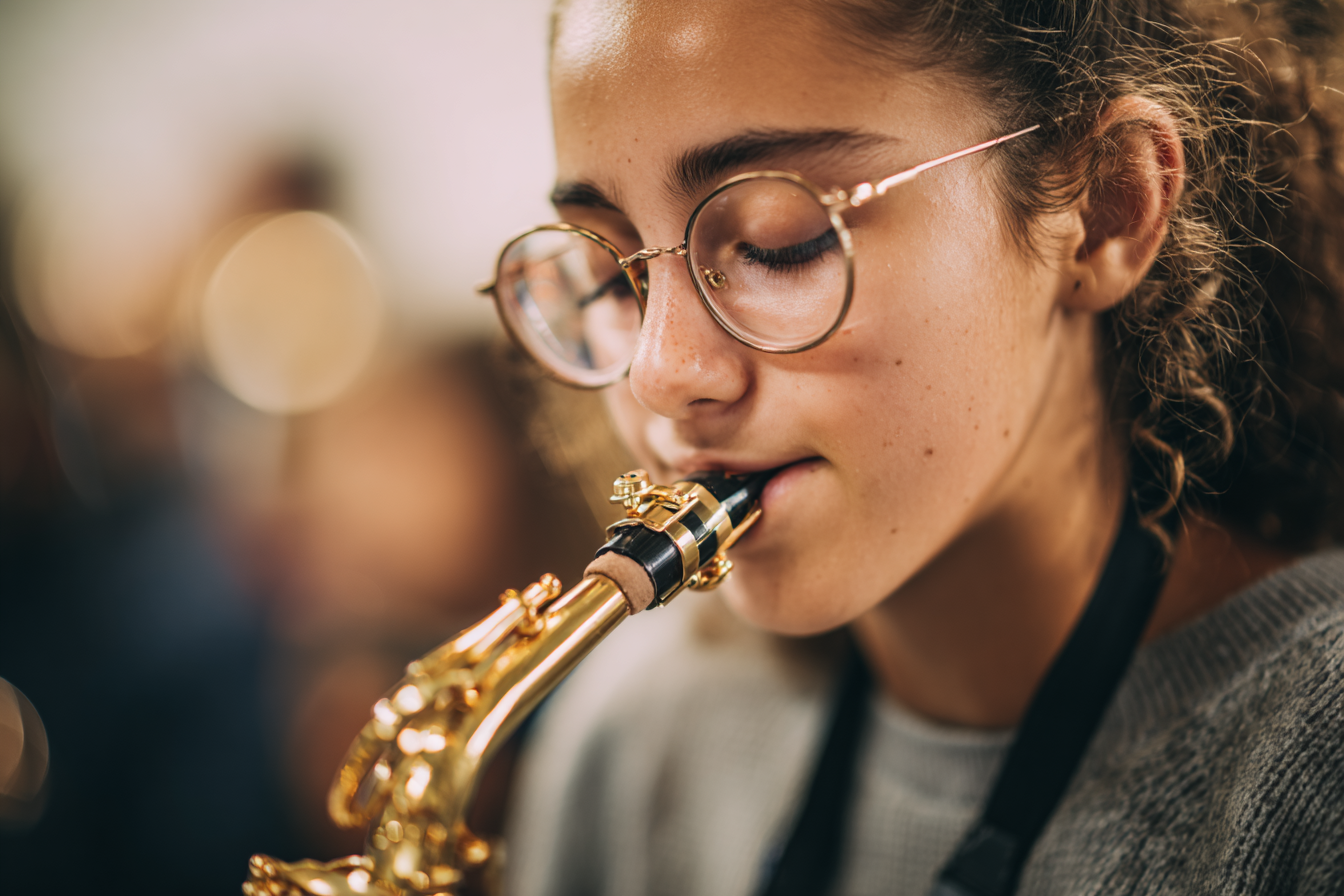
Focus: Adjust volume and tone to achieve a balanced, blended ensemble sound, using effective rehearsal strategies to improve individual accuracy, balance, blend, intonation, and rhythmic precision.
Grade Level: 8
Subject Area: Band (Ensemble Skills • Listening & Tone • Rehearsal Techniques)
Total Unit Duration: 5 sessions (one week), 50–60 minutes per session
I. Introduction
Students learn to think like ensemble musicians, not just individual players. The focus is on listening across the band, adjusting dynamics, tone color, and balance, and using rehearsal strategies (isolation, slow practice, looping) to improve tricky passages. They explore ideas like pyramid of sound, melody vs. accompaniment, and inner voices, connecting these to clear, musical performance. By the end of the unit, students can describe and apply strategies for achieving better balance, blend, intonation, and rhythmic precision in full band.
Essential Questions
- What does a balanced, blended ensemble sound like, and how is it different from everyone just playing “their part”?
- How can I adjust my volume and tone to support the melody, inner voices, and bass line?
- What rehearsal strategies help us fix issues with balance, blend, intonation, and rhythm more efficiently?
- How does listening across the band (not just to myself) change the way I play?
- How can improving our ensemble sound change the way an audience experiences our music?
II. Objectives and Standards
Learning Objectives — Students will be able to:
- Describe and demonstrate the difference between balanced vs. unbalanced ensemble sound and blended vs. mismatched tone.
- Adjust dynamic levels and tone color to support different roles (melody, harmony, bass line, accompaniment) in a piece.
- Use specific rehearsal strategies (e.g., isolating measures, slow practice, looping, sectional work) to improve ensemble balance, blend, intonation, and rhythmic precision.
- Listen and respond in real time by changing volume, attack, and tone to match their section and the full band.
- Identify moments in repertoire where balance or blend is especially important and explain how they improved those spots.
- Set at least one personal ensemble sound goal (e.g., better listening, matching tone, controlling dynamics) and track progress.
Standards Alignment — 8th Grade Band (custom, NAfME-style)
- BD:Pr5.8a — Apply effective rehearsal strategies to improve individual accuracy, ensemble balance, blend, intonation, and rhythmic precision.
- Example: Students isolate difficult measures, rehearse slowly, then reintegrate into full ensemble.
Success Criteria — Student Language
- I can hear when our band sound is balanced and blended and when it isn’t.
- I can adjust my volume and tone to help the melody stand out and the accompaniment support.
- I can name and use at least two rehearsal strategies (like isolating measures or slowing down) to fix ensemble problems.
- I can listen across the band and make instant changes to my playing (louder/softer, darker/brighter, shorter/longer) to match.
- I can point to a spot in our music where our balance and blend improved and explain what we changed.
- I can describe one ensemble goal I’m working on and what I’m doing to get better.