Unit Plan 11 (Grade 8 Band): Instrumental Improvisation
Grade 8 band improv unit on creating melodic and rhythmic ideas with pitch sets, groove, and style to build confidence, creativity, and musical expression.

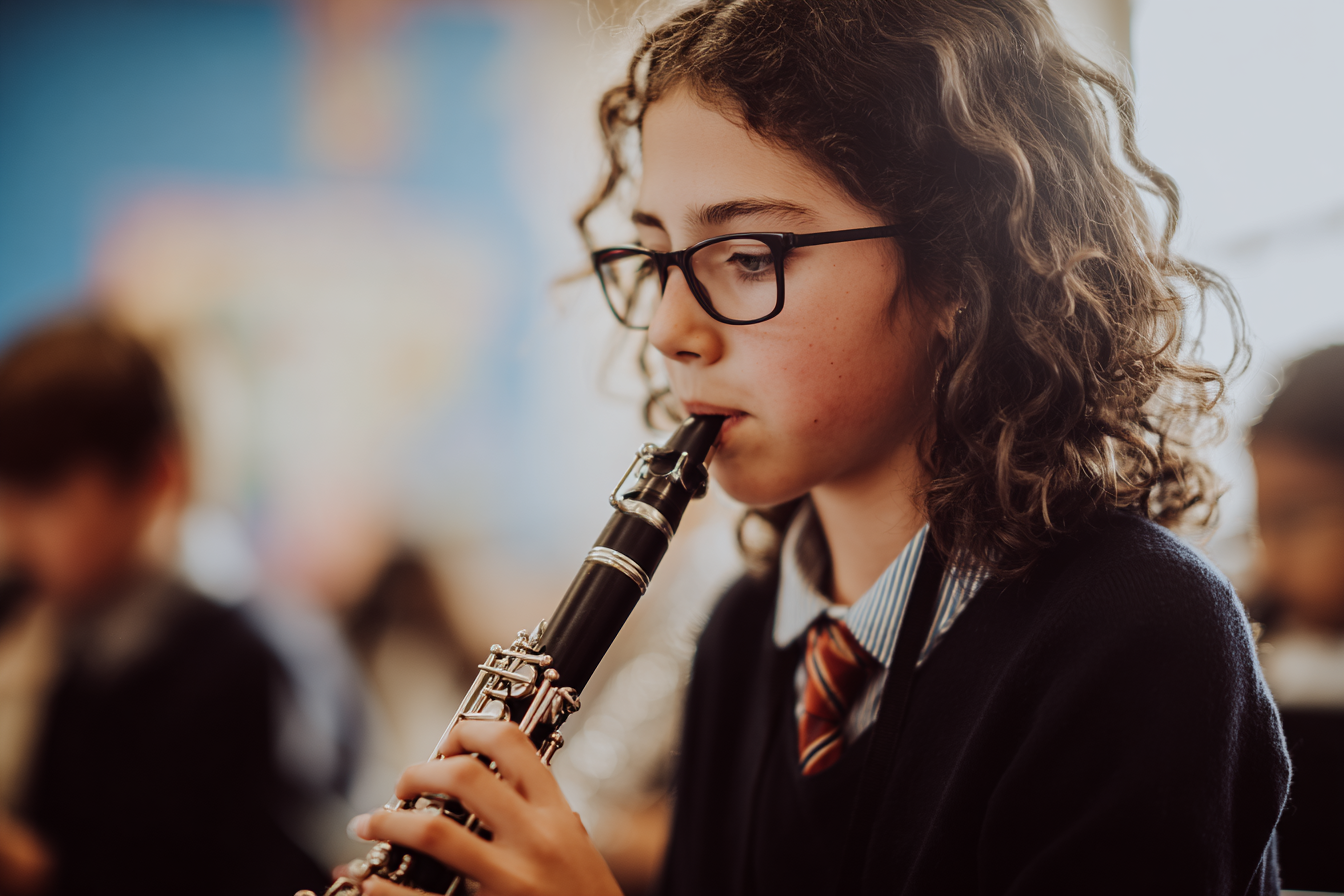
Focus: Improvise melodic and rhythmic ideas on band instruments using appropriate pitch sets, rhythms, and articulations to match a given expressive goal or style.
Grade Level: 8
Subject Area: Band (Creating & Improvising • Aural Skills • Style & Expression)
Total Unit Duration: 5 sessions (one week), 50–60 minutes per session
I. Introduction
Students explore instrumental improvisation as a way to create music in the moment, rather than only reading what is written. They begin with simple rhythmic ideas and limited pitch sets (such as concert B♭ scale notes or pentatonic patterns) and gradually work toward short improvised phrases that match a given style (e.g., bluesy, mysterious, bold) and backing groove. Through call-and-response, guided practice, and supportive class norms, students learn that improvisation is about listening, experimenting, and expressing an idea—not about perfection.
Essential Questions
- What does it mean to improvise music, and how is it different from (and connected to) reading written music?
- How can a limited pitch set and a simple rhythmic pattern help me feel safer and more confident improvising?
- How do style and expressive goals (bold, calm, mysterious, playful) affect the rhythms, pitches, and articulations I choose?
- How can listening and call-and-response help me create improvised ideas that fit with the ensemble?
- What habits and attitudes do I need to improvise with courage, respect, and creativity in band class?
II. Objectives and Standards
Learning Objectives — Students will be able to:
- Describe in their own words what improvisation is and identify basic expectations for respectful, low-risk improv in class.
- Improvise short rhythmic patterns that fit a given pulse and style using a small set of notes (e.g., 1 or 2 scale tones).
- Improvise simple melodic phrases using a defined pitch set (e.g., first 5 notes of the concert B♭ scale, pentatonic or blues notes) that match a given expressive goal (e.g., bold, calm, mysterious).
- Participate in call-and-response activities, echoing and then creating their own ideas in time with a backing groove or band vamp.
- Use appropriate articulations, dynamics, and tone to support the chosen style while improvising.
- Reflect on their progress and identify at least one personal strategy (e.g., “start simple,” “breathe and listen,” “repeat a motif”) that helps them improvise more confidently.
Standards Alignment — 8th Grade Band (custom, NAfME-style)
- BD:Cr1.8a — Improvise rhythmic and melodic ideas on their instrument using appropriate pitch sets, rhythms, and articulations to match a given expressive goal or style.
- Example: Students improvise a short melodic phrase using a concert B♭ scale to sound “bold” or “mysterious.”
Success Criteria — Student Language
- I can explain what improvisation is and follow our class norms to keep it respectful and low-pressure.
- I can improvise a short rhythmic pattern that stays in time with the beat.
- I can improvise a melodic idea using a few specific notes (our improv scale) that fits a style or emotion.
- I can listen first, then respond with an idea that makes sense with the groove or call I just heard.
- I can use articulation and dynamics to make my improvised phrase sound more expressive and style-appropriate.
- I can name at least one strategy that helps me feel more confident when improvising.