Unit Plan 8 (Grade 8 Band): Rehearsal Strategy Refinement
Grade 8 band unit on rehearsal strategies, using recordings and feedback to set goals, track progress, and improve ensemble performance.

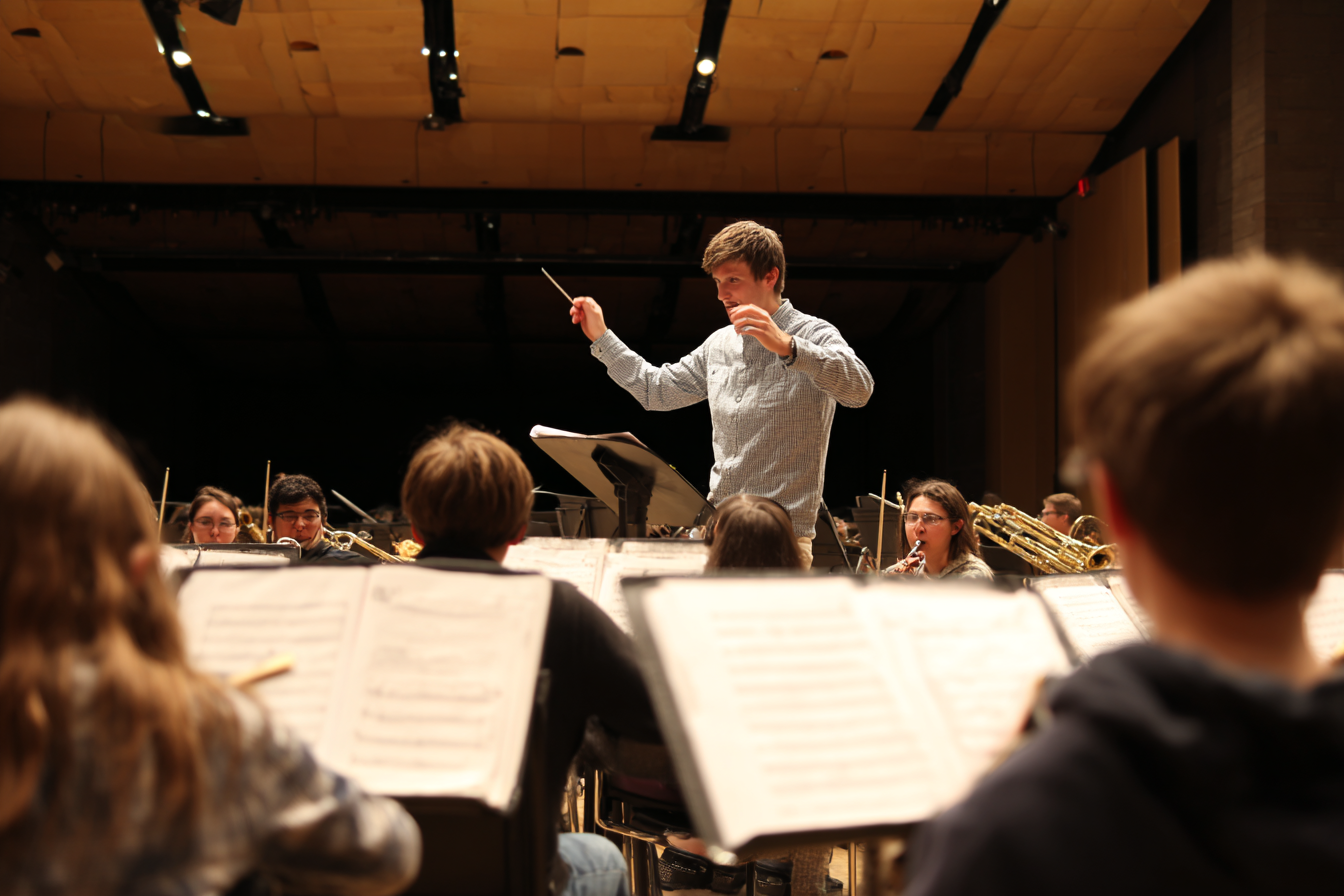
Focus: Apply sectional and targeted rehearsal techniques to solve musical challenges and use feedback and recordings to set goals, track progress, and improve performance quality over time.
Grade Level: 8
Subject Area: Band (Rehearsal Techniques • Feedback & Reflection • Ensemble Improvement)
Total Unit Duration: 5 sessions (one week), 50–60 minutes per session
I. Introduction
Students zoom out from “just playing the notes” to focus on how to rehearse effectively as a mature ensemble. They learn a toolkit of rehearsal strategies—isolating trouble spots, slowing down, looping, sectional work—and practice choosing the right tool for specific problems in balance, blend, intonation, rhythm, and style. They also learn to use recordings, teacher feedback, and peer feedback to set specific, measurable goals and monitor their growth over time. By the end of the unit, students think like co-rehearsal leaders, not just players following directions.
Essential Questions
- What makes a rehearsal efficient and effective instead of just “playing it again”?
- How can different rehearsal strategies (isolate, slow down, loop, sectional work) help us solve specific problems in balance, blend, intonation, and rhythm?
- How can teacher and peer feedback plus recordings help us set realistic goals and actually improve?
- What does it look like when students take responsibility for ensemble improvement, not just the conductor?
- How do we know if our rehearsal today moved us forward toward performance goals?
II. Objectives and Standards
Learning Objectives — Students will be able to:
- Identify common performance challenges (e.g., rhythmic precision, balance, blend, intonation, style) and match them with appropriate rehearsal strategies.
- Use at least two targeted rehearsal strategies (e.g., isolate, slow down, loop, sectional work) to improve a specific passage in band repertoire.
- Participate effectively in sectional rehearsals, including diagnosing issues, suggesting strategies, and listening for improvement.
- Use teacher and peer feedback to revise their playing in a specific area (tone, rhythm, articulation, etc.).
- Listen to rehearsal recordings and complete a short analysis identifying strengths, weaknesses, and next-step goals.
- Set and track at least one personal rehearsal goal and one ensemble goal, revisiting them over multiple rehearsals.
Standards Alignment — 8th Grade Band (custom, NAfME-style)
- BD:Pr5.8a — Apply effective rehearsal strategies to improve individual accuracy, ensemble balance, blend, intonation, and rhythmic precision.
- Example: Students isolate difficult measures, rehearse slowly, then reintegrate into full ensemble.
- BD:Pr5.8b — Use teacher and peer feedback, along with recordings, to set goals, track progress, and improve performance quality over time.
- Example: Students review a rehearsal recording and set a personal tone or rhythm goal.
Success Criteria — Student Language
- I can name and use specific rehearsal strategies (like “loop this measure” or “slow this down with a metronome”) instead of just saying “let’s play it again.”
- I can help my section diagnose a problem (rhythm, notes, balance, etc.) and suggest a strategy to fix it.
- I can listen to feedback from my teacher and peers and make a visible change in my playing.
- I can use a recording of our band to notice what is strong and what still needs work.
- I can write down and track at least one personal rehearsal goal and one ensemble goal over this week.