Unit Plan 17 (Grade 8 Band): Rehearsing Created Music
Rehearsal-focused Grade 8 band unit using chunking, looping, metronome/tuner work, and recordings to improve accuracy, rhythm, balance/blend, and intonation while setting goals from feedback.

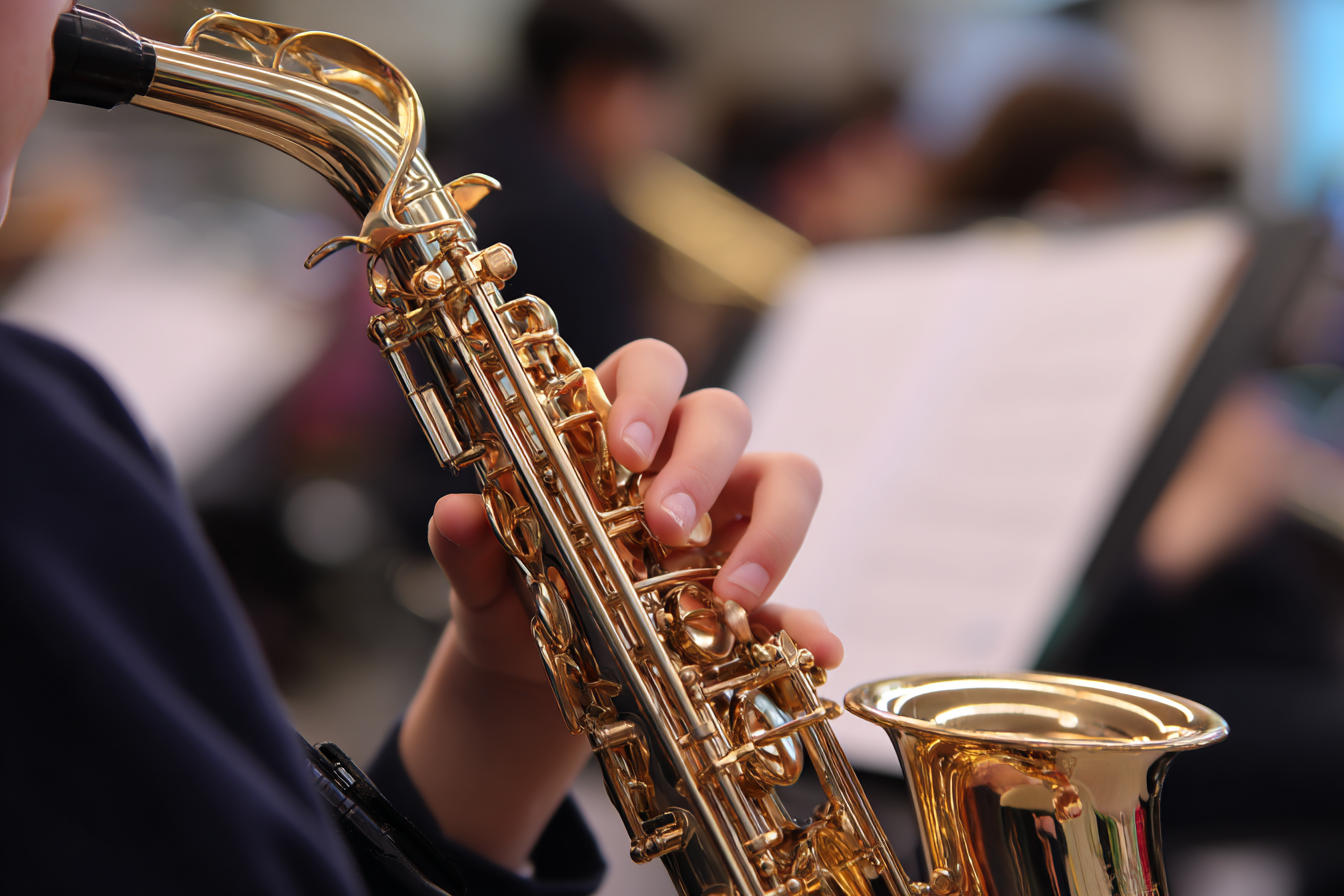
Focus: Rehearse original or arranged band pieces using effective rehearsal strategies, feedback, and recordings to improve accuracy, balance, blend, intonation, and rhythmic precision.
Grade Level: 8
Subject Area: Band (Preparing & Refining • Rehearsal Technique • Goal Setting & Feedback)
Total Unit Duration: 5 sessions (one week), 50–60 minutes per session
I. Introduction
Students shift from writing and notating music to rehearsing their own creations like a real ensemble. Using short original pieces or student arrangements (from earlier units or simple new projects), they practice targeted rehearsal strategies instead of just “running it again.” They learn to diagnose problems, chunk and loop difficult spots, adjust balance and intonation, and use recordings and feedback to refine their performance. By the end of the unit, students can explain and demonstrate how specific rehearsal choices lead to better ensemble results.
Essential Questions
- What makes a rehearsal efficient and productive, rather than just repeating the same mistakes?
- How can we use strategies like chunking, slowing down, and looping to improve accuracy and rhythm in created music?
- In what ways do balance, blend, and intonation affect how our original or arranged pieces sound to a listener?
- How can teacher and peer feedback and rehearsal recordings help us set goals and track improvement over time?
- How does rehearsing our own music change the way we think about composing, arranging, and performing?
II. Objectives and Standards
Learning Objectives — Students will be able to:
- Identify specific problem spots (accuracy, rhythm, balance, intonation) within a short original or arranged band piece.
- Apply effective rehearsal strategies—such as slowing the tempo, isolating measures, looping, counting/clapping rhythms, and sectional work—to improve individual and ensemble performance.
- Adjust dynamics, balance, and intonation to support clear melody, accompaniment, and overall blend.
- Use teacher and peer feedback, along with simple rehearsal recordings, to set personal and ensemble goals and monitor progress.
- Document rehearsal plans and strategy choices, and explain how these strategies improved a specific passage.
- Perform an original or arranged piece at the end of the unit with improved accuracy, ensemble cohesion, and expressive clarity.
Standards Alignment — 8th Grade Band (custom, NAfME-style)
- BD:Pr5.8a — Apply effective rehearsal strategies to improve individual accuracy, ensemble balance, blend, intonation, and rhythmic precision.
- Example: Students isolate difficult measures, rehearse slowly, then reintegrate into full ensemble.
- BD:Pr5.8b — Use teacher and peer feedback, along with recordings, to set goals, track progress, and improve performance quality over time.
- Example: Students review a rehearsal recording and set a personal tone or rhythm goal.
Success Criteria — Student Language
- I can find specific measures in our created music that need work and say why (rhythm, notes, balance, intonation).
- I can use strategies like slowing down, looping, and chunking to fix those spots instead of just playing them over and over.
- I can help my section adjust dynamics and balance so the melody and important lines come through clearly.
- I can listen to a rehearsal recording, notice improvements and problems, and set clear goals for the next rehearsal.
- I can explain in simple language which rehearsal strategies helped our piece improve the most and how.