Unit Plan 3 (Grade 8 Band): Tone Quality & Consistency
Build characteristic tone and listening skills in Grade 8 band as students refine sound across registers, adjust blend/balance, and analyze how tone color, articulation, and style shape musical meaning.

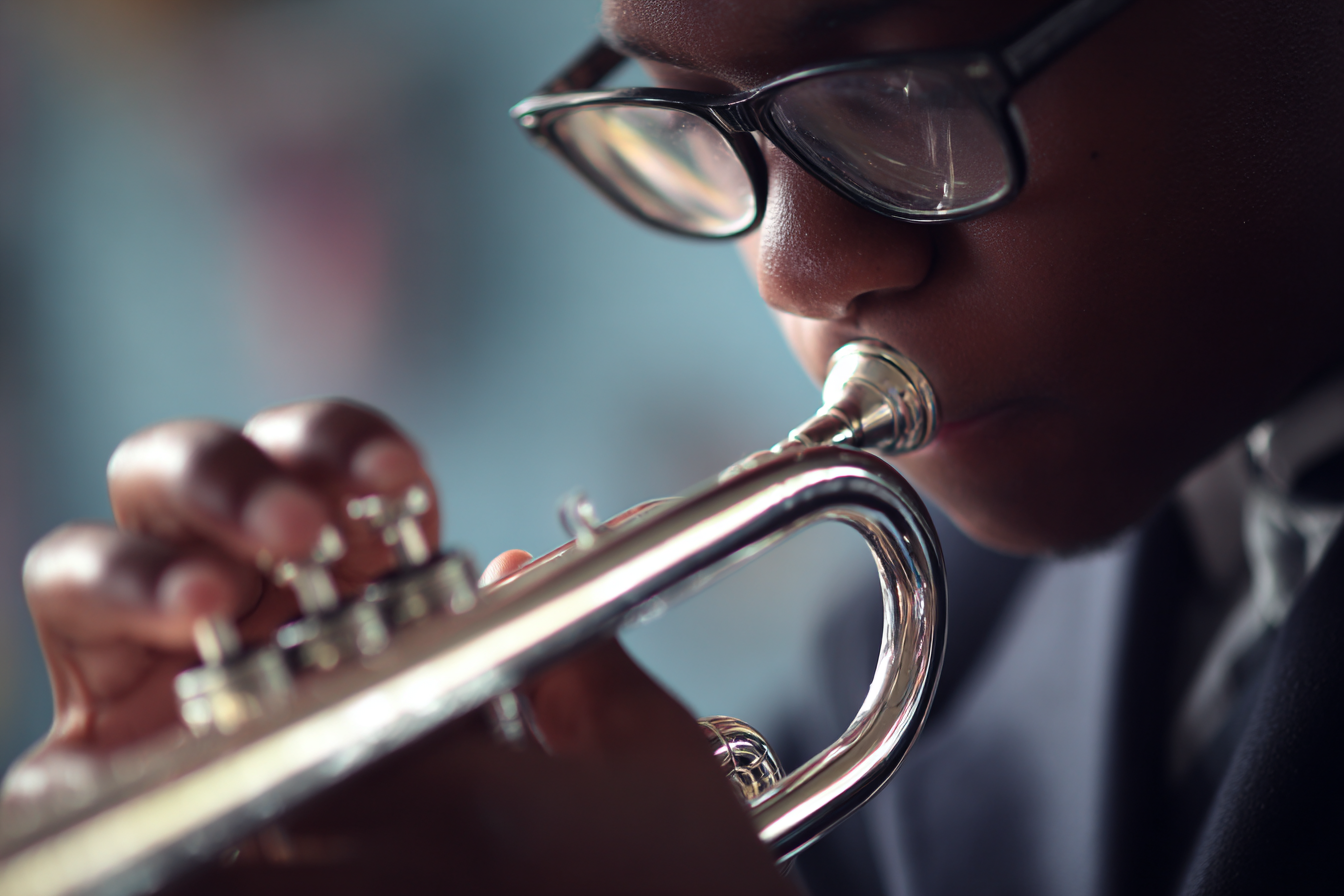
Focus: Develop a clear, characteristic tone across the full range of each instrument and apply listening skills to understand how tone color, articulation, and style contribute to musical meaning.
Grade Level: 8
Subject Area: Band (Tone Production • Listening & Analysis • Ensemble Sound)
Total Unit Duration: 5 sessions (one week), 50–60 minutes per session
I. Introduction
Students move beyond simply “playing the right notes” to focus on tone quality and consistency. They work on producing a characteristic sound in low, middle, and high registers, and they learn to listen deeply to how instrumentation, tone color, articulation, and style shape the character of band music. Through targeted tone exercises, listening examples, and ensemble work, students connect their individual sound to the overall ensemble color, understanding how their tone choices support the mood and meaning of each piece.
Essential Questions
- What does a characteristic tone sound like on my instrument, and how can I produce it in all ranges?
- How do posture, embouchure/grip, breathing, and hand position support consistent tone quality (even when playing loudly, softly, high, or low)?
- How do instrumentation, tone color, articulation, and style contribute to the meaning and mood of band music?
- How can I use my ears as much as my fingers—listening for balance, blend, and tone color changes within the ensemble?
- What daily habits will help me maintain tone quality and consistency across an entire rehearsal and throughout the year?
II. Objectives and Standards
Learning Objectives — Students will be able to:
- Describe and demonstrate a characteristic tone on their instrument in low, middle, and upper registers.
- Use mature technique (posture, embouchure/grip, breathing, hand position, stick/mallet control) to maintain consistent tone across different dynamics and articulations.
- Listen critically to recordings and live playing to identify how instrumentation, tone color, articulation, and style affect musical character.
- Adjust their own playing (tone, vibrato if appropriate, articulation choice, dynamic shaping) to support ensemble blend and balance.
- Use tone vocabulary (bright, dark, warm, edgy, round, focused, airy) to describe and refine their own sound and the ensemble’s sound.
- Develop and begin implementing a short “Tone Plan” (personal goals and strategies) to improve tone quality and consistency over time.
Standards Alignment — 8th Grade Band (custom, NAfME-style)
- BD:Pr4.8a — Demonstrate mature, instrument-appropriate technique (posture, embouchure, breathing, hand position, stick/mallet control) with endurance and consistency.
- Example: Students maintain characteristic tone quality across a full rehearsal.
- BD:Re7.8b — Explain how instrumentation, tone color, articulation, and style contribute to meaning in band music.
- Example: Students explain how brass and woodwind tone colors create contrast in a march.
Success Criteria — Student Language
- I can produce a characteristic tone on my instrument in low, middle, and high parts of my range.
- I can keep my tone steady and clear when I change dynamics, articulation, or register.
- I can listen to recordings and our own playing and describe how tone color, instrumentation, articulation, and style affect the mood of the music.
- I can adjust my tone and volume to blend with my section and the full band.
- I can use tone words (like warm, dark, bright, focused) to describe sound and set tone goals for myself.
- I have a simple Tone Plan with at least one specific goal and strategies to improve my sound.