Unit Plan 8 (Grade 8 PE): Basketball — Offense, Defense & Set Plays
Grade 8 PE basketball unit on set plays, screens, cuts, help defense, rotations, and box-outs in tactical 4v4 and 5v5 games.

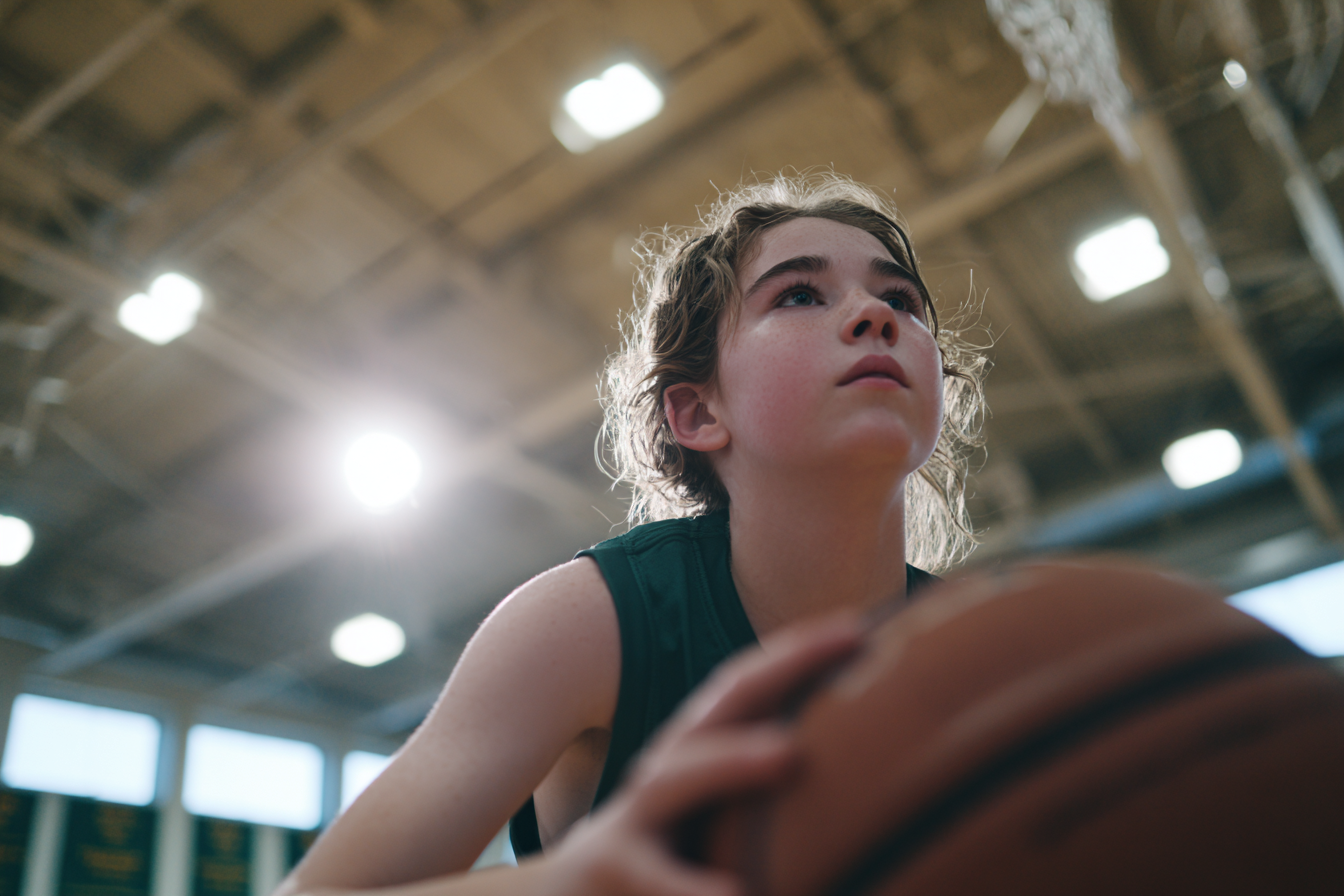
Focus: Develop offensive and defensive basketball tactics by running set plays (e.g., screen-the-screener, backdoor cuts), using screens and cuts to create shots, and applying help-and-recover defense with rotations and box-outs during 4v4/5v5 play.
Grade Level: 8
Subject Area: Physical Education (Invasion Games • Team Tactics • Basketball Skills)
Total Unit Duration: 5 sessions (one week), 45–55 minutes per session
I. Introduction
Students take their basketball play beyond basic dribbling and shooting into structured team offense and defense. Through warm-ups that focus on dribbling vs pressure, passing on the move, and shooting after cuts, they learn to handle game-like pressure and finish plays. In 4v4/5v5 games, students practice a set play (such as screen-the-screener or a backdoor play), read different defensive looks, and work on help-and-recover defense, rotating, and boxing out. Emphasis is placed on using screens and cuts to create advantages, making smart passes, and playing connected team defense that protects the paint and contests shots.
Essential Questions
- How can we use screens, cuts, and spacing on offense to create high-percentage shots instead of forcing difficult ones?
- What does help-and-recover defense look like, and how can rotations and box-outs limit easy baskets and second chances?
- How do decisions about pathways, tempo, and deception (changes of speed, fakes, backdoor cuts) make us tougher to guard?
- How can we stay actively engaged (MVPA) and communicate on both ends of the floor to help our team succeed?
II. Objectives and Standards
Learning Objectives — Students will be able to:
- Dribble, pass, and catch under defensive pressure, using appropriate force, timing, and angles to maintain possession and create shots.
- Combine dribbling, cutting, screening, passing, and finishing in continuous sequences during live play with control and balance.
- Apply offensive concepts (spacing, screening, backdoor cuts, ball reversal) to run a set play and read how the defense is reacting.
- Demonstrate help-and-recover defense, including staying in a stance, rotating to the ball, closing out, and boxing out after shots.
- Adjust effort, shot selection, pass speed, and cutting tempo based on defensive pressure and game situations.
- Stay in moderate-to-vigorous activity for most of class during drills and games, limiting standing and consistently moving with purpose.
Standards Alignment — 8th Grade (SHAPE America-based custom)
- PE:S1.8c – Throwing & Catching with Precision in Competitive Contexts Throw and catch a variety of objects with precision, appropriate force, and timing in competitive and high-pressure situations, including leading teammates and adjusting to defenders.
- Example: In ultimate or handball, a student delivers a well-timed leading pass away from defenders and consistently makes secure catches while being closely guarded.
- PE:S1.8f – Integrating Complex Skill Combinations in Continuous Play Combine locomotor, manipulative, and stability skills in complex, continuous sequences during game play, maintaining form and control throughout.
- Example: In a game, a student dribbles, executes a crossover, passes to a teammate, cuts to space, receives a return pass, and takes a balanced, accurate shot—all under defensive pressure.
- PE:S2.8a – Advanced Spatial Awareness & Tactical Positioning Consistently use spatial awareness to adjust positioning relative to teammates, opponents, and scoring areas, both in offense and defense, in real time.
- Example: In 5v5 or 6v6 games, students recognize when to spread wide, cut to gaps, rotate defensively, or drop into support positions without prompting.
- PE:S2.8b – Using Pathways, Levels, Tempo & Deception Strategically Intentionally select and vary pathways, levels, speed, and feints to create offensive opportunities and disrupt opponents’ strategies.
- Example: A student changes pace, uses a hesitation move, and then sharply cuts diagonally to receive a pass behind a defender.
- PE:S2.8c – Adjusting Effort, Force, Angle & Timing Based on Game Demands Adjust effort level, force, angle, and timing of skills (passes, shots, serves, runs) after interpreting distance, defensive pressure, and risk/benefit of different options.
- Example: In a net game, a student chooses a soft angled shot when the opponent is deep and a powerful deep shot when the opponent is crowding the net.
- PE:S2.8d – Selecting & Applying Offensive Strategies Effectively Identify and apply offensive strategies (spreading the field, using screens, give-and-go, overlaps, switching fields, setting picks) to create high-percentage scoring chances.
- Example: In basketball or handball, students run a set play (screen-and-roll or backdoor cut), read the defense, and make a smart choice between shooting or passing.
- PE:S2.8e – Executing Defensive Strategies & Transitions Smoothly Apply defensive concepts (marking, denying passing lanes, help defense, hedging, recovery, and transition defense) fluidly as the game flow changes.
- Example: After a turnover, students quickly communicate, pick up players or zones, stop fast breaks, and then shift back into half-court or set defense.
- PE:S3.8a – Sustained Engagement in Moderate-to-Vigorous Activity Participate actively in moderate-to-vigorous physical activity for most of class time and demonstrate the ability to sustain effort across longer intervals or game play.
- Example: During continuous small-sided games or fitness circuits, a student stays engaged, limits standing around, and completes all rounds with evident effort.
Success Criteria — Student Language
- I can dribble, pass, and catch under pressure and still make good decisions about when and where to pass or shoot.
- I can use screens, cuts, and spacing to run a set play and create better shots for myself or teammates.
- I can show help-and-recover defense, including rotating, closing out, and boxing out after the shot.
- I can change my speed, angle, and effort based on what the defense is doing in front of me.
- I can stay active for most of class, moving with purpose, communicating, and staying engaged on both offense and defense.