Unit Plan 36 (Grade 8 PE): Capstone Festival & Lifelong Movement Reflection
Celebrate Grade 8 PE growth with a student-centered activity festival, reflection on strengths and preferences, and realistic plans for staying active in high school and beyond.

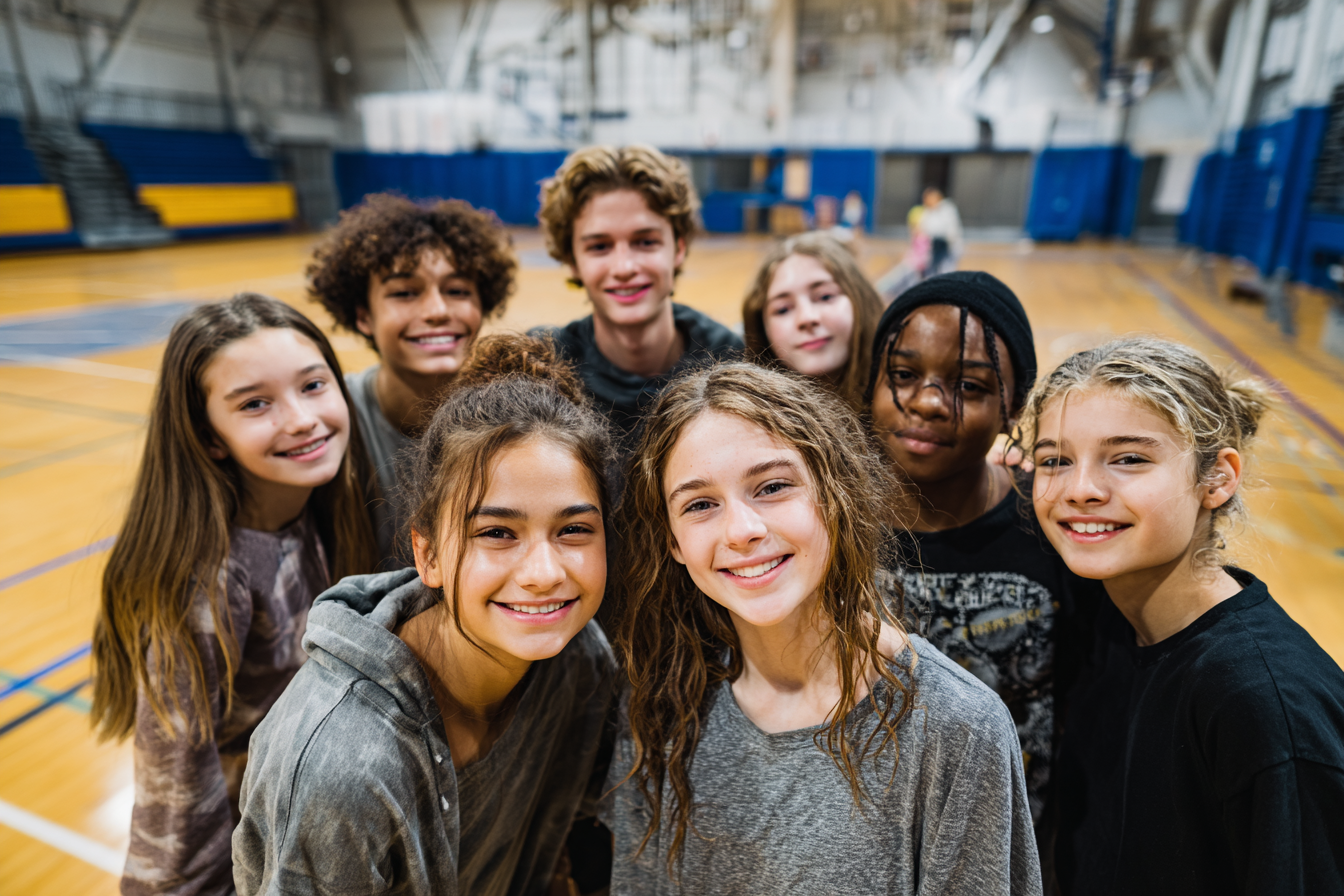
Focus: Celebrate growth through a student-centered activity festival, reflect on strengths and preferences, explain the physical, mental, and social benefits of movement, and commit to realistic high school and lifelong activity plans.
Grade Level: 8
Subject Area: Physical Education
Total Unit Duration: 5 sessions (one week), 45–55 minutes per session
I. Introduction
In this capstone unit, students celebrate their year in Grade 8 Physical Education by revisiting favorite games, activities, and movement experiences through a student-voted activity festival. Alongside active participation, students reflect on how they have grown in confidence, fitness, leadership, teamwork, and self-awareness. The unit emphasizes that Physical Education is not only about performance in class, but also about building habits that support health, enjoyment, and continued participation beyond middle school. By the end of the week, students will identify the activities that best fit their strengths and interests, explain why movement matters for physical, mental, and social well-being, and create a realistic plan for staying active in high school and beyond.
Essential Questions
- What activities helped me grow the most in Grade 8 PE, and why?
- How does regular movement support physical health, mental well-being, and social connection?
- Which activities best match my strengths, preferences, and lifestyle?
- What realistic plan can help me stay active in high school and later in life?
II. Objectives and Standards
Learning Objectives — Students will be able to:
- Participate actively in a variety of favorite class activities and sustain meaningful effort throughout the capstone festival.
- Explain how regular physical activity supports healthy lifestyle choices related to energy, mood, focus, sleep, and overall well-being.
- Identify personal strengths, preferences, and areas for growth in movement and physical activity.
- Evaluate several lifelong activity options and determine which ones seem most realistic and enjoyable for their future.
- Create a realistic plan for staying active beyond middle school using school, local, home, or community opportunities.
- Reflect on how PE experiences have influenced confidence, motivation, and future goals for movement.
Standards Alignment — Grade 8 PE (SHAPE America-based custom)
- PE:S3.8a – Sustained Engagement in Moderate-to-Vigorous Activity Participate actively in moderate-to-vigorous physical activity for most of class time and demonstrate the ability to sustain effort across longer intervals or game play.
- Example: During continuous small-sided games or fitness circuits, a student stays engaged, limits standing around, and completes all rounds with evident effort.
- PE:S3.8e – Making Informed Healthy Lifestyle Decisions Use knowledge about physical activity, nutrition, sleep, hydration, substance use, and screen time to make or plan informed daily health choices and explain their impact.
- Example: A student decides to prioritize consistent sleep and regular activity before big tests or events and explains the expected benefits for mood and performance.
- PE:S5.8a – Recognizing Preferences, Strengths & Areas for Growth Identify personal strengths and preferences in physical activity and use that understanding to set meaningful improvement goals and make activity choices.
- Example: A student recognizes they enjoy small-sided competitive games and endurance challenges, then sets a goal to join a community league or complete a local 5K.
- PE:S5.8b – Explaining Physical, Mental & Social Benefits of Activity Clearly explain how regular physical activity contributes to physical fitness, mental health, academic focus, and positive social connections.
- Example: Students can articulate that consistent movement helps reduce stress, supports better sleep and concentration, and provides chances to build friendships and teamwork skills.
- PE:S5.8c – Identifying & Evaluating Lifelong Activity Options Identify a range of physical activities that can be sustained into adolescence and adulthood and evaluate which options best fit personal interests, resources, and needs.
- Example: A student compares options like running, strength training, dance, rec sports leagues, group fitness, and outdoor recreation and explains which they’re most likely to continue.
- PE:S5.8d – Planning for Ongoing Participation in Physical Activity Develop realistic plans for being regularly active beyond the PE class—across a week, season, or year—and identify local or community opportunities to support those plans.
- Example: A student creates a weekly schedule that includes PE, active transport (walking/biking), club or rec sports, home workouts, or outdoor activities, and identifies where and when each can happen.
Success Criteria — Student Language
- I can stay active and engaged during a variety of festival activities.
- I can explain how movement helps my body, mind, and relationships.
- I can identify the activities that fit my strengths and preferences best.
- I can compare activity options and decide which ones feel realistic for my future.
- I can make a practical plan for staying active in high school and beyond.
III. Materials and Resources
Tasks & Tools (teacher acquires/curates)
- Equipment for student-voted favorite activities from the year, such as:
- balls
- cones
- pinnies
- goals
- scooters
- discs
- hoops
- rackets/paddles
- mats
- jump ropes
- Whiteboard, posters, or chart paper for:
- activity station list
- class vote results
- reflection prompts
- high school/community opportunity ideas
- Clipboards, pencils, and reflection sheets for:
- quick writes
- small-group reflection notes
- lifelong movement planning templates
- Optional student leadership cards such as:
- warm-up leader
- station manager
- encouragement leader
- equipment lead
- reflection facilitator
Preparation
- Collect or review student input on favorite units, games, and activities from the year.
- Set up multiple festival stations or activity zones based on class choices and available space.
- Post a simple Capstone Festival Expectations chart:
- participate positively
- include others
- rotate fairly
- care for equipment
- reflect honestly
- Prepare a lifelong movement reflection template that includes:
- favorite activities
- strongest skills
- goals for improvement
- likely high school/community options
- realistic weekly activity plan
- Gather examples of future participation options such as:
- school teams or clubs
- walking/running routes
- home workouts
- outdoor recreation
- local recreation centers
- neighborhood play or fitness opportunities
Common Misconceptions to Surface
- “PE ends when middle school ends.” → Physical activity can continue through high school, at home, in the community, or through informal recreation.
- “Only competitive sports count as real activity.” → Lifelong movement can include walking, fitness training, dance, recreational games, outdoor activities, and many other options.
- “If I wasn’t the best at an activity, it isn’t for me.” → Enjoyment, access, confidence, and consistency matter just as much as performance.
- “Healthy activity plans have to be intense every day.” → Realistic plans work best when they are manageable, flexible, and connected to real life.
Key Terms (highlight in lessons) capstone, lifelong activity, preference, strength, growth, well-being, mental health, social connection, routine, activity plan, opportunity, commitment, reflection
IV. Lesson Procedure
(Each day follows: Launch → Warm-Up → Game/Activity → Reflect. Timing for a 45–55 minute block.)
Session 1 — Favorite Activities Kickoff & Year-in-Review
- Launch (5–7 min)
- Ask: “Which activities from this year helped you feel most successful, most challenged, or most motivated?”
- Briefly review favorite units and explain that the week will celebrate movement growth while also focusing on the future.
- Introduce the idea that this capstone is both a festival and a reflection unit.
- Warm-Up (8–10 min) — Favorite Student-Designed Warm-Up from the Year
- Equipment: Based on chosen warm-up.
- Procedure:
- Students or a small leadership group lead one of the class’s favorite warm-ups from the year.
- The warm-up should include:
- light movement
- dynamic mobility
- a favorite challenge element
- positive group energy
- Teacher emphasizes student voice, clear leadership, and safe transitions.
- Game/Activity (28–30 min) — Activity Festival Round 1
- Equipment: Student-voted favorite game/activity equipment.
- Procedure:
- Students rotate through 2–3 favorite stations or game areas selected from prior units.
- Examples may include:
- invasion games
- target games
- fitness stations
- cooperative challenges
- net/wall games
- adventure-style movement
- Students are encouraged to notice:
- what activities they still enjoy most
- which ones feel easiest or most natural
- which ones help them feel energized or confident
- Teacher begins informal check-ins about preferences and strengths.
- Reflect (5 min)
- Prompt: “Which activity still feels like your best fit, and what does that say about your strengths or preferences?”
Session 2 — Physical, Mental & Social Benefits of Movement
- Launch (5–7 min)
- Ask: “How does physical activity help you beyond fitness?”
- Guide discussion toward:
- stress relief
- energy
- focus
- confidence
- friendships
- teamwork
- sleep and mood
- Warm-Up (8–10 min) — Favorite Student-Designed Warm-Up from the Year
- Equipment: Based on student choice.
- Procedure:
- A new student group leads a previously used favorite warm-up.
- Encourage students to explain why this warm-up is effective or enjoyable.
- Game/Activity (28–30 min) — Activity Festival Round 2
- Equipment: Student-voted favorite activities.
- Procedure:
- Students continue rotating through festival activities, with emphasis on how different activities make them feel physically and mentally.
- During activity breaks, students respond to brief prompts such as:
- “This activity helps me feel…”
- “This activity could help someone with stress because…”
- “This activity encourages social connection by…”
- Teacher may group some activities by type:
- competitive
- cooperative
- outdoor
- fitness-focused
- skill-focused
- Students begin comparing how different activities meet different needs.
- Reflect (5 min)
- Prompt: “How does physical activity support your mental or social well-being, not just your physical health?”
Session 3 — Strengths, Preferences & Lifelong Activity Options
- Launch (5–7 min)
- Ask: “What types of activities feel most realistic for you to continue in high school or later in life?”
- Introduce the idea that lifelong activity depends on:
- enjoyment
- access
- time
- confidence
- cost
- people you can do it with
- Warm-Up (8–10 min) — Favorite Student-Designed Warm-Up from the Year
- Equipment: Based on chosen warm-up.
- Procedure:
- Another student group leads a warm-up connected to a different type of movement or class favorite.
- Students notice whether their preferences lean more toward:
- competitive play
- fitness work
- outdoor recreation
- team games
- independent movement
- Game/Activity (28–30 min) — Activity Festival Round 3 + Lifelong Option Discussion
- Equipment: Festival station equipment, planning sheets.
- Procedure:
- Students rotate through additional favorite activities or revisit stations of choice.
- Between stations, students complete a short reflection organizer:
- activities I enjoy most
- activities that match my strengths
- activities I could realistically do outside school
- activities I might want to try in high school
- Teacher provides examples of lifelong movement options such as:
- running or walking
- rec sports
- outdoor recreation
- fitness classes
- home workouts
- open gym
- community leagues
- Students begin identifying which activities fit their likely future best.
- Reflect (5 min)
- Prompt: “Which activity options feel most realistic for your future, and why?”
Session 4 — Realistic High School & Lifelong Activity Planning
- Launch (5–7 min)
- Ask: “What usually gets in the way of staying active when life gets busy?”
- Discuss barriers such as:
- time
- transportation
- motivation
- screen time
- homework
- lack of confidence
- Frame the lesson around building a realistic, flexible plan instead of a perfect one.
- Warm-Up (8–10 min) — Favorite Student-Designed Warm-Up from the Year
- Equipment: Based on student choice.
- Procedure:
- Student leaders run another favorite warm-up with minimal teacher direction.
- Teacher highlights independence and ownership of movement.
- Game/Activity (28–30 min) — Activity Festival Round 4 + Planning Workshop
- Equipment: Favorite activity equipment, planning templates, clipboards.
- Procedure:
- Students participate in one final round of favorite activities, then transition into planning work.
- Using a structured template, students create a realistic high school/lifelong activity plan that includes:
- 3–5 activity opportunities per week
- where the activity could happen
- who they could do it with
- one or two likely barriers
- practical solutions
- one healthy habit that supports the plan (sleep, hydration, reduced screen time, etc.)
- Teacher conferences with students to help keep plans realistic and personalized.
- Reflect (5 min)
- Prompt: “What is one barrier to staying active after middle school, and what is one realistic solution?”
Session 5 — Capstone Festival Showcase & Final Reflection
- Launch (5 min)
- Review the week’s major themes:
- celebration of growth
- physical, mental, and social benefits
- strengths and preferences
- lifelong options
- realistic planning beyond middle school
- Review the week’s major themes:
- Warm-Up (8–10 min) — Favorite Student-Designed Warm-Up from the Year
- Equipment: Based on final class-selected warm-up.
- Procedure:
- Students complete one final favorite warm-up led by peers.
- Encourage energy, positivity, and appreciation for how much students can now do independently.
- Game/Activity (28–30 min) — Final Activity Festival & Reflection Share
- Equipment: Student-voted favorite activity equipment, reflection sheets.
- Procedure:
- Students participate in a final festival rotation or choice period featuring favorite games/activities from the year.
- During or after the festival, students complete a final reflection using either:
- a quick write
- a small-group share
- a paired reflection
- Reflection topics include:
- biggest growth this year
- favorite type of activity
- strongest skill or habit
- one mental/social benefit of movement
- one realistic next step for high school/lifelong activity
- Teacher closes with a short celebration of progress, effort, and future readiness.
- Reflect (5–7 min)
- Final prompts:
- “What are you most proud of from Grade 8 PE?”
- “What kind of movement do you want to keep in your life?”
- “What is one realistic commitment you can make for staying active in high school?”
- Final prompts:
V. Differentiation and Accommodations
Advanced Learners
- Encourage students to create more detailed activity plans that include multiple activity types and contingency plans for busy weeks.
- Ask them to lead festival stations or facilitate small-group reflection conversations.
- Invite them to compare several lifelong activity options in greater depth using access, cost, and enjoyment factors.
Targeted Support
- Offer activity-planning templates with simple prompts and examples.
- Reduce the number of required activities in the weekly plan while keeping the plan realistic and meaningful.
- Provide sentence stems such as:
- “I feel strongest in…”
- “An activity I enjoy because…”
- “A barrier for me is…”
- “A good solution would be…”
Multilingual Learners
- Use visuals for:
- strength
- preference
- routine
- benefit
- barrier
- solution
- lifelong activity
- Allow partner or small-group discussion before writing reflections.
- Accept charts, short phrases, and labeled visuals as part of planning and reflection.
IEP/504 & Accessibility
- Offer flexible reflection formats such as verbal response, checklist, small-group share, or teacher conference.
- Provide extra time and highly structured templates for identifying strengths and creating future plans.
- Allow students to revisit selected activities in a way that matches physical needs while still participating fully in reflection and planning.
- Support organization with visual schedules, checklists, and one-on-one guidance when needed.
VI. Assessment and Evaluation
Formative Checks (daily)
- Session 1 — Students actively participate in the festival and begin identifying strengths and preferences.
- Session 2 — Students explain at least one physical, mental, or social benefit of movement.
- Session 3 — Students compare lifelong activity options and identify realistic future possibilities.
- Session 4 — Students draft a realistic activity plan that includes barriers and solutions.
- Session 5 — Students complete final reflection and clearly connect PE experiences to future physical activity plans.
Summative — Capstone Festival & Lifelong Movement Reflection (0–2 per criterion, total 10)
- Sustained Participation & Engagement (PE:S3.8a)
- 2: Participates actively for most of class during festival activities and maintains strong effort and engagement.
- 1: Usually participates and stays engaged, but effort or consistency varies at times.
- 0: Frequently disengages or participates only minimally.
- Healthy Lifestyle Understanding (PE:S3.8e, PE:S5.8b)
- 2: Clearly explains how physical activity supports physical health, mental well-being, and social connection, and connects movement to healthy lifestyle choices.
- 1: Identifies some benefits and healthy choices, but explanation is general or incomplete.
- 0: Shows limited understanding of movement benefits or healthy lifestyle connections.
- Strengths, Preferences & Growth Awareness (PE:S5.8a)
- 2: Thoughtfully identifies strengths, preferences, and one meaningful area for future growth.
- 1: Identifies some strengths or preferences, but reflection lacks detail or depth.
- 0: Reflection is minimal or does not show awareness of strengths, preferences, or growth.
- Lifelong Activity Evaluation (PE:S5.8c)
- 2: Evaluates several activity options realistically and explains which ones best fit personal interests, needs, and resources.
- 1: Gives a basic opinion about future activities, but evaluation is limited or vague.
- 0: Shows little meaningful consideration of future activity options.
- Ongoing Participation Planning (PE:S5.8d)
- 2: Creates a realistic, specific plan for staying active beyond middle school and includes practical barriers and solutions.
- 1: Creates a basic plan, but details may be incomplete or unrealistic.
- 0: Does not create a meaningful or realistic participation plan.
Feedback Protocol (TAG)
- Tell one strength (e.g., “You clearly know which activities fit your interests and why they matter to you.”).
- Ask one question (e.g., “What could help you stay consistent with your activity plan during a busy school week?”).
- Give one suggestion (e.g., “Try including one backup activity in your plan for days when your first option cannot happen.”).
VII. Reflection and Extension
Reflection Prompts
- What is the biggest way you grew in Grade 8 PE?
- Which activity or type of movement feels most important for your future, and why?
- How does physical activity help you physically, mentally, and socially?
- What realistic commitment can you make to stay active in high school?
Extensions
- High School Readiness Letter: Write a short letter to your future high school self about how you want to stay active and why it matters.
- Activity Menu Project: Create a personal menu of favorite activities you could choose from during different seasons or busy weeks.
- Community Connection: Research one local or school-based activity opportunity you could realistically use next year.
Standards Trace — When Each Standard Is Addressed
- PE:S3.8a — Sessions 1–5 (sustained active participation during the capstone festival).
- PE:S3.8e — Sessions 2–5 (connecting activity with healthy lifestyle decisions, mood, sleep, focus, and routine).
- PE:S5.8a — Sessions 1–5 (reflecting on strengths, preferences, and growth areas across festival activities).
- PE:S5.8b — Sessions 2–5 (explaining physical, mental, and social benefits of regular activity).
- PE:S5.8c — Sessions 3–5 (evaluating realistic lifelong activity options).
- PE:S5.8d — Sessions 4–5 (building practical high school and lifelong activity plans).