Unit Plan 13 (Grade 8 PE): Invasion Tactics Lab (No Equipment)
Grade 8 PE tactics lab unit using no-equipment invasion games to build cuts, feints, slides, marking, transitions, and movement awareness.

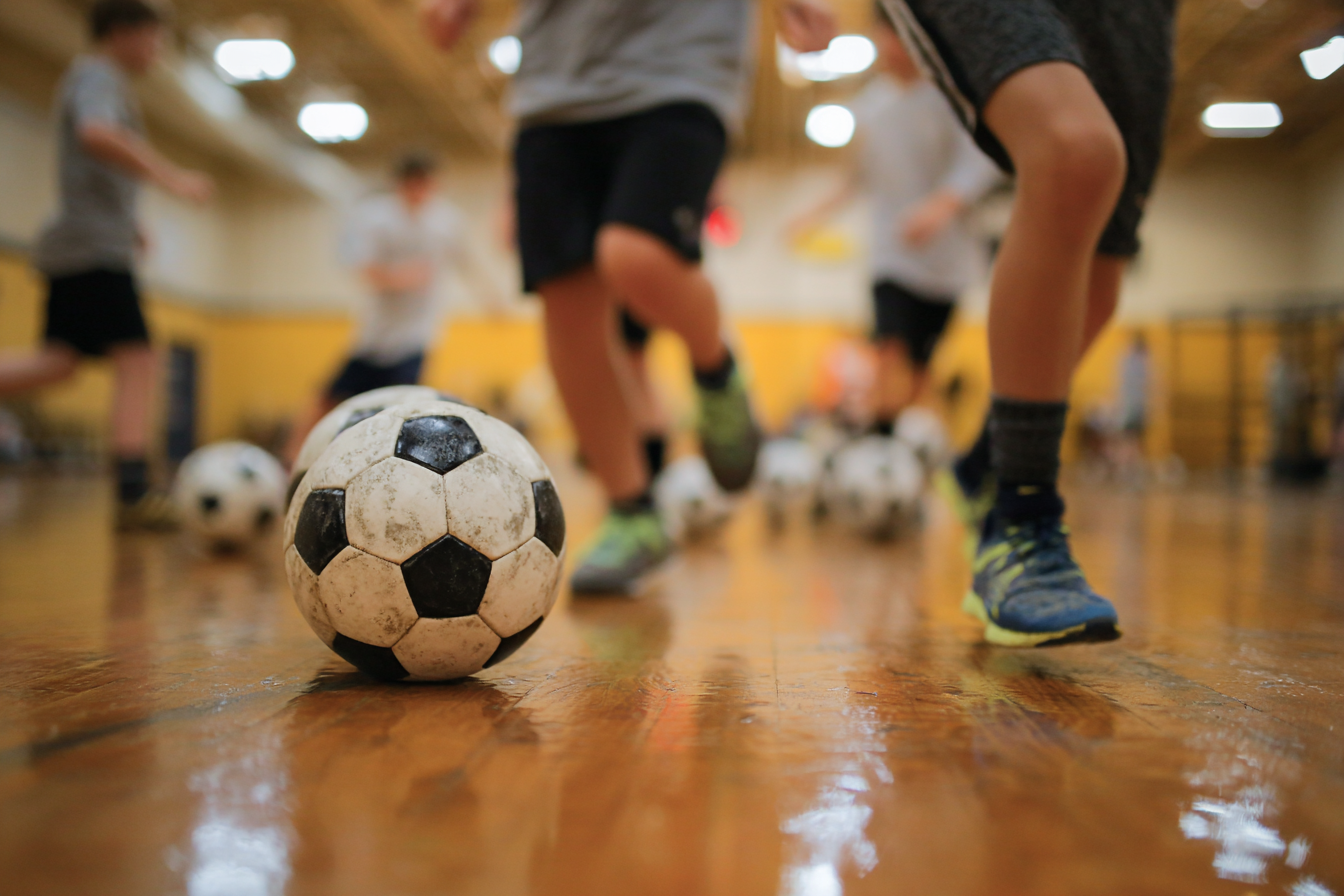
Focus: Use no-equipment invasion “tactics lab” games with grid-based movement challenges (e.g., Shadow and Escape, Endline Race) to strengthen offensive and defensive movement concepts—cuts, feints, slides, marking, and transitions—without worrying about balls or implements.
Grade Level: 8
Subject Area: Physical Education (Invasion Games • Movement Skills • Tactical Concepts)
Total Unit Duration: 5 sessions (one week), 45–55 minutes per session
I. Introduction
Students strip invasion games (basketball, soccer, flag football, ultimate, handball) down to their pure movement and spacing pieces—no balls, no sticks, no goals. Through defensive slide work, closeout footwork, change-of-direction drills, and grid-based tag/marking games, they learn how to create and close space using body position, angles, tempo changes, and communication. By focusing on movement-only scenarios, students can practice sharp cuts, feints, denial defense, help-and-recover, and transition movement in a low-skill, high-learning environment that transfers to many sports.
Essential Questions
- How do players in invasion games use cuts, feints, and changes of speed to create space and get open without the ball?
- What does it look like to play smart defense—sliding, closing out, and adjusting positioning—rather than just chasing the offense?
- How can pathways, angles, and tempo help us both attack open space and shut down scoring lanes?
- How can these no-equipment movement skills make me more effective in sports like basketball, soccer, ultimate, and flag football?
II. Objectives and Standards
Learning Objectives — Students will be able to:
- Perform locomotor movements (sprinting, shuffling, backpedaling, cutting, bounding) with control while reading offensive/defensive cues to create or close space.
- Maintain balance and body control when changing direction, stopping suddenly, and performing defensive slides and closeouts even under fatigue.
- Use advanced spatial awareness to adjust positioning relative to teammates, opponents, and scoring lines in grid-based invasion games.
- Intentionally vary pathways, levels, speed, and feints to get open on offense and disrupt opponents’ movement on defense.
- Apply defensive concepts such as marking, denying lanes, help-and-recover, and smooth transition movement during small-group grid games.
- Sustain moderate-to-vigorous activity (MVPA) for most of class time across multiple rounds of movement-only games.
Standards Alignment — 8th Grade (SHAPE America-based custom)
- PE:S1.8a – Locomotor Skills with Speed, Agility & Game Awareness Perform locomotor skills (sprinting, shuffling, backpedaling, cutting, bounding) with control and precision while reading the game and adjusting movements to create or close space.
- Example: In a fast-paced invasion game, a student sprints into open space, plants and cuts sharply to lose a defender, then quickly adjusts when the play reverses.
- PE:S1.8b – Advanced Balance, Stability & Coordination in Dynamic Play Maintain balance and body control during advanced movements involving jumping, landing, rotating, dodging, and contact or near-contact, even when fatigued.
- Example: A student jumps to receive a pass, lands with proper body position, spins away from a defender, and stays controlled while driving toward the goal.
- PE:S2.8a – Advanced Spatial Awareness & Tactical Positioning Consistently use spatial awareness to adjust positioning relative to teammates, opponents, and scoring areas, both in offense and defense, in real time.
- Example: In 5v5 or 6v6 games, students recognize when to spread wide, cut to gaps, rotate defensively, or drop into support positions without prompting.
- PE:S2.8b – Using Pathways, Levels, Tempo & Deception Strategically Intentionally select and vary pathways, levels, speed, and feints to create offensive opportunities and disrupt opponents’ strategies.
- Example: A student changes pace, uses a hesitation move, and then sharply cuts diagonally to receive a pass behind a defender.
- PE:S2.8e – Executing Defensive Strategies & Transitions Smoothly Apply defensive concepts (marking, denying passing lanes, help defense, hedging, recovery, and transition defense) fluidly as the game flow changes.
- Example: After a turnover, students quickly communicate, pick up players or zones, stop fast breaks, and then shift back into half-court or set defense.
- PE:S3.8a – Sustained Engagement in Moderate-to-Vigorous Activity Participate actively in moderate-to-vigorous physical activity for most of class time and demonstrate the ability to sustain effort across longer intervals or game play.
- Example: During continuous small-sided games or fitness circuits, a student stays engaged, limits standing around, and completes all rounds with evident effort.
Success Criteria — Student Language
- I can use defensive slides, closeouts, and change-of-direction with control to stay in front of an opponent.
- I can move into open space on offense using sharp cuts, feints, and tempo changes, not just straight-line sprints.
- I can adjust my position and angle based on where my teammates and opponents are in the grid.
- I can show help-and-recover and transition defense by quickly shifting from one assignment or zone to another.
- I can stay active and engaged (MVPA) for most of each class while playing no-equipment invasion games.