Unit Plan 29 (Grade 8 PE): Net/Wall Playground Games (Four-Square & Wall Ball)
Grade 8 PE unit on Four-Square and Wall Ball building striking control, anticipation, self-officiating, conflict resolution, and fair play.

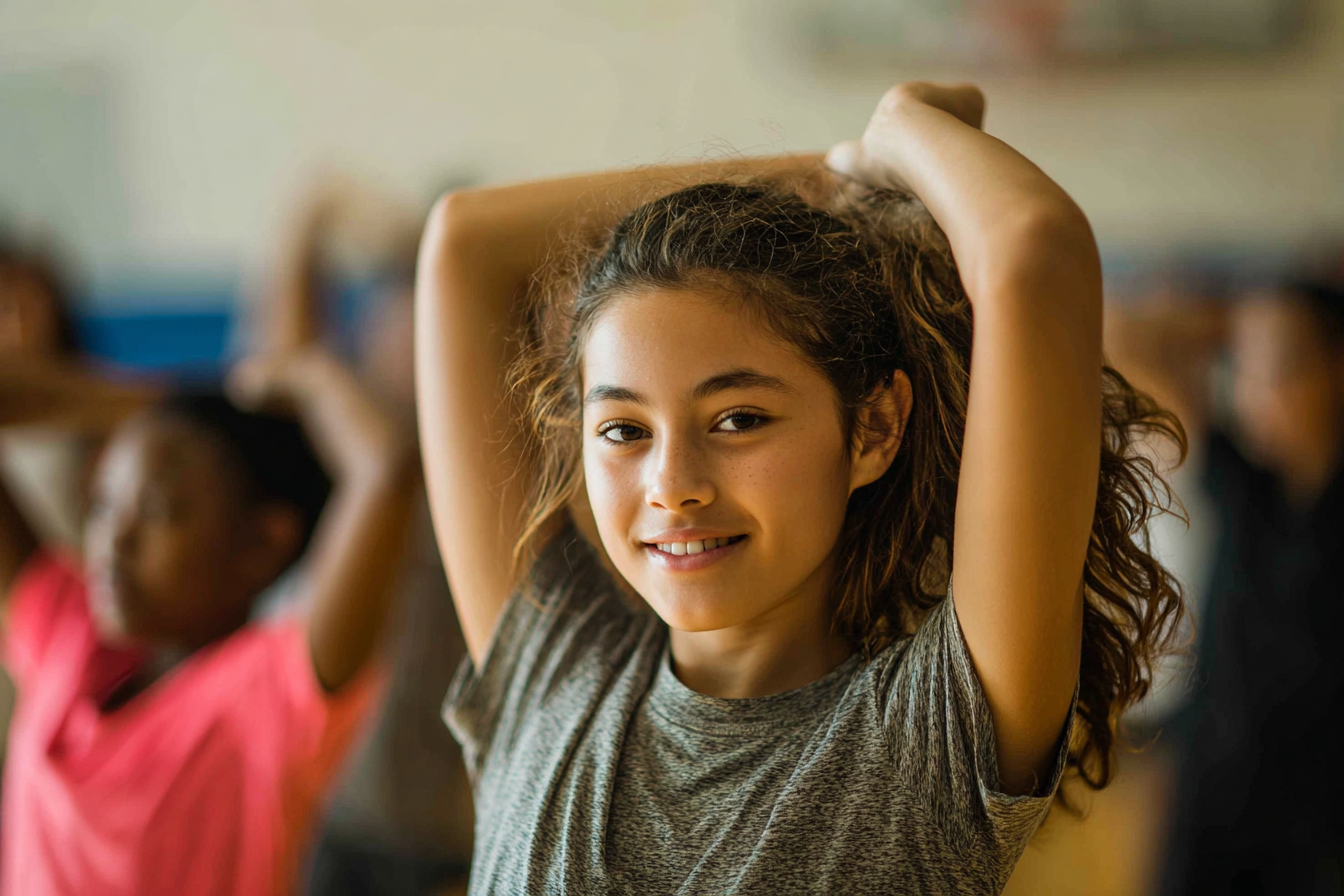
Focus: Use hand striking, anticipation, and self-officiating in Four-Square and Wall Ball to develop striking control, movement to position, fair rule enforcement, and respectful conflict resolution in informal playground-style games.
Grade Level: 8
Subject Area: Physical Education
Total Unit Duration: 5 sessions (one week), 45–55 minutes per session
I. Introduction
In this unit, students explore playground net/wall games through Four-Square and Wall Ball, two activities that require quick reactions, smart positioning, and fair self-management. Students practice hand striking control, adjust the force and angle of the ball, and move into position before the ball arrives. Because these games are often played without referees, students also learn how to use self-officiating, playground etiquette, and calm conflict-resolution strategies to keep games safe, fair, and fun. By the end of the unit, students can explain how these informal games build not only physical skill, but also social responsibility, focus, and community.
Essential Questions
- How can I improve my striking control and get into better position before the ball arrives in Four-Square and Wall Ball?
- How do force, angle, and timing affect success in net/wall playground games?
- What does strong self-officiating and fair playground etiquette look like when no adult is making every call?
- How do informal playground games support physical, mental, and social well-being?
II. Objectives and Standards
Learning Objectives — Students will be able to:
- Strike a ball with control using the hand, adjusting placement, force, and timing based on the game situation.
- Move efficiently into space and position early before the ball arrives in Four-Square and Wall Ball.
- Apply simple tactical decisions such as sending the ball deep, short, or wide to challenge opponents.
- Demonstrate self-officiating by making honest calls, following procedures, and resolving disagreements respectfully.
- Explain how regular participation in informal games can benefit fitness, mood, focus, and social connection.
Standards Alignment — Grade 8 PE (SHAPE America-based custom)
- PE:S1.8e – Striking with Implements for Tactical Placement & Power Strike stationary and moving objects with paddles, rackets, bats, or sticks to send them with purposeful placement, speed, and spin, based on tactical choices.
- Example: In badminton or pickleball, a student alternates between clears, drops, and smashes to move an opponent around the court and set up winning shots.
- PE:S2.8a – Advanced Spatial Awareness & Tactical Positioning Consistently use spatial awareness to adjust positioning relative to teammates, opponents, and scoring areas, both in offense and defense, in real time.
- Example: In 5v5 or 6v6 games, students recognize when to spread wide, cut to gaps, rotate defensively, or drop into support positions without prompting.
- PE:S2.8c – Adjusting Effort, Force, Angle & Timing Based on Game Demands Adjust effort level, force, angle, and timing of skills after interpreting distance, defensive pressure, and risk/benefit of different options.
- Example: In a net game, a student chooses a soft angled shot when the opponent is deep and a powerful deep shot when the opponent is crowding the net.
- PE:S4.8a – Modeling Rules, Procedures & Safety for the Group Consistently follow and model classroom rules, procedures, and safety expectations, often acting as a positive example for peers.
- Example: A student proactively checks boundaries and equipment for safety, reminds classmates about safe conduct, and responds promptly to signals without being told.
- PE:S4.8d – Leading Conflict Resolution & Self-Officiating Take a leading role in resolving conflicts and self-officiating by using respectful communication, agreed-upon procedures, and impartial decision-making.
- Example: When teams disagree on a call, a student suggests a fair resolution method (replay, alternate possession, or quick vote), keeps the discussion calm, and moves play forward.
- PE:S5.8b – Explaining Physical, Mental & Social Benefits of Activity Clearly explain how regular physical activity contributes to physical fitness, mental health, academic focus, and positive social connections.
- Example: Students can articulate that consistent movement helps reduce stress, supports better sleep and concentration, and provides chances to build friendships and teamwork skills.
Success Criteria — Student Language
- I can strike the ball with control and change the force or angle depending on where I want it to go.
- I can move into a strong ready position before the ball gets to me.
- I can make fair calls, follow playground rules, and help solve disagreements respectfully.
- I can explain how Four-Square and Wall Ball help build fitness, focus, and positive social interaction.
- I can play in a way that is safe, fair, and respectful to everyone in the game.