Unit Plan 25 (Grade 8 PE): Rugby-Style Flag — Support & Phase Play
Grade 8 PE rugby-style flag unit on support runs, backward passing, phase play, line defense, and safe tactical teamwork.

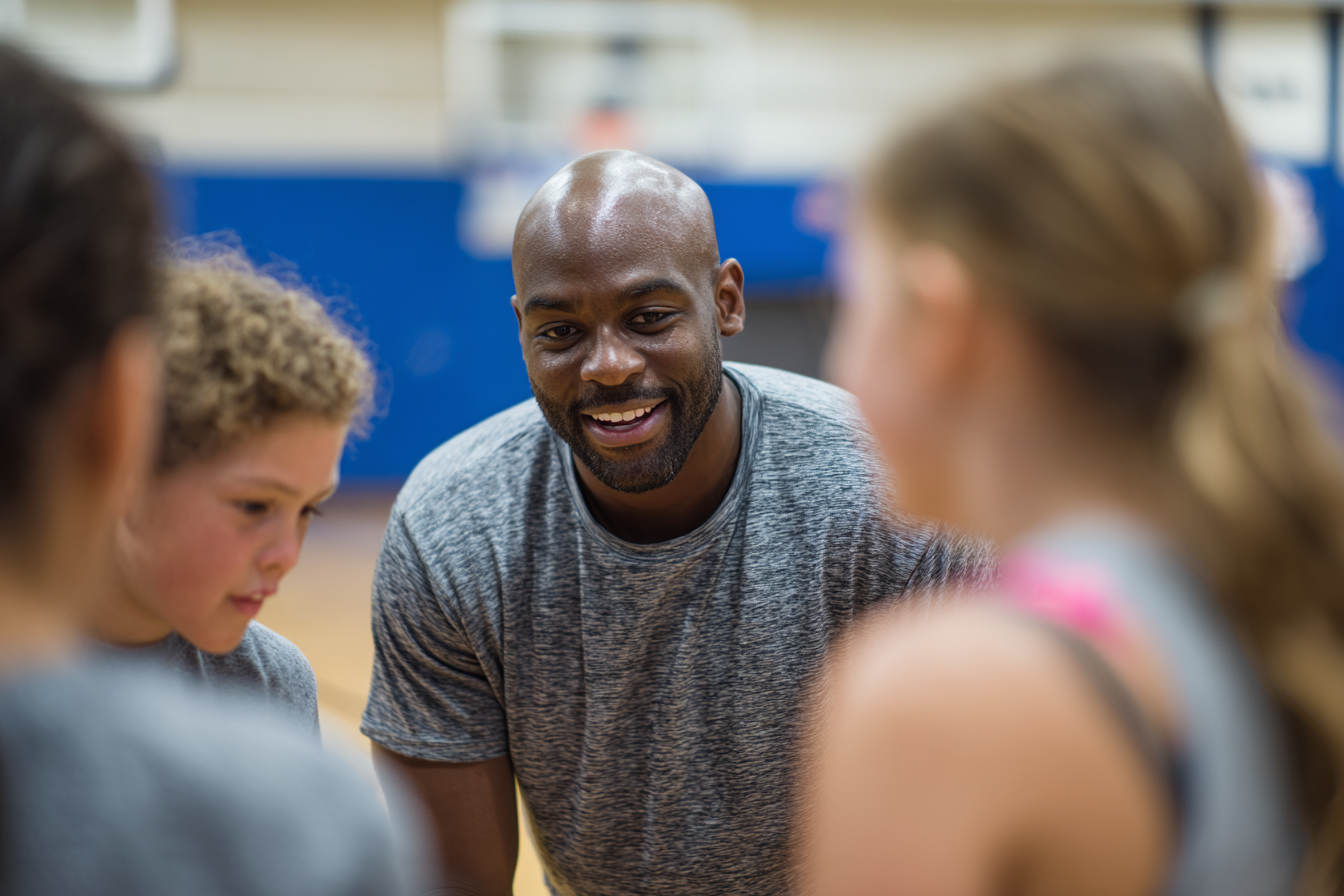
Focus: Use rugby-style flag games to develop support running, backward/lateral passing, and phase play while maintaining a safe, structured defensive line. Emphasize continuity of play, decision-making about when to attack or reset, and team communication around safety and spacing.
Grade Level: 8
Subject Area: Physical Education (Invasion Games • Strategy • Teamwork)
Total Unit Duration: 5 sessions (one week), 45–55 minutes per session
I. Introduction
Students are introduced to rugby-style flag as a running and passing invasion game that emphasizes backward/lateral passing, continuous play, and support running rather than long forward throws. They learn the basics of phase play (a series of plays after each flag pull), how to stay organized in a defensive line, and how to make smart choices about when to attack aggressively and when to reset and keep possession. A strong focus is placed on safety, including no tackling, controlled tag pulls, and clear communication.
Essential Questions
- How does support running help rugby-style flag teams keep possession and move the ball forward safely?
- What does it mean to play through phases, and how do teams decide when to attack versus reset?
- How can a defensive line stay organized while still pressuring the offense and stopping breaks?
- What leadership and communication skills are needed to keep rugby-style flag safe, inclusive, and fun for everyone?
II. Objectives and Standards
Learning Objectives — Students will be able to:
- Perform controlled locomotor movements (sprinting, shuffling, cutting, backpedaling) appropriate to rugby-style flag, adjusting speed and direction based on game situations.
- Combine running, flag pulling, backward/lateral passing, and catching in continuous play without losing control or compromising safety.
- Demonstrate supportive offensive positioning, staying behind/alongside the ball carrier at smart angles for passes.
- Apply basic offensive strategies (spreading the field, running support lines, choosing when to reset) to maintain possession and create scoring chances.
- Maintain a defensive line, communicate assignments, and execute team defense (press, contain, recover) while following safety rules.
- Model rules, procedures, and safety expectations, showing leadership and inclusive teamwork during warm-ups and games.
Standards Alignment — 8th Grade (SHAPE America-based custom)
- PE:S1.8a – Locomotor Skills with Speed, Agility & Game Awareness Perform locomotor skills (sprinting, shuffling, backpedaling, cutting, bounding) with control and precision while reading the game and adjusting movements to create or close space.
- Example: In a fast-paced invasion game, a student sprints into open space, plants and cuts sharply to lose a defender, then quickly adjusts when the play reverses.
- PE:S1.8f – Integrating Complex Skill Combinations in Continuous Play Combine locomotor, manipulative, and stability skills in complex, continuous sequences during game play, maintaining form and control throughout.
- Example: In a game, a student dribbles, executes a crossover, passes to a teammate, cuts to space, receives a return pass, and takes a balanced, accurate shot—all under defensive pressure.
- PE:S2.8a – Advanced Spatial Awareness & Tactical Positioning Consistently use spatial awareness to adjust positioning relative to teammates, opponents, and scoring areas, both in offense and defense, in real time.
- Example: In 5v5 or 6v6 games, students recognize when to spread wide, cut to gaps, rotate defensively, or drop into support positions without prompting.
- PE:S2.8d – Selecting & Applying Offensive Strategies Effectively Identify and apply offensive strategies (spreading the field, using screens, give-and-go, overlaps, switching fields, setting picks) to create high-percentage scoring chances.
- Example: In basketball or handball, students run a set play (screen-and-roll or backdoor cut), read the defense, and make a smart choice between shooting or passing.
- PE:S2.8e – Executing Defensive Strategies & Transitions Smoothly Apply defensive concepts (marking, denying passing lanes, help defense, hedging, recovery, and transition defense) fluidly as the game flow changes.
- Example: After a turnover, students quickly communicate, pick up players or zones, stop fast breaks, and then shift back into half-court or set defense.
- PE:S4.8a – Modeling Rules, Procedures & Safety for the Group Consistently follow and model classroom rules, procedures, and safety expectations, often acting as a positive example for peers.
- Example: A student proactively checks boundaries and equipment for safety, reminds classmates about safe conduct, and responds promptly to signals without being told.
- PE:S4.8b – Leadership, Teamwork & Inclusive Participation Demonstrate leadership and teamwork by organizing groups, facilitating fair play, encouraging peers, and ensuring all students are included and respected.
- Example: When captaining a team, a student balances teams, assigns roles, listens to ideas, encourages quieter students to participate, and promotes positive communication.
Success Criteria — Student Language
- I can move with speed, control, and awareness (cutting, shuffling, sprinting) in rugby-style flag games.
- I can pass backward or sideways to teammates while on the move and be in a good support position to receive passes.
- I can help my team spread out, support the ball carrier, and decide when to attack or reset during phases.
- I can stay in a defensive line, communicate, and help my team cover space without dangerous contact.
- I can model safety rules and positive leadership, helping my group run fair and inclusive games.