Unit Plan 6 (Grade 8 PE): Volleyball — Systems & Transition
Grade 8 PE volleyball unit on serving, first passes, 4-2 systems, base positions, transitions, and team communication in 4v4/5v5 play.

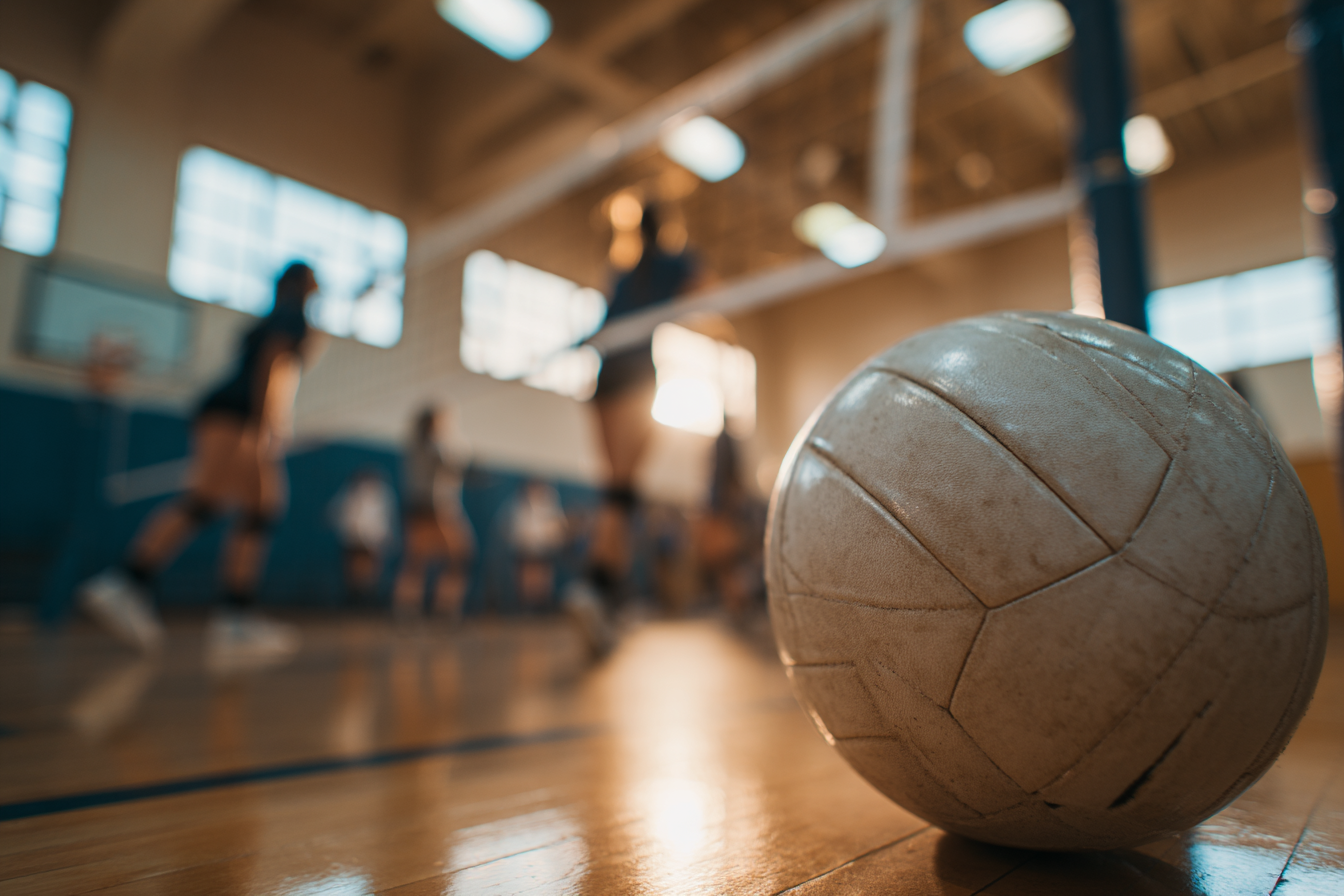
Focus: Develop consistent serves and first passes, use simple offensive systems (e.g., 4–2), hold defined base positions, and transition quickly between offense and defense in 4v4/5v5 volleyball.
Grade Level: 8
Subject Area: Physical Education (Net/Wall Games • Tactical Systems • Team Communication)
Total Unit Duration: 5 sessions (one week), 45–55 minutes per session
I. Introduction
Students move beyond basic volleyball skills into system play and transition awareness. Through serving to zones and pepper drills (bump–set–hit), they refine control and consistency. In 4v4/5v5 games, students learn a simple 4–2 offensive system, define base positions, and rotate into coverage spots on both serve receive and defense. Emphasis is placed on reading the play, moving in and out of base, and communicating responsibilities so rallies stay organized and competitive.
Essential Questions
- How do serves and first passes set up the rest of the rally and influence which options our team has?
- What is a simple offensive system (like a 4–2) and how do base positions help teams stay organized?
- How can we transition quickly between offense and defense, especially after a serve, free ball, or tip?
- How do communication and leadership help us cover the court and support teammates in a volleyball system?
II. Objectives and Standards
Learning Objectives — Students will be able to:
- Serve volleyballs with intentional placement to target zones and adjust force and angle based on distance and strategy.
- Perform bump–set–hit sequences in continuous pepper drills, combining movement, platform, setting, and attacking with control.
- Use a simple 4–2 system (or similar) with defined base positions and rotations in 4v4/5v5 play.
- Adjust positioning and effort in real time based on where the ball, teammates, and opponents are, both in offense and defense.
- Apply basic offensive strategies like serving to weak zones, using free balls smartly, and aiming attacks to open space.
- Demonstrate leadership and teamwork by organizing rotations, calling the ball, and maintaining positive, inclusive communication.
Standards Alignment — 8th Grade (SHAPE America-based custom)
- PE:S1.8e – Striking with Implements for Tactical Placement & Power Strike stationary and moving objects with paddles, rackets, bats, or sticks to send them with purposeful placement, speed, and spin, based on tactical choices.
- Example: In badminton or pickleball, a student alternates between clears, drops, and smashes to move an opponent around the court and set up winning shots.
- PE:S1.8f – Integrating Complex Skill Combinations in Continuous Play Combine locomotor, manipulative, and stability skills in complex, continuous sequences during game play, maintaining form and control throughout.
- Example: In a game, a student dribbles, executes a crossover, passes to a teammate, cuts to space, receives a return pass, and takes a balanced, accurate shot—all under defensive pressure.
- PE:S2.8a – Advanced Spatial Awareness & Tactical Positioning Consistently use spatial awareness to adjust positioning relative to teammates, opponents, and scoring areas, both in offense and defense, in real time.
- Example: In 5v5 or 6v6 games, students recognize when to spread wide, cut to gaps, rotate defensively, or drop into support positions without prompting.
- PE:S2.8c – Adjusting Effort, Force, Angle & Timing Based on Game Demands Adjust effort level, force, angle, and timing of skills (passes, shots, serves, runs) after interpreting distance, defensive pressure, and risk/benefit of different options.
- Example: In a net game, a student chooses a soft angled shot when the opponent is deep and a powerful deep shot when the opponent is crowding the net.
- PE:S2.8d – Selecting & Applying Offensive Strategies Effectively Identify and apply offensive strategies (spreading the field, using screens, give-and-go, overlaps, switching fields, setting picks) to create high-percentage scoring chances.
- Example: In basketball or handball, students run a set play (screen-and-roll or backdoor cut), read the defense, and make a smart choice between shooting or passing.
- PE:S4.8b – Leadership, Teamwork & Inclusive Participation Demonstrate leadership and teamwork by organizing groups, facilitating fair play, encouraging peers, and ensuring all students are included and respected.
- Example: When captaining a team, a student balances teams, assigns roles, listens to ideas, encourages quieter students to participate, and promotes positive communication.
Success Criteria — Student Language
- I can serve to different zones on the court and adjust how hard I hit based on where I’m aiming.
- I can keep a pepper drill (bump–set–hit) going by moving my feet, using a strong platform, and making playable sets and hits.
- I can explain where my base position is in our system and where I move when we are on serve receive, defense, or transition.
- I can make smart decisions about where to serve, pass, or hit to give my team the best chance to win the rally.
- I can communicate and lead positively, helping teammates with rotations, calling the ball, and encouraging everyone.