Unit Plan 31 (Grade K Art): Display Choices Matter
Kindergarten Art: Students explore how placement affects what viewers notice first, learning how middle, corner, and grouping make artwork stand out.

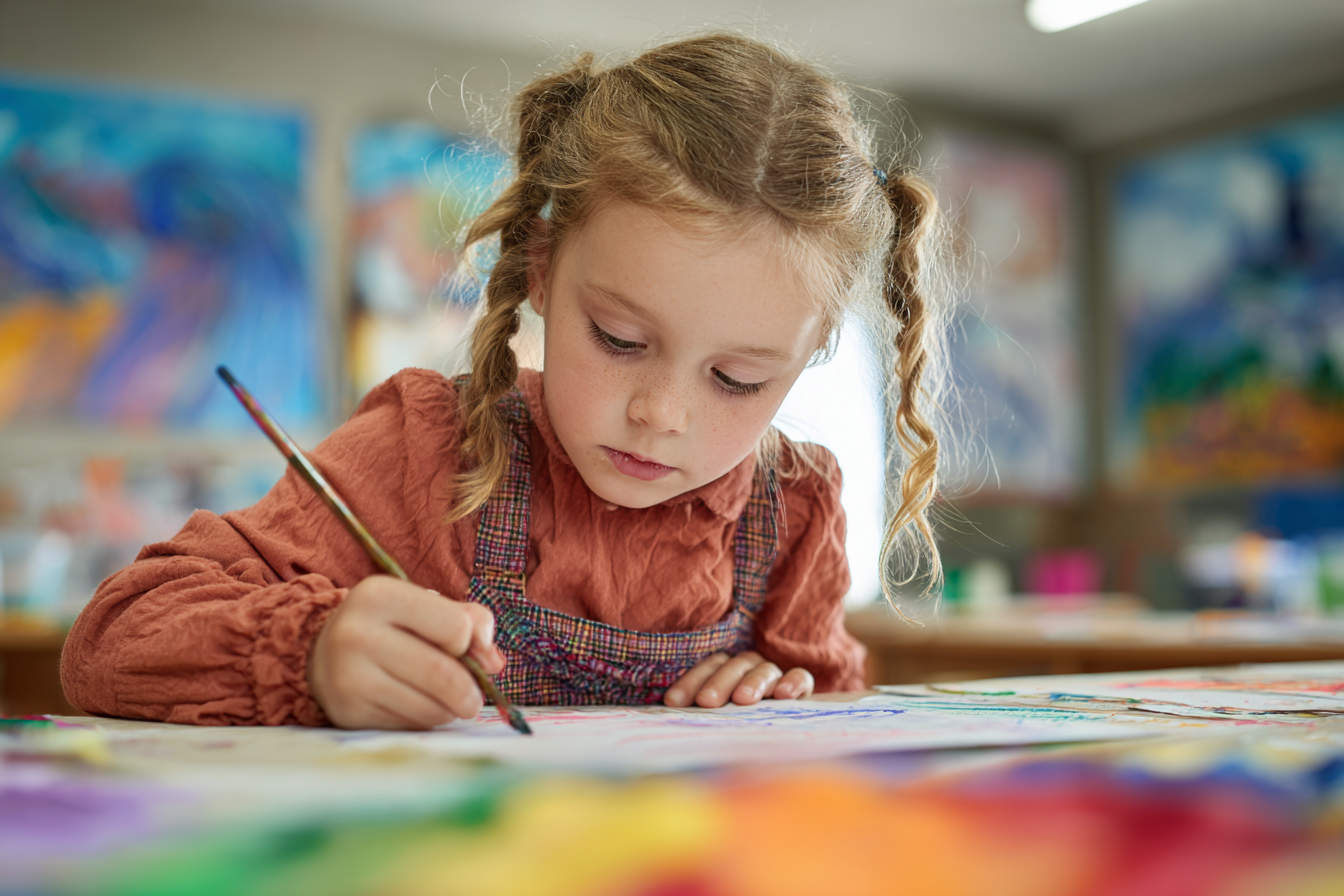
Focus: Notice how placement of artwork changes what people look at first.
Grade Level: K
Subject Area: Art (Visual Arts • Presenting)
Total Unit Duration: 1–2 weeks, 30–45 minutes per session
I. Introduction
In this unit, kindergarten students explore how display choices—where artwork is placed on a wall or board—change what people notice first. By moving the same artworks to different spots (high/low, middle/sides, alone/in a group), students pay attention to where their eyes go first and talk about which art “stands out.” They learn that when we plan where art goes, we are also planning what people see most. By the end of the unit, they can describe how changing the placement of artwork changes how the display looks and feels.
Essential Questions
- What happens when we move artwork to a different place on the wall?
- Why do our eyes go to some artworks first?
- How can placement make one artwork stand out more than others?
- How can we talk about how artwork looks when it is displayed in different places?
II. Objectives and Standards
Learning Objectives — Students will be able to:
- Notice and describe where artwork is placed (high, low, middle, sides, by itself, in a group).
- Say which artwork they see first in a display and explain why in simple language (“It’s in the middle,” “It’s big,” “It’s by itself”).
- Compare two different ways of hanging the same artworks and talk about how the display changes.
- Use simple words like middle, corner, high, low, and stand out to describe displays.
- Help make a small display choice (e.g., where to put one special piece) and explain their thinking.
Standards Alignment — Kindergarten (NCAS-Aligned)
- VA:Pr6.Ka — Talk about how artwork looks when displayed.
- Example: Students notice how artwork stands out on a wall.
Success Criteria — Student Language
- I can say where artwork is on the wall (high, low, middle, side).
- I can tell which artwork I see first and why.
- I can talk about how moving artwork changes how the display looks.
- I can help choose where art should go and explain my idea.