Unit Plan 21 (Grade K Music): Music & Movement Stories
Kindergarten music unit where students respond to music through movement and simple storytelling, noticing tempo and dynamics changes and creating beginning–middle–end “music stories” that show ideas and feelings.

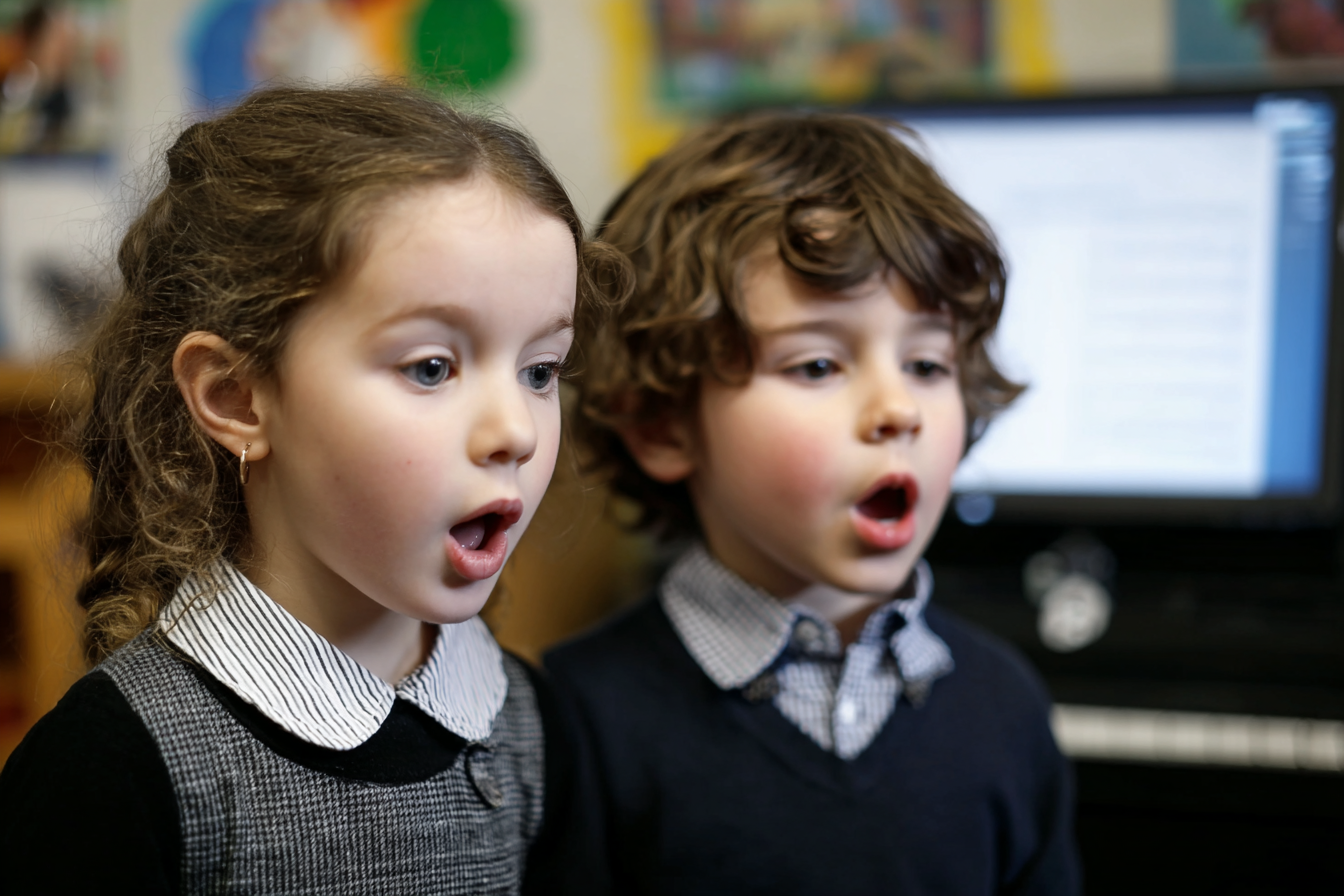
Focus: Respond to music using movement and simple storytelling to show ideas and feelings.
Grade Level: K
Subject Area: Music (Responding)
Total Unit Duration: 3–4 sessions (2+ weeks), 20–30 minutes per session
I. Introduction
In this unit, students explore how music can tell a story through movement, faces, and simple actions. They listen to short pieces with clear changes in tempo and dynamics, then use their bodies to show characters, settings, and events. With guidance, the class builds short “music stories” that have a beginning, middle, and end, and students share how their movements match what they hear.
Essential Questions
- How can music help tell a story without words?
- How do tempo (fast/slow) and dynamics (loud/soft) change the way a story feels?
- How can we show what we hear in music using movement, faces, and actions?
II. Objectives and Standards
Learning Objectives — Students will be able to:
- Listen to short pieces of music and notice changes in tempo and dynamics.
- Use movement, facial expression, and simple actions to show characters or events in a musical story.
- Help create a class music & movement story with a clear beginning, middle, and end.
- Describe in simple words how their movements match what they hear (e.g., “The music got faster, so I ran.”).
- Perform a short “music and movement story” for classmates with safe bodies and focused attention.
Standards Alignment — Kindergarten (NAfME-Based)
- MU:Re8.1.Ka — With guidance, demonstrate awareness of expressive qualities such as dynamics and tempo that reflect a creator’s or performer’s intent.
- Example: Identifying music as “fast” or “slow” and changing movement to match.
Success Criteria — Student Language
- I can show what I hear in music with my body (fast, slow, loud, soft).
- I can move like a character or part of a story while music plays.
- I can help my class make a beginning, middle, and end movement story for a song.
- I can tell a friend how the music and my movement go together.