Unit Plan 36 (Grade K PE): Movement Celebration
Kindergarten PE celebration unit builds joy, active participation, and body awareness as students enjoy favorite games while learning to notice breathing, heartbeat, and how their bodies feel during exercise.

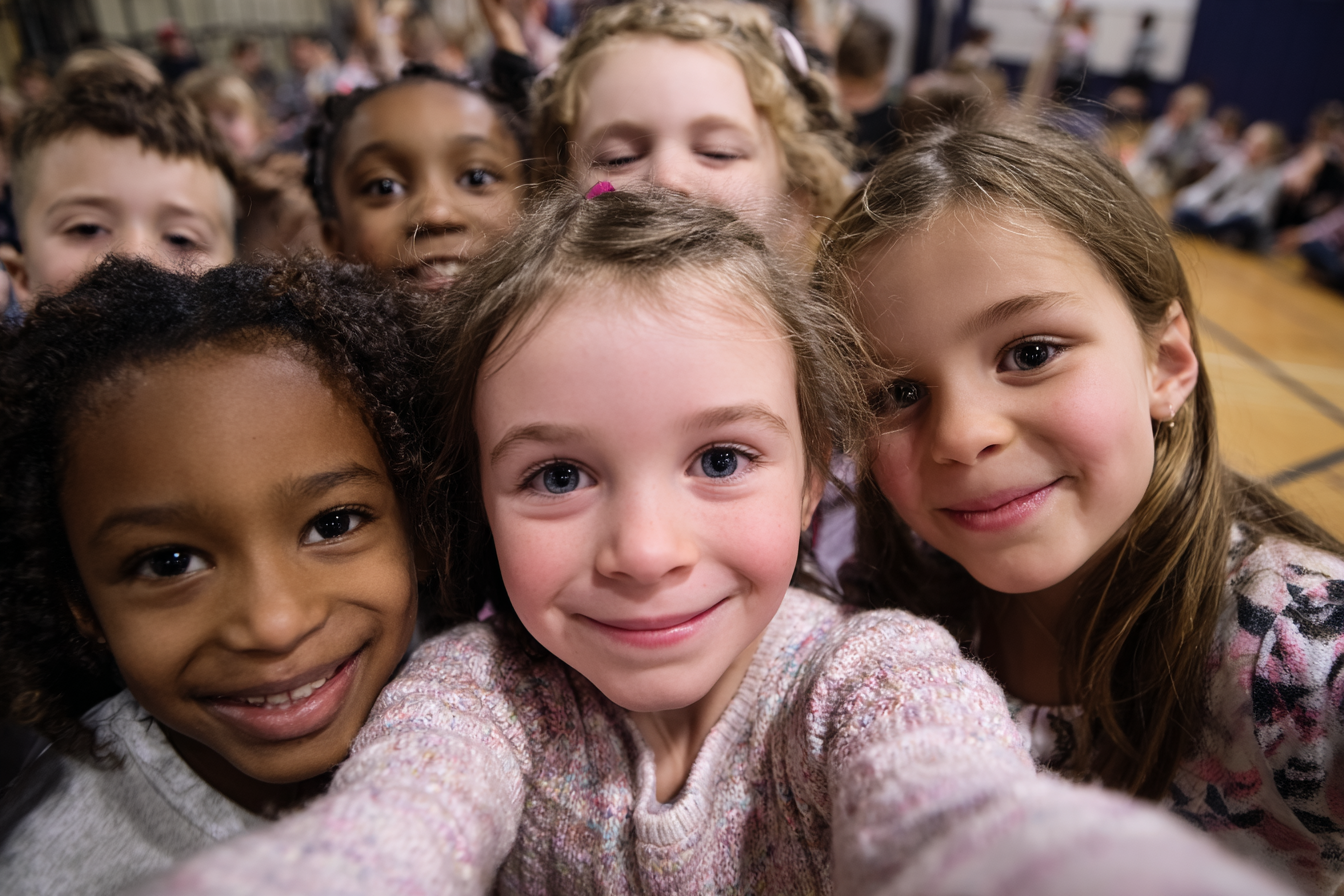
Focus: Help students celebrate active movement through joyful favorite-game experiences while noticing how their bodies feel during exercise.
Grade Level: K
Subject Area: Physical Education (Enjoyment of Movement • Active Participation • Body Responses to Activity)
Total Unit Duration: 2 core sessions + 2 optional sessions (1–2 weeks), 20–30 minutes per session
I. Introduction
Students finish this Kindergarten PE sequence by celebrating how much they have learned about moving, playing, and being active. In this unit, students revisit favorite types of games and movement experiences, enjoy group participation, and begin noticing how active play changes the body through faster breathing, feeling warm, and feeling the heart beat more strongly. This unit uses a group dance warm-up and then moves into a favorite games festival with familiar class activities such as tag, obstacle paths, ball games, or dance/freeze games. The goal is to help students enjoy movement, participate with enthusiasm, and connect active play to simple body responses they can notice and describe.
Essential Questions
- How can I celebrate movement in PE?
- What games and activities do I enjoy the most?
- How does my body feel after active play?
- Why is it fun to keep my body moving?
II. Objectives and Standards
Learning Objectives — Students will be able to:
- Show enjoyment and enthusiasm during favorite PE games and movement activities.
- Recognize simple body responses to active movement such as faster breathing, warmth, and heartbeat changes.
- Participate positively in a movement festival with repeated active play.
- Reflect on favorite games and how activity makes the body feel.
Standards Alignment — Kindergarten (SHAPE America-based custom)
- PE:S5.Ka Show enjoyment and enthusiasm during physical activities.
- Example: Students participate with smiles and positive energy in movement games.
- PE:S3.Kb Recognize body responses to physical activity (breathing faster, sweating, heart beating).
- Example: Students notice their breathing changes after running laps.
Success Criteria — Student Language
- I can show joy and energy in PE.
- I can play favorite games with my class.
- I can notice when my breathing gets faster.
- I can tell how my body feels after I move.
III. Materials and Resources
Tasks & Tools (teacher acquires/curates)
- General Equipment
- Cones to mark boundaries, game zones, walking paths, and safe waiting areas.
- Floor spots or poly spots for home spots and reflection stops.
- Whistle and/or visual stop signal.
- Picture cards or posters showing dance, play, favorite, heart, breathe, warm, freeze, and joy.
- Warm-Up Equipment
- Open space with enough room for whole-group dance movement.
- Music source for group dance warm-up.
- Optional scarves, ribbons, or rhythm cards for added movement variety.
- Optional visual cue cards for clap, step, jump, twirl, and freeze.
- Game/Activity Equipment
- Equipment for several familiar class favorites, such as:
- cones for tag games and boundaries,
- hoops, mats, lines, and spots for obstacle games,
- soft balls, beanbags, hoops, or goals for ball-skill games,
- music and open space for dance/freeze activities.
- Optional voting visuals such as picture cards, colored stickers, clothespins, or standing-choice corners.
- Optional themed visuals such as celebration station, favorite games festival, movement party, or active fun fair to make the lesson especially inviting for Kindergarten students.
- Equipment for several familiar class favorites, such as:
- Reflection & Assessment Tools
- Teacher checklist for enjoyment, enthusiasm, body-response awareness, participation, and safe movement.
- Quick reflection prompts, thumbs-up/sideways/down checks, smiley-face cards, or favorite-game charts.
- Optional anchor chart with cues such as I feel warm, my breathing is faster, my heart is beating, and I liked this game because....
Preparation
- Choose 3–4 familiar favorite games students can enter quickly and enjoy successfully.
- Set up clear game zones ahead of time to reduce transition delays.
- Plan quick body-check pauses where students place a hand on the chest or notice breathing after active rounds.
- Use highly visual voting or choice routines if students will help decide the festival games.
- Keep the lesson centered on joy, movement, and body awareness rather than competition.
Common Misconceptions to Surface
- “Celebration day means there are no rules.” → Celebration still includes safe movement and teacher signals.
- “If I am breathing faster, something is wrong.” → Faster breathing can be a normal body response to activity.
- “Favorite games are only about fun, not learning.” → Favorite games can also help students notice how movement affects the body.
- “If I get tired, I should stop completely.” → Students can pause briefly, notice their body, and rejoin safely.
Key Terms (highlight in lessons) favorite, celebration, joy, active, breathe, heart, warm, move, play, body check
IV. Lesson Procedure
(Each lesson follows: Launch → Warm-up → Game/Activity → Reflect. Timing for a 20–30 minute block.)
Session 1 — Celebrating Favorite Movement Games
- Launch (3–4 min)
- Students begin on home spots facing the teacher.
- Teacher explains that today’s lesson is a movement celebration where students will revisit favorite games and notice how their bodies feel after active play.
- Briefly review 3–4 familiar game options with picture cards or quick reminders.
- Review one important safety reminder: favorite games still use boundaries, freeze signals, and kind behavior.
- Warm-up (5–6 min) — Group Dance Warm-Up
- Equipment: Open space, music source, optional scarves or rhythm cards.
- Set-Up:
- Students spread out in general space or on dance spots with enough room to move safely.
- Teacher stands at the front where all students can follow along.
- Procedure:
- Teacher leads a short whole-group dance using repeated moves such as:
- clap and step,
- march,
- jump two times,
- twirl,
- freeze in a pose.
- The dance should feel upbeat and simple so students can join right away.
- After one active round, teacher pauses for a quick body check and asks:
- “Is your breathing faster?”
- “Do you feel warm?”
- “Can you feel your heart beating?”
- Students restart the dance for another short round.
- Teacher leads a short whole-group dance using repeated moves such as:
- Rules:
- The warm-up is played by following the teacher’s dance moves safely in personal space.
- Students must keep enough room around arms and feet.
- Freeze means stop right away and listen.
- Everyone joins with positive energy and safe bodies.
- Game/Activity (10–12 min) — Favorite Games Festival
- Equipment: Equipment for 2–3 favorite class games.
- Set-Up:
- Teacher selects 2–3 familiar favorite games using a quick class vote or preplanned favorites.
- Possible festival choices include:
- Favorite Tag Game
- Favorite Obstacle Adventure
- Favorite Ball-Skill Game
- Favorite Dance/Freeze Round
- Set each activity in its own clearly marked zone.
- Procedure:
- Students participate in one favorite game for a short round, then freeze and transition to the next festival zone.
- Teacher keeps the rounds short and active so students stay moving and excited.
- Between rounds, teacher leads quick body checks with questions such as:
- “Are you breathing faster now?”
- “Do you feel warm?”
- “Which game made your body work harder?”
- Teacher also reinforces joy and enthusiasm with cues such as:
- “Show your happy movement faces.”
- “Use your best celebration energy.”
- “Play safely and joyfully.”
- Rules:
- The festival is played by following the rules of the chosen activity in each zone.
- Students must freeze on signal and walk safely to the next festival game.
- Everyone uses kind behavior, safe movement, and teacher-approved play choices.
- Students participate positively in each game, even if it was not their first favorite.
- Reflect (2–3 min)
- Prompt: “Which favorite game felt the most fun, and how did your body feel after it?”
Session 2 — Favorite Games and Body-Check Celebration
- Launch (3–4 min)
- Review the favorite games from Session 1 and the body responses students noticed.
- Ask students to place a hand on the chest and remember what it felt like after active play.
- Explain that today they will celebrate favorite movement again and pay even closer attention to breathing, warmth, and heartbeat.
- Warm-up (5–6 min) — Group Dance Warm-Up with Favorite Moves
- Equipment: Open space, music source, optional scarves or rhythm cards.
- Set-Up:
- Use the same dance area as Session 1.
- Procedure:
- Teacher leads another short dance warm-up, but now includes a few favorite movement ideas from students, such as:
- jump and clap,
- march and turn,
- twirl and freeze,
- tiptoe and pose.
- Students repeat the dance pattern for a short round, then pause for a body check.
- Teacher asks simple questions:
- “Is your breathing slow or fast?”
- “Do you feel warm?”
- “Can you feel your heart?”
- Teacher leads another short dance warm-up, but now includes a few favorite movement ideas from students, such as:
- Rules:
- The warm-up is played by following the teacher’s dance pattern safely.
- Students must stay in personal space and freeze on cue.
- Everyone uses joyful movement and safe control.
- Game/Activity (10–12 min) — Favorite Games Festival with Celebration Stops
- Equipment: Same favorite-game equipment as Session 1 plus optional body-check spots.
- Set-Up:
- Use the same favorite games festival setup or a revised top 2–3 list based on student interest.
- Add 1–2 simple “celebration stops” or body-check cones where students pause briefly between games.
- Procedure:
- Students revisit favorite games in short active rounds.
- After each game, they stop at a celebration cone or reflection spot for a quick body check.
- Teacher prompts may include:
- “Touch your chest and feel your heartbeat.”
- “Take one breath and notice how your body feels.”
- “Which game made you feel the most active?”
- Teacher also encourages joy with prompts such as:
- “What game made you smile?”
- “Which one would you want to do again?”
- “How did you celebrate movement today?”
- This helps students connect favorite active play to body awareness and enjoyment.
- Rules:
- The festival is played by following each game’s safety rules and boundaries.
- Students must freeze on signal, transition safely, and stop at celebration/body-check spots when the teacher directs.
- Everyone uses positive energy, safe movement, and kind behavior in each activity zone.
- Body checks are short pauses, not long rest breaks, unless the teacher says otherwise.
- Reflect (2–3 min)
- Prompt: “What was your favorite game today, and what did your body feel like after moving?”
Optional Session 3 — Movement Party Trail
- Launch (3–4 min)
- Review that favorite movement games can help students feel joyful and notice body changes.
- Explain that today they will move through a party trail of favorite activities and body-check stops.
- Warm-up (5–6 min) — Group Dance Warm-Up Favorites
- Equipment: Open space, music source.
- Set-Up:
- Use the same whole-group dance area from earlier sessions.
- Procedure:
- Teacher leads favorite dance moves from Sessions 1 and 2.
- Students continue showing joyful movement and active participation.
- Rules:
- The warm-up is played by following the teacher’s rhythm and movement cues safely.
- Students must keep enough space and freeze on signal.
- Everyone joins with positive energy.
- Game/Activity (10–12 min) — Movement Party Trail
- Equipment: Favorite game equipment, cones, optional body-check signs.
- Set-Up:
- Arrange 3–4 favorite activities as a trail or loop around the room.
- Add one or two body-check stops between activity zones.
- Procedure:
- Students move through the trail in a teacher-guided order.
- At each stop, they play a short favorite activity round and then pause for a simple body-check question.
- This keeps the lesson playful while reinforcing both joy and body awareness.
- Rules:
- The trail is played by completing each activity zone in order and transitioning safely when signaled.
- Students must stay in the correct game area and follow that activity’s rules.
- Everyone freezes on cue and uses calm bodies at body-check stops.
- Reflect (2–3 min)
- Prompt: “Which activity on the party trail made your body feel the most active?”
Optional Session 4 — Celebration Festival Adventure
- Launch (3–4 min)
- Review that students can now celebrate movement by enjoying games and noticing what their body feels like.
- Explain that today they will use those same ideas in one more movement celebration adventure.
- Warm-up (5–6 min) — Group Dance Parade
- Equipment: Open space, music source, optional scarves.
- Set-Up:
- Students stand in personal space or follow the teacher in a simple dance route.
- Procedure:
- Teacher leads a short dance parade of favorite moves, claps, jumps, turns, and freezes.
- This keeps the warm-up directly tied to joy and celebration.
- Rules:
- The warm-up is played by following the teacher’s movement sequence safely.
- Students must keep enough room and freeze on cue.
- Everyone uses active, joyful movement.
- Game/Activity (10–12 min) — Celebration Festival Adventure
- Equipment: Equipment for selected favorite games plus optional celebration visuals.
- Set-Up:
- Use 2–3 favorite game zones and 1–2 body-check celebration spots around the room.
- Students begin at assigned activities or rotate in a teacher-directed order.
- Procedure:
- Students revisit celebration games in short rounds.
- Teacher alternates between active play and short reflection prompts:
- “What game makes you smile?”
- “Where do you feel your heartbeat?”
- “Does your breathing feel faster after this game?”
- This gives students one more fun, active, and reflective celebration of PE movement.
- Rules:
- The celebration adventure is played by following the rules of each game and the teacher’s transition cues.
- Students must use safe movement, kind behavior, and quick freeze responses.
- Everyone respects classmates’ space and joins the games positively.
- Reflect (2–3 min)
- Prompt: “What did you learn about enjoying movement and noticing your body in PE?”
V. Differentiation and Accommodations
Advanced Learners
- Encourage students to describe body responses with slightly more detail, such as “my heart was beating fast after tag.”
- Let students suggest one favorite warm-up move or festival game cue.
- Invite students to model a body-check routine after teacher approval.
Targeted Support
- Keep games familiar, transitions short, and body-check language simple.
- Use repeated cues such as favorite, breathe, heart, warm, joy, and freeze.
- Offer movement choices that allow walking or slower participation before building up.
- Keep students near the teacher for extra modeling and reassurance.
Multilingual Learners
- Use picture cards for dance, favorite, heart, breathe, warm, play, and freeze.
- Demonstrate each game and each body-check routine clearly before students begin.
- Place students near supportive classmates who model routines and simple language well.
- Accept pointing to body parts or gesture during reflection instead of full verbal explanation.
IEP/504 & Accessibility
- Modify game complexity, speed, or movement intensity as needed.
- Offer walking-only or lower-impact versions of favorite activities when appropriate.
- Keep activity boundaries, transition paths, and body-check spots highly visible and predictable.
- Provide extra adult or peer support for transitions, body-check routines, and understanding game expectations if needed.
VI. Assessment and Evaluation
Formative Checks (daily)
- Session 1 — Students begin showing enjoyment during favorite games and noticing simple body responses after active play.
- Session 2 — Students improve their ability to connect favorite movement activities with faster breathing, warmth, and heartbeat changes.
- Optional Session 3 — Students reinforce both joyful participation and body-awareness concepts through a movement trail.
- Optional Session 4 — Students demonstrate stronger celebration of movement and reflection on body responses during favorite activity play.
Summative — Movement Celebration Checklist (0–2 per criterion, total 10)
- Enjoyment and Enthusiasm (PE:S5.Ka)
- 2: Consistently participates with smiles, positive energy, and enthusiasm during favorite games and movement activities.
- 1: Usually participates with enjoyment but may be hesitant or inconsistent at times.
- 0: Frequently needs repeated encouragement to join activities.
- Recognizing Faster Breathing (PE:S3.Kb)
- 2: Consistently recognizes and describes that breathing becomes faster after active play.
- 1: Sometimes recognizes faster breathing but needs reminders or prompts.
- 0: Rarely recognizes breathing changes after activity.
- Recognizing Heartbeat or Warmth Changes (PE:S3.Kb)
- 2: Consistently recognizes feeling warm or noticing heart beating faster during or after active play.
- 1: Sometimes recognizes body changes but needs reminders or prompts.
- 0: Rarely notices body changes during or after movement.
- Following Celebration Game Routines and Safety
- 2: Consistently follows game rules, boundaries, transition routines, and body-check stops safely.
- 1: Usually follows routines but may need occasional reminders.
- 0: Frequently needs repeated reminders about safety or transitions.
- Participation and Positive Effort
- 2: Participates actively and positively throughout the celebration activities.
- 1: Usually participates with effort but may hesitate or need support.
- 0: Frequently needs repeated encouragement to participate.
Feedback Protocol (TAG)
- Tell one strength (e.g., “You did a great job celebrating movement, playing with joy, and noticing how your breathing and heart changed after active games.”).
- Ask one question (e.g., “Which game made your body feel the most active today?”).
- Give one suggestion (e.g., “Next time, try paying attention to your body right after the game stops so you can notice your breathing and heartbeat even faster.”).
VII. Reflection and Extension
Reflection Prompts
- Which favorite game made you smile the most?
- What happened to your breathing after you played?
- How did your body feel warm or active?
- What did you enjoy most about celebrating movement in PE?
Extensions
- Favorite Festival Replay: Bring back one or two top celebration games later as a warm-up or review day.
- Body Check Review: Reuse hand-on-chest and breathing check routines in future Kindergarten PE lessons.
- Movement Share: Invite students to show or name one favorite game and one body feeling they noticed after playing.
Standards Trace — When Each Standard Is Addressed
- PE:S5.Ka — Sessions 1–2, reinforced in Optional Sessions 3–4 (showing enjoyment, enthusiasm, and positive energy during group dance warm-ups and favorite games festival activities).
- PE:S3.Kb — Sessions 1–2, reinforced in Optional Sessions 3–4 (recognizing faster breathing, heartbeat changes, and feeling warm during and after active movement celebration games).