Unit Plan 33 (Grade K Social Studies): Caring for Our World and Each Other
Teach kindness and responsibility as children practice caring for people and the environment through daily actions and a simple class service project.

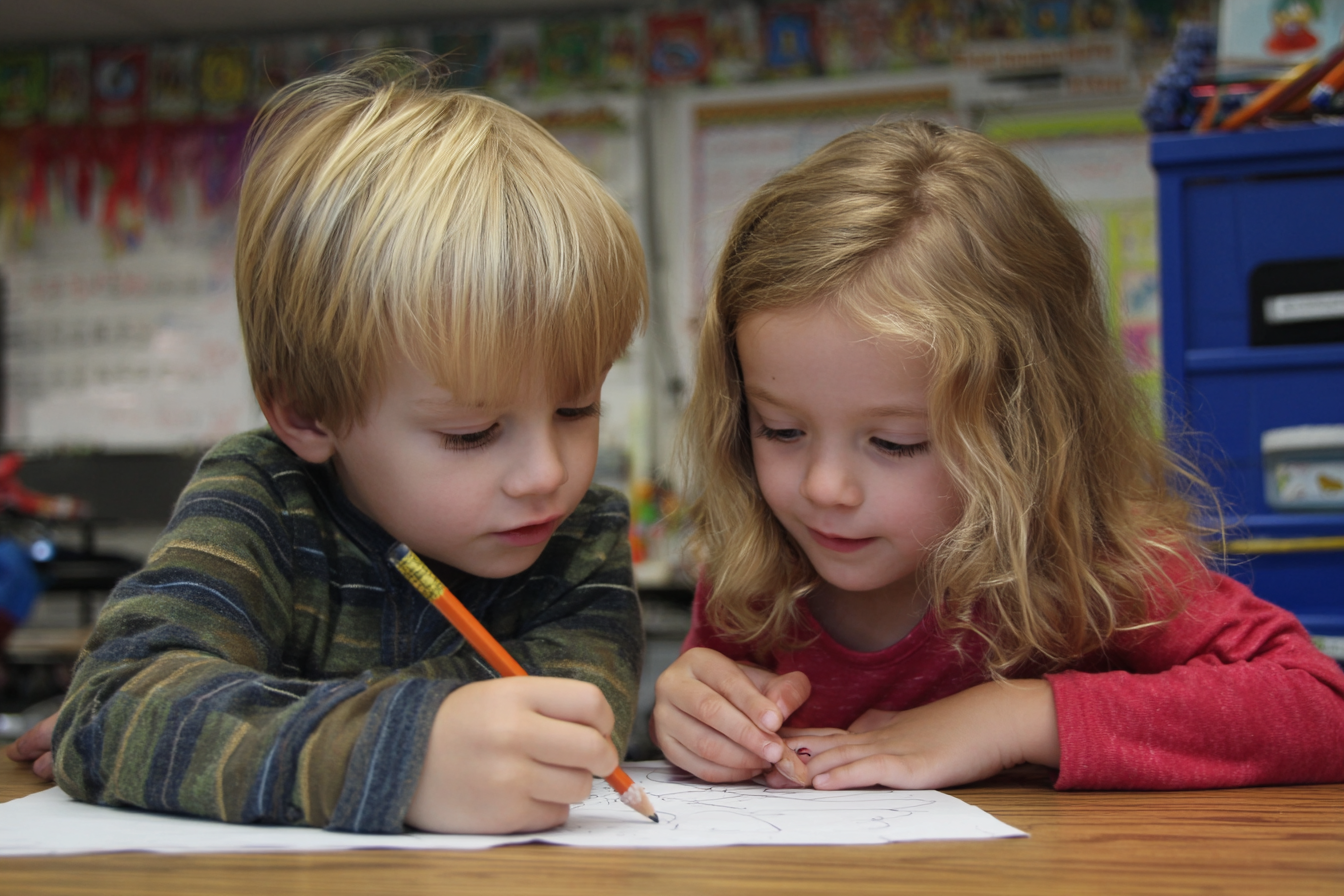
Focus: Help children notice and practice caring behaviors toward people and the environment. Students explore what it means to be kind, responsible, and helpful in a diverse classroom and community, and they participate in a small class action project that helps their school or environment (e.g., thank-you notes, cleanup, recycling posters).
Grade Level: Kindergarten
Subject Area: Social Studies (Civics • Inquiry • Geography)
Total Unit Duration: 5 sessions (one week), 20–30 minutes per session
I. Introduction
In this unit, students become “Kindness and Care Champions” who look for ways to help people and places around them. They recognize that using kind words, including others, and taking care of materials and nature all show responsibility and respect. Through stories, role-plays, and a simple class project, students learn that even small actions—like picking up trash or saying “thank you”—can make a big difference in their classroom and school.
Essential Questions
- What does it mean to be kind and responsible in our classroom?
- How can we include others and show respect for our classmates?
- How can we take care of our classroom, school, and environment?
- How can our class work together to help our community?
- What caring action can I take today to help our world and each other?
II. Objectives and Standards
Learning Objectives — Students will be able to:
- Identify at least two ways to show kindness and respect to classmates (e.g., sharing, kind words, including others).
- Describe simple ways to care for shared materials and classroom/school spaces (e.g., putting supplies away, picking up litter).
- Work cooperatively in a small group to plan or participate in a class service or care activity.
- Contribute ideas (verbally or with pictures) for a class action that helps their school or environment.
- Use simple language like kind, help, share, care, clean up, and community when describing caring actions.
Standards Alignment — Kindergarten (C3-based custom)
- K.C3.Civ.5 — Show responsibility and respect in a diverse classroom.
- Example: Use kind words, include others, and care for shared materials.
- K.C3.Inq.5 — Participate in a small class action to help the community.
- Example: Make posters to remind classmates to recycle.
Success Criteria — Student Language
- I can name one way to be kind to a classmate.
- I can show how to take care of our classroom or school.
- I can work with my classmates on a project that helps others or our environment.
- I can say a sentence like, “I care for my classroom by __,” or “I help my school by __.”