Unit Plan 36 (Grade K Social Studies): Cumulative Synthesis & Exhibition
Celebrates year-end learning as students create and guide simple stations for a “Kindergarten World Fair,” showcasing rules, helpers, maps, traditions, needs, wants, and caring actions.

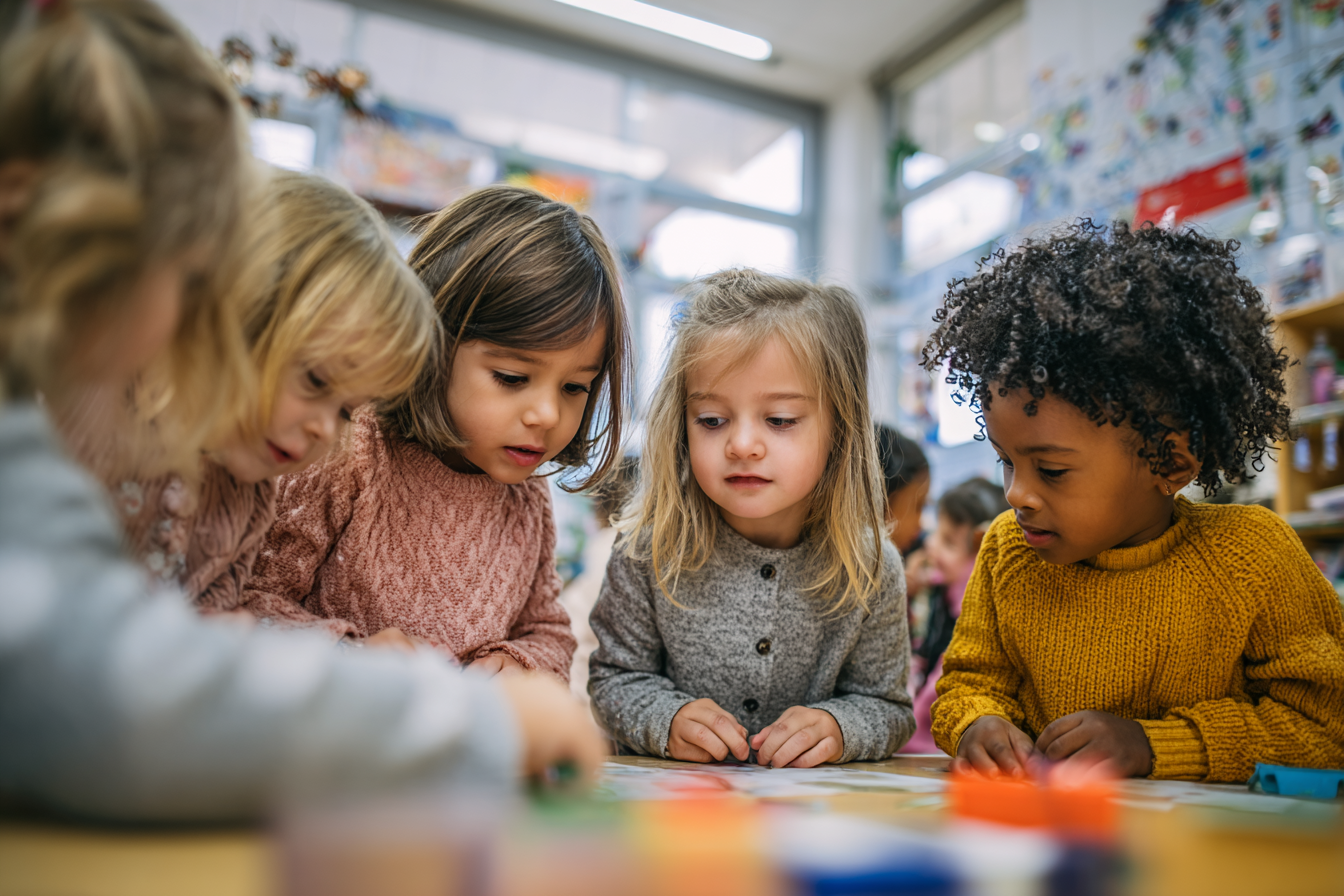
Focus: Celebrate and synthesize the year’s learning by having children show what they know about community helpers, rules and routines, maps and places, family traditions, needs and wants, and caring for the environment. Students prepare simple stations and displays for a “Kindergarten World Fair,” practicing speaking, listening, and explaining their ideas to classmates and invited guests.
Grade Level: Kindergarten
Subject Area: Social Studies (Civics • Inquiry • Geography • History • Economics)
Total Unit Duration: 5 sessions (one week), 20–30 minutes per session
I. Introduction
In this culminating unit, students become “World Fair Guides” who share their learning with others. They revisit key topics from the year—rules and fairness, helpers, maps and places, family and cultural traditions, needs and wants, and caring for our world—and turn them into simple displays and stations. Throughout the week, children practice explaining their work, listening to visitors, and celebrating their growth as kindergarten citizens.
Essential Questions
- What have we learned this year about people, places, and rules?
- How do helpers, rules, and maps make our community work?
- How do our families and traditions make us special and connected?
- How do needs and wants and the way we work and share matter in our lives?
- How can we show others what we know at our Kindergarten World Fair?
II. Objectives and Standards
Learning Objectives — Students will be able to:
- Revisit and talk about key ideas from kindergarten social studies (rules, helpers, maps, traditions, needs/wants, caring for places).
- Help design and create simple displays or stations (posters, maps, drawings, labeled charts, photos) for the “Kindergarten World Fair.”
- Practice explaining their work using simple social studies language (rules, helpers, map, need, want, tradition, care).
- Participate as a guide or visitor, taking turns, listening, and asking/answering simple questions.
- Reflect on what they learned this year and how they can help their community in the future.
Standards Alignment — Kindergarten (C3-based custom, comprehensive spiral)
This unit spirals across:
- K.C3.Inq (Inquiry) — Asking/answering questions, gathering information, sorting what’s important, and sharing learning.
- K.C3.Civ (Civics) — Rules, responsibilities, symbols, participation, and caring for others.
- K.C3.Geo (Geography) — Familiar places, maps, position words, physical features, and caring for environments.
- K.C3.Hist (History) — Past vs. present, important people and holidays, family traditions and stories.
- K.C3.Econ (Economics) — Needs vs. wants, goods and services, work, basic resources.
Success Criteria — Student Language
- I can tell about a community helper, rule, place, or family tradition we learned.
- I can help make a poster, map, or drawing for our Kindergarten World Fair.
- I can take turns and listen when others are sharing.
- I can explain one thing in our station (e.g., “This is a map of our classroom.”).
- I can say one way I can help my classroom or school in the future.
III. Materials and Resources
Tasks & Tools (teacher acquires/curates)
- Chart paper for:
- “What We Learned in Kindergarten” brainstorm chart.
- Station planning charts (e.g., Rules & Helpers, Maps & Places, Family & Traditions, Needs & Wants & Caring for Our World).
- Reflection chart after the fair.
- Student work and artifacts from previous units (if available):
- Old maps of classroom/school, drawings of helpers, weather charts, needs/wants activities, family tradition drawings.
- Materials for displays:
- Poster paper or chart paper, markers/crayons, labels, sticky notes, tape.
- Construction paper for station signs (“Rules Station,” “Helpers Station,” etc.).
- Simple “visitor badges” or stickers for fair day.
- Optional: invitations for another K class, families, or staff to visit the fair (as allowed).
Preparation
- Decide on 3–4 simple stations for the Kindergarten World Fair that cover the strands, for example:
- Station 1: Rules & Helpers (civics).
- Station 2: Maps & Places (geography).
- Station 3: Families & Traditions (history/culture).
- Station 4: Needs, Wants, & Caring for Our World (economics/environment).
- Pull previous work or plan quick new pieces that can be assembled into displays.
- Arrange the classroom so each station has a clear space and materials.
- Plan simple roles for students on fair day (e.g., Greeter, Helper at Station 1, Visitor group 1).
Common Misconceptions to Surface
- Thinking the fair is about “perfect work” instead of sharing learning and effort.
- Believing they must remember everything instead of a few key ideas.
- Confusing needs and wants again; mixing up past/present in history.
- Thinking maps are the same as pictures, not tools to show where things are.
Key Terms (highlight in lessons) rules, helper, map, place, need, want, tradition, past/today, care, community
IV. Lesson Procedure
(Each day uses: Launch → Explore → Discuss → Reflect, in 20–30 minutes.)
Session 1 — Remembering Our Kindergarten Social Studies (Big Ideas) (K.C3.Inq, all strands)
- Launch (5–7 min)
- Say: “This week we will show what we know at our Kindergarten World Fair!”
- Briefly explain that students will make stations to share the most important things they learned.
- Explore (10–15 min)
- Create a “What We Learned in Kindergarten” chart. Prompt with pictures or questions:
- Rules and being safe/fair; helpers at school; maps and places; weather and caring for Earth; families and traditions; needs and wants; jobs and goods/services.
- As students share, sketch simple icons and write key words next to them.
- Create a “What We Learned in Kindergarten” chart. Prompt with pictures or questions:
- Discuss (5–7 min)
- Group the brainstormed ideas into a few categories (rules/helpers, maps/places, families/traditions, needs/wants/caring).
- Tell students: “These groups will become our World Fair stations!”
- Reflect (3–5 min)
- Sentence frame: “One thing I remember learning is __.”
Session 2 — Planning Our World Fair Stations (K.C3.Inq.3–4; K.C3.Civ/Geo/Hist/Econ)
- Launch (5–7 min)
- Review the categories and introduce the planned stations (e.g., 3–4).
- Explain: “Today we will plan what goes at each station.”
- Explore (10–15 min)
- For each station, work as a class (or small groups) to decide what to display. Example:
- Rules & Helpers Station: A chart of classroom rules; drawings of helpers; labels like “principal,” “nurse,” “police officer.”
- Maps & Places Station: Classroom/school maps; labels with “library,” “cafeteria,” “playground.”
- Families & Traditions Station: Drawings of family celebrations; simple captions (“We eat __,” “We sing __”).
- Needs, Wants, & Caring Station: Needs/wants sorting chart; “We care for our world by __” poster.
- Use station planning charts (What will we show? Who does it help/describe?) and let students choose or suggest items.
- For each station, work as a class (or small groups) to decide what to display. Example:
- Discuss (5–7 min)
- Ask students to name one thing for each station.
- Reinforce that they will help make and explain these displays.
- Reflect (3–5 min)
- Sentence frame: “I want to help with the __ station.”
Session 3 — Creating Station Displays (Posters, Maps, and Charts) (K.C3.Inq.4; K.C3.Civ/Geo/Hist/Econ)
- Launch (5–7 min)
- Show the station planning charts and remind students of their roles/groups.
- Review expectations: sharing materials, taking turns, and listening.
- Explore (10–15 min)
- Students work in small groups at each station area to create or finalize displays, with teacher support:
- Draw and label helpers, rules, or simple symbols at Rules & Helpers.
- Trace or redraw simple maps and add icons/labels at Maps & Places.
- Add family celebration drawings and dictated captions at Families & Traditions.
- Make needs/wants or “We care by…” charts/pictures at Needs, Wants, & Caring.
- Teacher and aides support with writing labels from student dictation.
- Students work in small groups at each station area to create or finalize displays, with teacher support:
- Discuss (5–7 min)
- Quick gallery walk: groups visit other stations in progress and share one positive comment.
- Ask: “How will these displays help visitors know what we learned?”
- Reflect (3–5 min)
- Sentence frame: “At my station, I helped by __.”
Session 4 — Practicing Being World Fair Guides (K.C3.Inq.1–2; K.C3.Civ.3)
- Launch (5–7 min)
- Explain: “Today we will practice being guides and visitors before our real fair.”
- Model a short guide script:
- “Welcome to our station. This is our map of the classroom. It shows __.”
- Explore (10–15 min)
- In small groups, students take turns pretending to be guides and visitors at 1–2 stations.
- Provide simple sentence frames at each station, for example:
- Rules & Helpers: “This rule helps us because __.” / “This helper is a __.”
- Maps & Places: “This is a map of __. Here is the __.”
- Families & Traditions: “My family celebrates __ by __.”
- Needs, Wants, & Caring: “We need __ to live.” / “We care for our world by __.”
- Encourage visitors to ask one simple question: “What is this?” or “Who is that?”
- Discuss (5–7 min)
- Ask: “How can we be kind visitors and good listeners at the fair?”
- Chart ideas: “Look at the speaker,” “Wait your turn,” “Say ‘thank you.’”
- Reflect (3–5 min)
- Thumbs up/side/down: “Do you feel ready to be a guide?”
- Sentence frame: “When I am a guide, I will say __.”
Session 5 — Kindergarten World Fair: Sharing Our Learning (Summative) (All strands)
- Launch (5–7 min)
- Set the tone: “Today is our Kindergarten World Fair! We will share what we know with our guests.”
- Explain simple rotations (e.g., half the class starts as guides, half as visitors, then switch).
- Explore (10–15+ min)
- Run the World Fair:
- Guides stand or sit by their station with an adult nearby for support.
- Visitors walk through slowly, listening, looking, and asking simple questions.
- After a few minutes, groups switch roles so everyone guides and visits.
- If guests from another class or staff attend, help them ask simple questions students can answer.
- Run the World Fair:
- Discuss (5–7 min)
- After the fair, gather for a circle discussion:
- “What was your favorite station to guide?”
- “What did you like seeing at someone else’s station?”
- “What new thing did you remember or learn again today?”
- After the fair, gather for a circle discussion:
- Reflect (3–5 min)
- On a reflection chart, complete:
- “We showed people __ (what we know).”
- “We helped others learn about __ (rules, helpers, maps, traditions, needs/wants, caring).”
- Individual frame: “I can help my school by __.”
- On a reflection chart, complete:
V. Differentiation and Accommodations
Advanced Learners
- Invite them to be peer coaches who help others practice guide sentences.
- Encourage them to connect ideas across stations (e.g., “Helpers also help us with our needs.”).
- Let them help with small extras like station signs or a short welcome message to visitors.
Targeted Support
- Provide picture-based sentence frames at each station.
- Assign clear, specific roles (e.g., “Hold this poster,” “Point to the map when you say ‘here.’”).
- Pre-practice short scripts one-on-one or in a small group.
Multilingual Learners
- Encourage sharing in home language first, then give one simple phrase in English.
- Use translated words or family-provided language on some labels if appropriate.
- Pair with a buddy who can model the phrases and help explain displays.
IEP/504 & Accessibility
- Allow alternative participation (e.g., pointing to items instead of speaking, using AAC or picture cards).
- Provide extra time and fewer visitors at a time for students who need reduced stimulation.
- Pre-teach fair routines and expectations with visual schedules and practice rounds.
VI. Assessment and Evaluation
Formative Checks (daily)
- Session 1: Can students name at least one big idea from the year (rules, helpers, maps, traditions, needs/wants, caring)?
- Session 2: Can students help plan what to show at each station with picture/choice support?
- Session 3: Are students actively creating or contributing to displays at their station?
- Session 4: Can students practice simple guide statements and listen as visitors with adult modeling?
- Session 5 (formative within summative): During the fair, can most students share one simple explanation about a station?
Summative — “Kindergarten World Fair Guide” Rubric (0–2 per criterion, total 10)
- Content Recall and Understanding (across K.C3 strands)
- 2: Shows understanding of at least two big ideas (e.g., helpers, rules, maps, traditions, needs/wants, caring) when sharing or responding.
- 1: Shows partial understanding of one big idea with prompts or choices.
- 0: Unable to show understanding of key ideas, even with support.
- Participation in Station Creation (K.C3.Inq.4)
- 2: Actively helps create or organize station displays (drawing, labeling, placing items) and stays generally on task.
- 1: Assists briefly or inconsistently; needs frequent prompts.
- 0: Does not participate in station creation, even with support.
- Guide/Visitor Participation (K.C3.Civ.3)
- 2: Participates as both guide and visitor, taking turns, listening, and following fair routines with minimal support.
- 1: Participates in at least one role (guide or visitor) but needs reminders for listening/turn-taking.
- 0: Has difficulty participating in roles, even with adult support.
- Communication of Learning (K.C3.Inq.5)
- 2: As a guide, gives at least one clear statement about the station (e.g., “This is our map,” “We drew helpers,” “We showed needs and wants.”).
- 1: Communicates with significant prompting or only repeats a modeled phrase.
- 0: Does not attempt to communicate about the station, even with support.
- Reflection on Community and Self as Helper
- 2: Can express at least one way they helped with the fair or one way they can help at school in the future.
- 1: Gives a very general reflection (“I helped”) without detail, even after prompting.
- 0: Does not reflect, even with prompts and models.
Feedback Protocol (TAG)
- Tell a strength: “You did a great job telling visitors about our map.”
- Ask a question: “What part of the fair made you feel most proud?”
- Give a suggestion: “Next time, try speaking a little louder so visitors can hear your great ideas.”
VII. Reflection and Extension
Reflection Prompts
- What did you enjoy most about our Kindergarten World Fair?
- Which station helped you remember something important we learned?
- How can you keep helping your class and school in first grade and at home?
Extensions
- Hallway Display: Keep some or all displays up as a celebration of learning for families and future visitors.
- Buddy Sharing: Invite another class (older “buddies” or another K class) to visit the stations later in the week.
- Home Connection: Send a simple note inviting families to ask children: “What did you show at your World Fair?” and share one way the child helps at home.
VIII. Standards Trace — When the Spiral Standards Are Addressed
- K.C3.Inq (Inquiry)
- Session 1–2: Recall big ideas, group them into categories, and plan stations.
- Session 3–4: Create displays and practice explanations using evidence from the year.
- Session 5: Share learning and reflect on what they showed.
- K.C3.Civ (Civics)
- Across sessions: Review rules, helpers, participation, and symbols within stations.
- Sessions 2–5: Practice voting/choosing, taking turns, sharing, listening, and helping community.
- K.C3.Geo (Geography)
- Sessions 1–3: Revisit maps, places, and physical features in station planning and displays.
- Sessions 4–5: Explain maps and places to visitors during the fair.
- K.C3.Hist (History)
- Sessions 1–3: Review and display family traditions, important people, holidays, and past vs. present artifacts.
- Session 5: Retell simple historical or family stories for visitors.
- K.C3.Econ (Economics)
- Sessions 1–3: Revisit needs/wants, goods/services, workers, and resources in the Needs & Wants station.
- Session 5: Explain simple economic ideas (needs/wants, helpers’ jobs) when guiding visitors.