Unit Plan 36 (PreK Art): Year-End Reflection
Preschool art unit where children reflect on their favorite creations, share simple opinions about their artwork, and connect art to personal experiences.

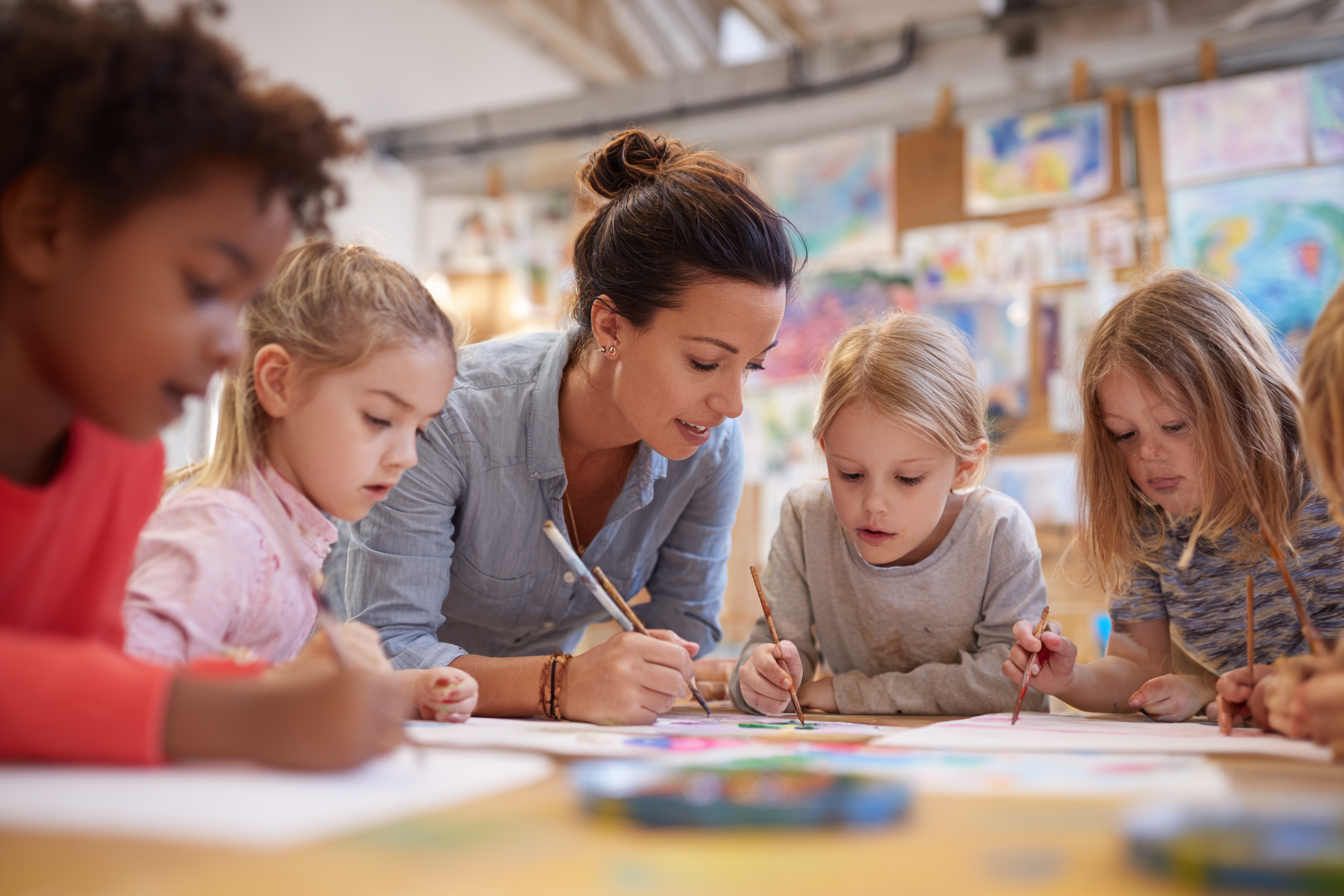
Focus: Share what you liked creating this year and why, connecting artwork to personal experiences and simple opinions.
Grade Level: PreK
Subject Area: Art (Visual Arts • Responding • Connecting)
Total Unit Duration: 1–3 weeks, 20–30 minutes per session
I. Introduction
In this unit, preschool children look back on the art they created throughout the year and talk about what they liked making and why. They revisit favorite drawings, paintings, collages, and clay pieces, noticing what they enjoyed—colors, tools, subjects, and feelings. Children practice sharing simple opinions about their own artwork (“I like it because…”) and talk about how some pieces show their family, friends, or special experiences. By the end of the unit, each child can name at least one favorite artwork or type of art and give a simple reason that connects to their life or feelings.
Essential Questions
- What artwork did I like making the most this year?
- Why do I like that artwork—what do I notice or remember about it?
- How does my artwork show something from my life (family, home, places I go, things I love)?
- How does it feel to remember and share my favorite art from this year?
II. Objectives and Standards
Learning Objectives — Children will be able to:
- Look at several pieces of their own artwork and choose one or two favorites.
- Share a simple opinion about a favorite artwork using language such as “I like…” or “My favorite is…”.
- Say at least one reason why they like a piece (color, subject, memory, feeling).
- Talk about how one artwork shows something from their personal experience (family, event, favorite place or activity).
- Participate in a short sharing circle where they listen to and celebrate classmates’ favorite art.
Standards Alignment — PreK (NCAS-Aligned)
- VA:Re9.PKa — Share what they like about artwork using simple opinions.
- Example: A child says, “I like the bright colors.”
- VA:Cn10.PKa — Create artwork based on personal experiences and talk about it.
- Example: A child draws their family and describes it.
Success Criteria — Child-Friendly Language
- I can look at my pictures and choose a favorite.
- I can say, “I like this picture because ___.”
- I can tell someone what from my life is in my picture (family, place, thing I like).
- I can listen when my friends talk about their favorite art.
- I can feel proud of the art I made this year.
III. Materials and Resources
Tasks & Tools (teacher acquires/curates)
- A small selection of each child’s artwork from the year (3–6 pieces if possible).
- Individual folders, trays, or simple portfolios to hold each child’s work.
- “My Favorite Art” mat or paper with two boxes and simple icons (heart/star for “favorite”).
- Sentence frame cards or posters:
- “I like this picture because ___.”
- “My favorite picture is ___.”
- “This picture shows ___ from my life.”
- Visual icons to support reasons:
- Heart (I love it).
- Smiley face (It makes me happy).
- Family icon (Shows my family).
- House/park icon (Shows a place I know).
- Paint palette (I like the colors).
- Drawing materials (crayons, markers, colored pencils) and paper for an optional “favorite memory” or “favorite art” drawing.
Preparation
- Gather and organize each child’s artwork into individual sets.
- Prepare “My Favorite Art” mats and place them at tables or on the floor for sorting.
- Create a simple anchor chart: “Talking About Our Favorite Art” with picture cues for like, because, family, place, colors.
- Decide on a comfortable circle area for whole-class sharing.
Common Misconceptions to Surface
- “If I don’t choose a picture, it means it is bad.” → All artwork is part of learning; choosing a favorite doesn’t mean the others are bad.
- “I should pick the same favorite as my friend.” → Everyone can have different favorites, and that is okay.
- “I need a big reason to like my art.” → Simple reasons (colors, people, feelings) are good reasons.
- “My art only matters if it looks like someone else’s.” → Art is special when it shows your ideas and experiences.
Key Terms (highlight in lessons) favorite, like, because, proud, remember, family, story, life, year, happy
IV. Lesson Procedure
(Each session follows: Launch → Explore/Make → Discuss/Share → Reflect. Timing for a 20–30 minute class.)
Session 1 — Looking Back at Our Art (Core Session — Addresses Standards: VA:Re9.PKa, VA:Cn10.PKa)
Launch (5–7 min)
- Gather children and show 2–3 of your own simple drawings or sample artworks.
- Model talking about a favorite:
- “My favorite is this one because I like the bright colors.”
- “This picture shows my family at the park, and that makes me happy.”
- Explain that today they will look at their art from the year and think about which pieces they like the most and why.
Explore/Make (Choosing Favorites) (10–15 min)
- Give each child their folder or tray of artwork and a “My Favorite Art” mat.
- Invite them to gently spread their pieces out and look at each one.
- Walk around asking prompts:
- “What do you see in this picture?”
- “How does this picture make you feel?”
- “Which picture do you like best?”
- Encourage them to place one or two pieces on the mat as favorites and use sentence frames:
- “I like this picture because ___ (color, people, place, feeling).”
- “This picture shows ___ from my life.”
- Support children who struggle to choose by offering either/or questions and pointing prompts.
Discuss/Share (3–5 min)
- Invite a few volunteers to share one favorite picture with the group or a small group:
- “My favorite picture is this one because ___.”
- Celebrate all responses and recognize that reasons can be simple and personal.
Reflect (2–3 min)
- Quick frame:
- “Today I chose a favorite artwork from this year and said why I like it.”
Optional Session 2 — Drawing My Favorite Thing to Make
Launch (5–7 min)
- Tell children: “Today you will make one more picture that shows something you loved creating or something you love from your life.”
- Review a few examples: pictures of family, pets, playgrounds, birthdays, or favorite toys and colors.
Explore/Make (Creating a Favorite Memory/Art Picture) (10–15 min)
- Give children drawing materials and paper.
- Prompt them:
- “Think about your favorite thing you made or something special from your life.”
- “Who is in your picture? Where are you? What colors do you want to use?”
- As they work, support them in connecting to personal experience:
- “Tell me about what is happening in your picture.”
- “Is this your family? Your favorite place?”
Discuss/Share (3–5 min)
- Invite a few children to hold up their new drawing and share:
- “This picture shows ___ and I like it because ___.”
- Link this back to the year: “We made many kinds of art this year. This picture shows something that is special to you.”
Reflect (2–3 min)
- Prompt:
- “Today I drew something I love from my life and said why I like it.”
Optional Session 3 — Year-End Sharing Circle
Launch (5–7 min)
- Gather children in a circle with either their favorite piece from Session 1 or their new drawing from Session 2.
- Explain: “We will have a Year-End Reflection Circle. Each artist can show one picture and share what they liked creating and why.”
Explore/Make (Sharing Favorites) (10–15 min)
- One by one (or in very small groups), invite children to hold up their artwork.
- Prompt with simple questions as needed:
- “What does your picture show?”
- “Why do you like this picture?”
- “Is there something from your life in this picture?”
- Help form short statements:
- “I like this picture because it has my family.”
- “I like this one because I used many colors.”
- “I like it because it makes me feel happy.”
- Encourage the rest of the class to look at each artist and their picture, using quiet bodies and kind faces.
Discuss/Share (3–5 min)
- Ask the group:
- “What kinds of things did we hear people say they liked about their art?”
- “How do we feel about all the art we made this year?”
- Emphasize pride, effort, and joy in creating.
Reflect (2–3 min)
- Group reflection:
- “We are artists who can talk about what we liked creating this year and why it is special to us.”
V. Differentiation and Accommodations
Advanced Learners
- Encourage them to give more than one reason for liking a piece (color, subject, how long it took, how they solved a problem).
- Ask them to compare favorites:
- “I liked this picture earlier in the year, and now I like this one because ___.”
- Invite them to help model sentence frames for peers: “I like this picture because…”
Targeted Support
- Limit the number of artworks they look at at once to prevent overwhelm (e.g., 2–3 at a time).
- Use picture cues (color swatch, heart, family icon) to help children pick reasons:
- “Do you like it because of the colors, because it shows your family, or because it makes you happy?”
- Accept pointing and nodding as valid responses and translate into words:
- “You are pointing to the colors. You’re telling me you like it because of the colors.”
- Offer small group or one-on-one support for the sharing circle if large groups are difficult.
Multilingual Learners
- Encourage children to talk about their favorite artwork first in their home language; then, help them repeat a short sentence in English if they are comfortable.
- Use visuals and gestures to support words like favorite, like, happy, family, home.
- Model simple bilingual frames when possible:
- “I like this picture because it shows mi familia / my family.”
- Restate their home-language comments in English for the group while respecting both languages.
IEP/504 & Accessibility
- Offer enlarged images of artwork for children with visual needs, or bring pieces closer during sharing.
- Provide adapted drawing tools (thick crayons, markers, grips) for the optional drawing session.
- Accept alternative forms of communication (eye gaze, picture symbols, communication device buttons for “I like it” or “family”) for expressing favorites and reasons.
- Allow flexible participation in the circle (child can share from a preferred seat or with adult support).
VI. Assessment and Evaluation
Formative Checks (each session)
- Session 1 — Children identify one or more favorite artworks and attempt to express why they like them.
- Optional Session 2 — Children create a drawing based on a favorite thing or personal experience and begin to talk about it.
- Optional Session 3 — Children participate in a sharing circle, expressing at least a simple opinion about a favorite artwork and listening to others.
Summative — Year-End Reflection Observation Task (0–2 per criterion, total 10)
- Expressing Simple Opinions (VA:Re9.PKa)
- 2: Child clearly says what they like about an artwork (e.g., “I like the bright colors,” “I like the big rainbow”).
- 1: Child expresses a general liking (“I like it”) but needs prompting to add any details.
- 0: Child does not express any opinion about artwork, even with support.
- Connecting Artwork to Personal Experience (VA:Cn10.PKa)
- 2: Child states how the artwork connects to their life (e.g., “This is my family,” “This is my birthday party”).
- 1: Child hints at a personal connection that the teacher must interpret or restate.
- 0: Child does not show or talk about a personal connection, even with prompting.
- Selection and Identification of Favorite Artwork
- 2: Child chooses at least one favorite artwork and consistently identifies it when asked.
- 1: Child chooses a favorite with significant help or changes their choice often but eventually settles on one.
- 0: Child is unable or unwilling to choose a favorite artwork, even with support.
- Participation in Sharing Activities
- 2: Child participates in the sharing circle or small-group sharing by showing artwork and speaking or communicating in another clear way.
- 1: Child participates with frequent prompts or in a very limited way (e.g., shows artwork but does not speak).
- 0: Child does not participate meaningfully in sharing, even with support.
- Positive Engagement with Art Reflection
- 2: Child shows excitement or pride (through words, facial expressions, or body language) when talking about their art.
- 1: Child shows some engagement but needs support to label feelings or stays mostly neutral.
- 0: Child shows little or no engagement with the reflection process, even with support.
Feedback Protocol (TAG)
- Tell one strength: “You did a great job telling us what you liked about your artwork.”
- Ask one question: “Is there another picture from this year that you also liked making?”
- Give one suggestion: “Next time, you might tell us even more about who or what from your life is in your picture.”
VII. Reflection and Extension
Reflection Prompts
- What was your favorite artwork you made this year? Why did you like it?
- What did your artwork show about your family, your home, or things you love?
- How did it feel to share your favorite art with the class?
- What kind of art would you like to make next year?
Extensions
- My Favorite Art Mini-Book: Help each child create a tiny booklet with a photo or drawing of their favorite artwork and a dictated sentence: “I like this picture because ___.”
- Class Reflection Chart: Make a chart with columns like “Family,” “Places,” “Colors,” “Animals” and tally how many favorites include each idea.
- Family Reflection Note: Send home a simple note encouraging families to ask, “What was your favorite art from this year, and why did you like making it?” and invite children to share their Year-End Reflection at home.
Standards Trace — When Each Standard Is Addressed
- VA:Re9.PKa — Session 1 (children share simple opinions about favorite artworks), Optional Session 2 (children talk about what they like in their new favorite drawing), Optional Session 3 (children express what they liked creating and why during the sharing circle).
- VA:Cn10.PKa — Session 1 (children talk about how their favorite artwork shows something from their life), Optional Session 2 (children create and describe a drawing based on a personal experience or favorite thing), Optional Session 3 (children connect their shared artwork to family, places, or activities they care about).