Unit Plan 3 (PreK Music): High & Low Sounds
PreK music unit exploring high and low sounds with voice, movement, and listening games to build pitch awareness and playful musical responses.

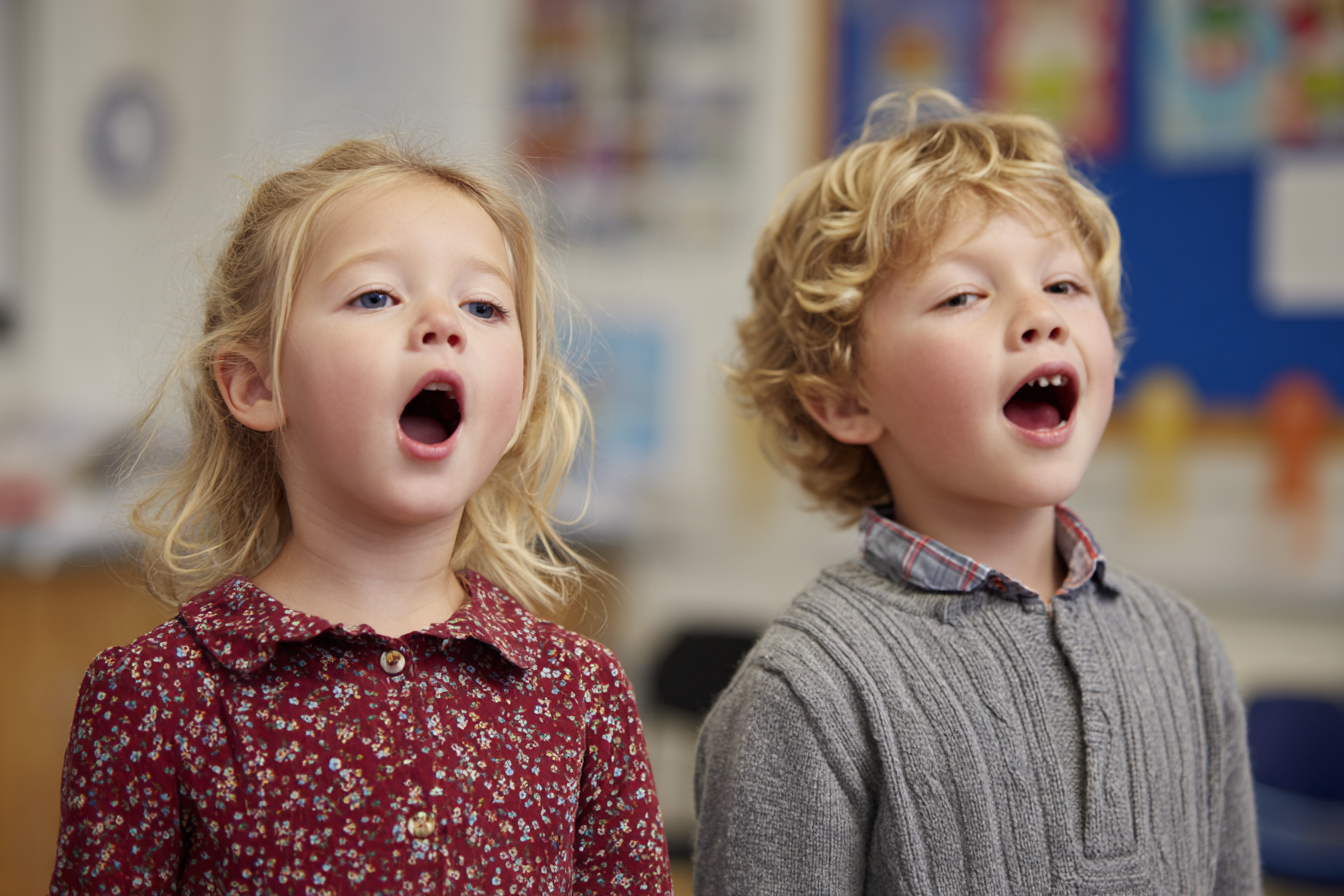
Focus: Children explore high and low sounds using their voices, bodies, and listening ears. Through playful vocal games, movement, and simple listening tasks, they learn to notice and show whether a sound is high or low.
Grade Level: PreK
Subject Area: Music (Exploring • Moving • Singing • Listening)
Total Unit Duration: 3–4 sessions (2+ weeks), 15–20 minutes per session
I. Introduction
Children discover that music can go up and down like a slide or a rocket. Using simple songs, glissandos (“whoooop!”), and movement (reaching tall, crouching low), they explore what high and low sounds feel like. They also practice listening carefully and telling whether sounds they hear are high or low, using picture cues and gestures to show what they notice.
Essential Questions
- How can we tell if a sound is high or low?
- How can we use our voices and bodies to show high and low sounds?
- How does listening carefully help us notice different kinds of sounds in music?
II. Objectives and Standards
Learning Objectives — Children will be able to:
- Use voice (e.g., “whooooo” vs. “booooo”) and body movement (reaching up, crouching down) to show high and low sounds.
- Point to or hold up a picture card or gesture to show whether a sound they hear is high or low.
- Follow teacher-led games that move sounds up, down, or stay the same, showing pitch direction with movement.
- Create a simple high/low pattern using voice or movement (e.g., “high–high–low”) and share it with the class.
Standards Alignment — PreK Music (NAfME-based)
- MU:Pr4.2.PK — Explore music concepts through singing and movement.
- Children explore pitch, loud/soft, and steady beat through playful songs and actions.
- Example: Singing high and low echoes while moving hands up and down.
- MU:Re7.1.PK — Identify music through listening.
- Children recognize and describe sounds and music they hear using simple words or gestures.
- Example: Saying “That sound is high” or “That is a low drum sound.”
Success Criteria — Child-Friendly Language
- I can tell if a sound is high or low.
- I can use my voice and body to show high and low sounds.
- I can listen and show what I hear with a picture, gesture, or movement.