Unit Plan 24 (PreK Music): Moving to Cultural Music
PreK world music movement unit where children explore beat and tempo through dancing, swaying, and jumping to music from different cultures.

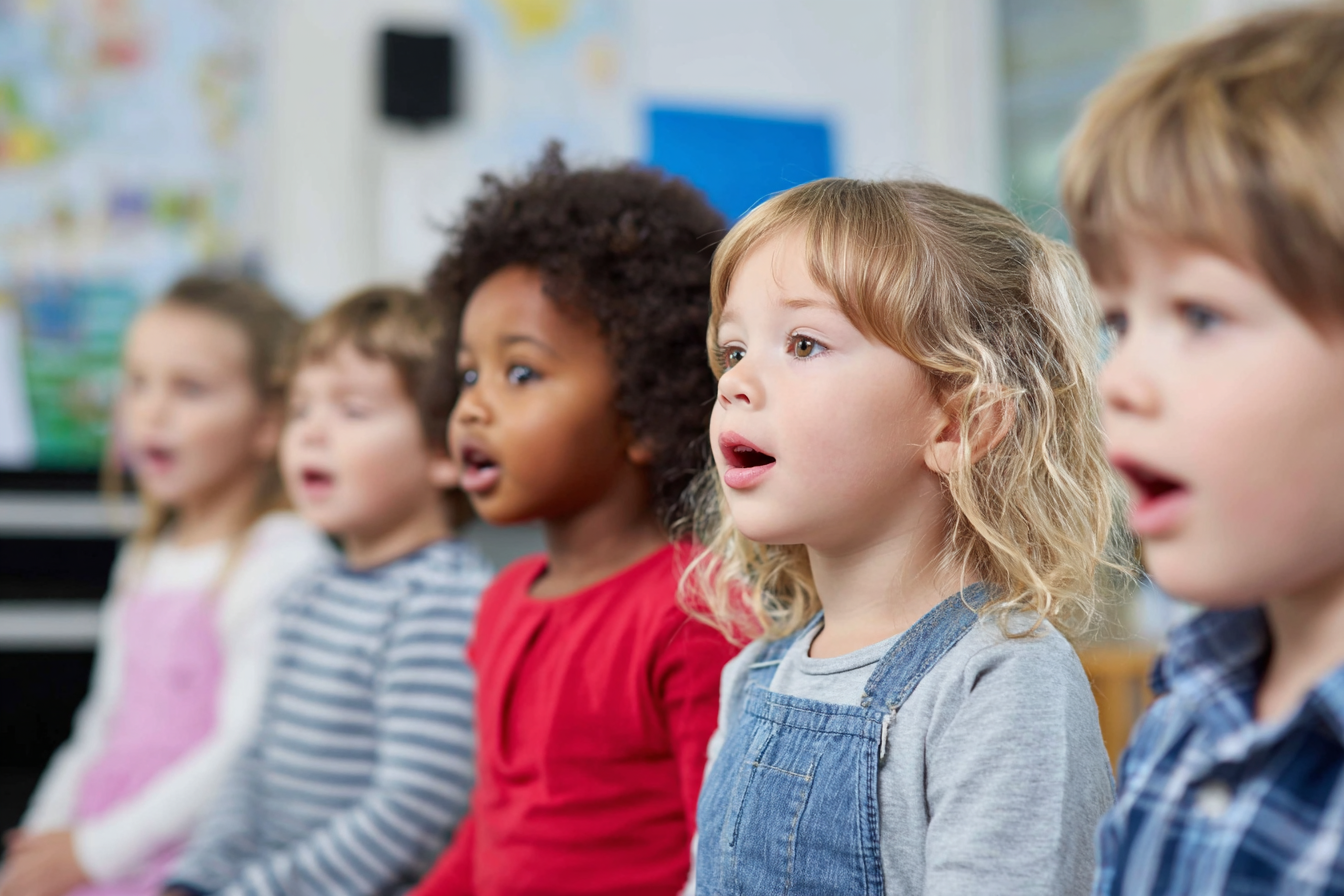
Focus: Use movement to respond to music from different cultures, exploring how beat, tempo, and style change the way our bodies move.
Grade Level: PreK
Subject Area: Music (Exploring • Performing • Responding • Connecting)
Total Unit Duration: 3–4 sessions (2+ weeks), 20–30 minutes per session
I. Introduction
Children experience short pieces of world music and explore different ways to move their bodies safely in response. Through simple prompts (walk, sway, jump, tiptoe), they begin to notice how fast/slow, strong/gentle, and smooth or bouncy music invites different movements. The class practices taking turns, watching the teacher for stop/go signals, and showing respect for other cultures’ music and dance ideas.
Essential Questions
- How can we move our bodies to show what we hear in music from different places?
- How do fast/slow and loud/soft sounds change the way we want to move?
- How can we show respect when listening and moving to music from other cultures?
II. Objectives and Standards
Learning Objectives — Children will be able to:
- Move their bodies (walk, sway, jump, tiptoe) to match the tempo and energy of cultural music examples.
- Show they are listening by starting, stopping, and changing movement when the music changes or when the teacher signals.
- Describe, in simple language, how they moved to the music (fast/slow, big/small, bouncy/smooth) and connect it to pictures or stories from another place.
- Participate in simple movement patterns or “follow-the-leader” dances inspired by world music examples.
Standards Alignment — PreK Music (NAfME-Inspired)
- MU:Pr4.1.PK — Demonstrate awareness of music through movement and sound. Children respond physically or vocally to music they hear.
- Example: Moving fast to fast music, slow to slow music.
- MU:Cn11.0.PK — Explore music from different places and cultures. Children experience music from varied cultures and traditions.
- Example: Moving to music from different countries.
Success Criteria — Child-Friendly Language
- I can move my body in a way that matches the music I hear.
- I can start and stop my movement when the music or teacher tells me to.
- I can say how the music makes me feel and how my body wanted to move (fast/slow, big/small, bouncy/smooth).
- I can try out new movements when we listen to music from other places.