Unit Plan 1 (PreK Music): Music Routines & Listening
PreK music routines unit that teaches classroom rules, listening bodies, and safe instrument use through songs, movement games, and sound exploration—building awareness of loud/soft, fast/slow, and instrument sounds for confident, respectful music participation.

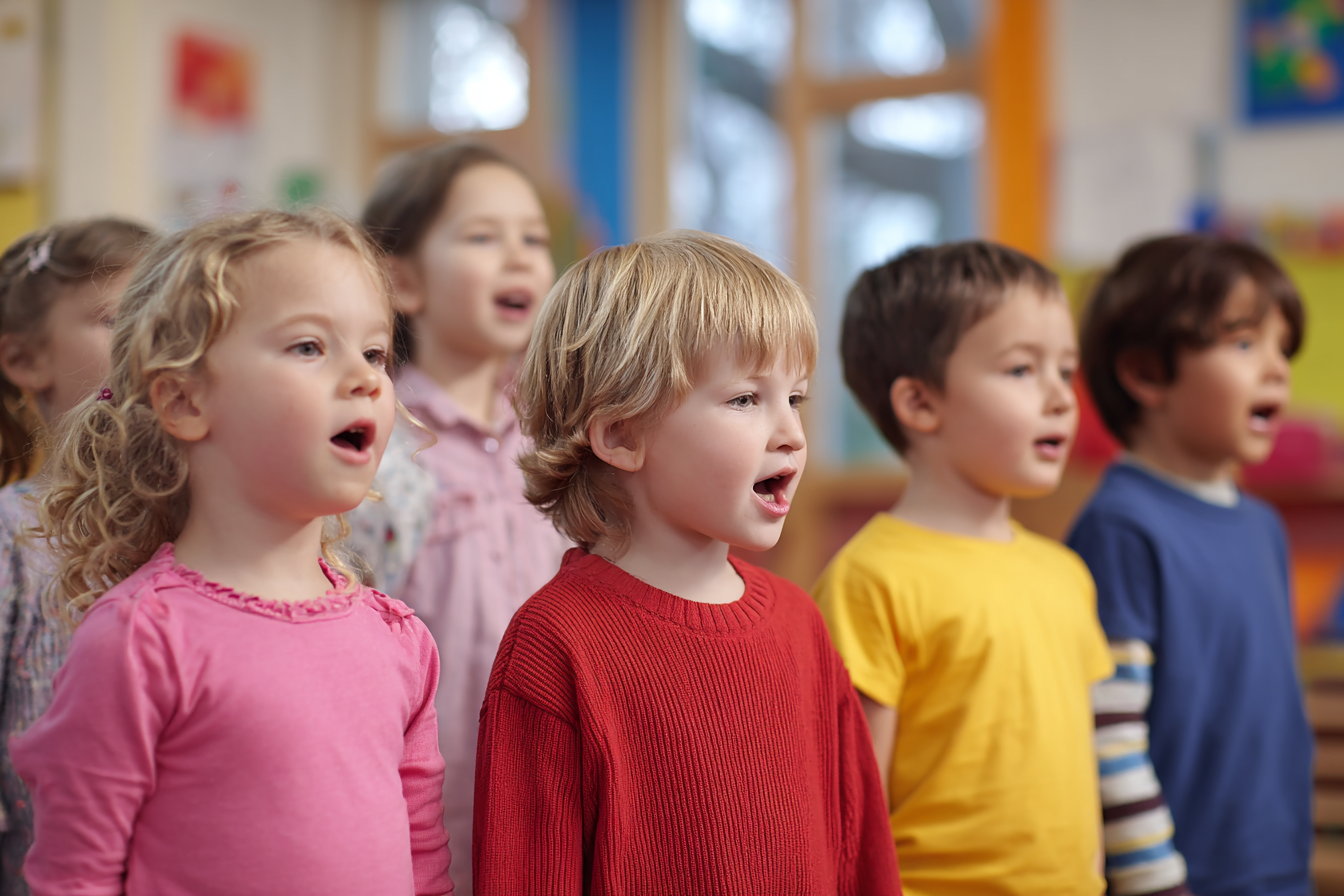
Focus: Explore classroom music rules, listening behaviors, and sound awareness through simple songs, movement, and instrument exploration.
Grade Level: PreK
Subject Area: Music (Responding • Performing • Connecting)
Total Unit Duration: 3–4 sessions (2+ weeks), 20–30 minutes per session
I. Introduction
Children are introduced to the music classroom as a special place for listening, moving, and making sounds safely. Through short, playful activities, they learn basic routines: where to sit, how to hold and put away instruments, and what “listening bodies” look like. Children practice noticing sounds around them, talking about what they hear (“loud,” “soft,” “high,” “low”), and responding with simple movements that match the music.
Essential Questions
- What does it look and sound like when we are ready for music?
- How can we listen carefully to sounds and music in our classroom?
- How can we use our bodies and voices to show that we hear the music?
II. Objectives and Standards
Learning Objectives — Students will be able to:
- Show basic music routines (where to sit, how to move to and from the carpet, how to use and put away instruments safely).
- Demonstrate listening behaviors with their bodies (eyes on teacher, quiet mouth, still hands when needed) and voices (waiting for turn, echoing a sound).
- Identify and describe at least one sound or musical element they hear (e.g., “That was loud,” “I heard a drum,” “The music was fast”).
- Respond to music with simple movement or vocal sounds (e.g., moving fast/slow, tapping to the beat, humming along).
Standards Alignment — PreK Music (NAfME-Aligned)
- MU:Re7.1.PK — Identify music through listening. Children recognize and describe sounds and music they hear.
- Example: Saying “That music is loud” or “That is a drum.”
- MU:Pr4.1.PK — Demonstrate awareness of music through movement and sound. Children respond physically or vocally to music they hear.
- Example: Moving fast to fast music, slow to slow music.
Success Criteria — Student-Friendly Language
- I can show I’m ready for music by where I sit and how I use my body.
- I can listen and tell what I hear (like “drum,” “loud,” “soft,” “high,” or “low”).
- I can move or use my voice to match what the music is doing.
III. Materials and Resources
Tasks & Tools (teacher prepares/acquires)
- Visual routine cards (e.g., “Walk,” “Sit,” “Listen,” “Clean up”) with simple pictures.
- A basket or tub of non-pitched percussion (hand drums, shakers, rhythm sticks, triangles).
- A small “mystery sound” box (behind a screen or under a cloth) to hide instruments or sound-making objects.
- Short recordings that clearly contrast loud/soft, fast/slow, and different timbres (drums, piano, voices).
- Simple picture cards for sound words (ear, drum, loud speaker, quiet finger on lips).
Preparation
- Designate and mark the music circle or rug area (e.g., floor dots or taped spots).
- Pre-teach or rehearse a short hello song and goodbye song that can be reused all year.
- Create a simple “Music Rules” anchor chart with pictures:
- “We listen with our ears.”
- “We use walking feet.”
- “We use gentle hands with instruments.”
- Prepare a short call-and-response chant for practicing listening and echoing.
Common Misconceptions to Surface
- “We can run with instruments.” → Music class needs walking feet and safe hands so no one gets hurt.
- “Listening means being silent only.” → Listening also means watching, noticing sounds, and sometimes moving to the beat.
- “Only the teacher makes music.” → Children can also make sounds and music when it is their turn.
Key Terms (highlight in lessons) music room, listening, quiet, loud, fast, slow, beat, instrument, turn, stop, go, rules, ready position
IV. Lesson Procedure
(Each session is designed for a 20–30 minute PreK music class.)
Session 1 — Welcome to the Music Room (Routines & Listening Basics) (Re7.1.PK • Pr4.1.PK)
- Launch (5–7 min)
- Greet children at the door and guide them to sit on their spot in the music circle.
- Sing a simple hello song that includes their names and a motion (wave, clap, pat).
- Briefly show the Music Rules chart and act out “listening body” together (eyes on teacher, quiet mouth, calm hands).
- Explore (10–12 min)
- Play a short recording with clear contrasts (loud/soft, fast/slow). Ask children to move in place (wiggle fingers, sway, tap knees) to match the music.
- Pause the music and ask: “What did you hear?” Offer language: “Was it loud or soft? Fast or slow?”
- Introduce one or two instruments (e.g., drum and shaker). Model gentle hands. Children take turns playing one soft, one loud sound while the class listens.
- Discuss (3–4 min)
- Ask: “How did you know it was your turn?” “How did your body show listening?”
- Have a few children point to the rule picture that matches what they showed (listening, walking feet, gentle hands).
- Reflect (3–4 min)
- Quick check: “Show me your listening body.”
- End with the goodbye song, noticing who remembers how to sit and listen.
Session 2 — Mystery Sounds & Listening Games (Re7.1.PK • Pr4.1.PK)
- Launch (4–5 min)
- Review the Music Rules by pointing to each picture and having children act it out (e.g., freeze pose for listening).
- Sing the hello song and ask children to add one motion (clap, pat, wiggle) that everyone copies.
- Explore (12–15 min)
- Introduce the “mystery sound box.” Hide an instrument (e.g., shaker, triangle, drum) inside or behind a screen.
- Play a short sound and ask children to listen with eyes closed (if comfortable).
- Have them guess: “Was it a drum or a shaker?” Let a child peek and reveal the instrument.
- Repeat with 2–3 different sounds, asking children to describe them using simple words: “loud,” “soft,” “short,” “long.”
- Transition into a movement game: when the teacher plays a soft sound, children tiptoe; when the sound is loud, they march in place.
- Discuss (3–4 min)
- Ask: “How did you know what to do when you heard the sound?”
- Highlight that listening carefully helps them move the right way and stay safe.
- Reflect (3–4 min)
- Have children choose one sound they liked and share: “I liked the drum because…” or point to a picture of the sound.
- End with the goodbye song, noticing how quickly they get into their ready spots.
Optional Session 3 — Instrument Parade & Sound Sorting (Re7.1.PK • Pr4.1.PK)
- Launch (4–5 min)
- Quick “listening body” reminder game: teacher plays a short sound; children freeze in listening pose when the sound stops.
- Sing the hello song with a dynamic change (quiet verse, loud verse). Children show the difference with face and hands.
- Explore (12–15 min)
- Show 3–4 different percussion instruments (drum, shaker, triangle, rhythm sticks). Play each one while children listen only, then imitate the motion in the air (no instruments yet).
- Pass out one instrument per child for a short “instrument parade” around the circle, practicing:
- Start/stop on a teacher signal.
- Play when the music is on; rest when the music stops.
- Practice quiet walking feet and gentle hands while traveling.
- Discuss (3–4 min)
- Ask: “Which instrument was loudest? Which one was softest?”
- Sort instruments into two groups on the floor (loud/soft or long/short sound) while naming them.
- Reflect (3–4 min)
- Children point to or stand next to the instrument they liked best and say (or echo) a short sentence: “I liked the triangle.”
- Put instruments away together, reinforcing the clean-up part of the routine.
Optional Session 4 — Listening Pathways (Re7.1.PK • Pr4.1.PK)
- Launch (4–5 min)
- Review routine: entering the room, finding a spot, showing listening body.
- Sing hello song and invite children to choose a quiet listening motion (hug knees, hands in lap) to hold during the last phrase.
- Explore (12–15 min)
- Lay down “listening pathways” on the floor (e.g., tape arrows or spots).
- Play a short recording and guide children to walk on the path to the beat, then freeze in listening pose when the music stops.
- Vary listening tasks:
- Fast music → small fast steps.
- Slow music → big slow steps.
- Loud music → big arm swings (still safe).
- Soft music → small quiet movements.
- Discuss (3–4 min)
- Ask: “How did your body change when the music changed?”
- Name that they are using their bodies to show what they hear in the music.
- Reflect (3–4 min)
- Children share (verbally or by pointing to a picture card) what they did best today: “listening,” “moving,” or “putting away instruments.”
- End with goodbye song and exit using the learned routine.
V. Differentiation and Accommodations
Advanced Learners
- Invite children who easily follow routines to model listening body, instrument care, and movement for peers.
- Give them simple choice roles (e.g., choosing which instrument plays next in the mystery sound game).
- Encourage use of describing words beyond loud/soft (e.g., “bumpy,” “ringing,” “boomy”).
Targeted Support
- Use picture schedules and clear gestures to support transitions (sit, stand, move, stop).
- Offer hand-over-hand guidance when learning how to hold or play instruments safely.
- Use very short, repeated listening tasks (5–10 seconds) with immediate feedback and praise.
Multilingual Learners
- Pair sound words with gestures and images (ear picture for listening, big arms for loud, small hands for soft).
- Allow children to respond with movement or pointing instead of words when identifying sounds.
- Learn and occasionally use key words for “loud/soft/fast/slow” in students’ home languages, if possible.
IEP/504 & Accessibility
- Provide flexible seating (chair, cushion, or spot away from crowd) for sensory or mobility needs.
- Offer noise-reduction options (e.g., sitting farther from louder instruments, using softer instruments).
- Break tasks into smaller steps (first listen, then move, then stop) and use consistent visual cues.
VI. Assessment and Evaluation
Formative Checks (ongoing)
- Session 1: Children can move to their music spots, show listening body, and follow at least one routine (e.g., waiting turn).
- Session 2: Children correctly identify or respond to at least one mystery sound and can describe it with a simple word (loud/soft, drum/shaker).
- Optional Session 3: Children follow start/stop signals during instrument parade and return instruments safely.
- Optional Session 4: Children change their movement to match at least one musical change (fast/slow or loud/soft).
Summative — Music Routines & Listening Check (0–2 per criterion, total 8)
- Listening Behaviors (Re7.1.PK)
- 2: Consistently shows listening body (eyes on teacher, quiet mouth, still hands when needed) and responds to start/stop cues.
- 1: Sometimes shows listening behaviors but needs occasional reminders.
- 0: Rarely shows listening behaviors; often unaware of cues.
- Sound Identification (Re7.1.PK)
- 2: Correctly identifies at least one instrument or sound and uses a simple describing word (e.g., “loud drum,” “soft shaker”).
- 1: Can identify either the instrument or a describing word, but not both consistently.
- 0: Has difficulty identifying what is heard even with prompts.
- Movement Response to Music (Pr4.1.PK)
- 2: Responds to music with appropriate movement (fast/slow, big/small) that clearly matches what is heard.
- 1: Moves to music but not always in a way that matches tempo or dynamics.
- 0: Movement rarely relates to the music; often disengaged.
- Instrument & Space Routines (Pr4.1.PK)
- 2: Uses instruments with gentle hands, walks safely, and helps put materials away with minimal reminders.
- 1: Needs occasional reminders about safe use and clean-up routines.
- 0: Frequently needs significant support to use instruments safely or follow space rules.
Feedback Protocol (TAG)
- Tell one strength (e.g., “You listened so carefully and stopped right with the music.”).
- Ask one question (e.g., “Can you show me how your body looks when the music is very soft?”).
- Give one suggestion (e.g., “Next time, try keeping your hands in your lap when it’s not your turn with the drum.”).
VII. Reflection and Extension
Reflection Prompts
- What is one music rule you can follow very well?
- How does your body show that you are listening to the music?
- Which sound or instrument did you like best, and why?
Extensions
- Home Listening Link: Send a short note inviting families to play a favorite song at home and ask the child to show fast/slow or loud/soft movements.
- Classroom Sound Hunt: During another part of the day, have children notice and name everyday sounds (door, pencil, voices) and connect them to “quiet/loud.”
- Picture Match Center: Add a small center with instrument pictures and simple sound words for children to match during choice time.
Standards Trace — When Each Standard Is Addressed
- MU:Re7.1.PK — Sessions 1–2, Optional Sessions 3–4 (identifying and describing sounds, mystery sound games, choosing favorite sounds).
- MU:Pr4.1.PK — Sessions 1–2, Optional Sessions 3–4 (moving and using voices/instruments to respond to music, following listening and movement routines).