Lesson Plan (Grades 6-8): Crime Scene Chemistry - Solving a Mystery Through Reactions, Residues, and Evidence
Middle school forensic chemistry mystery where students analyze unknown substances, test reactions, and defend claims using CER writing and data.

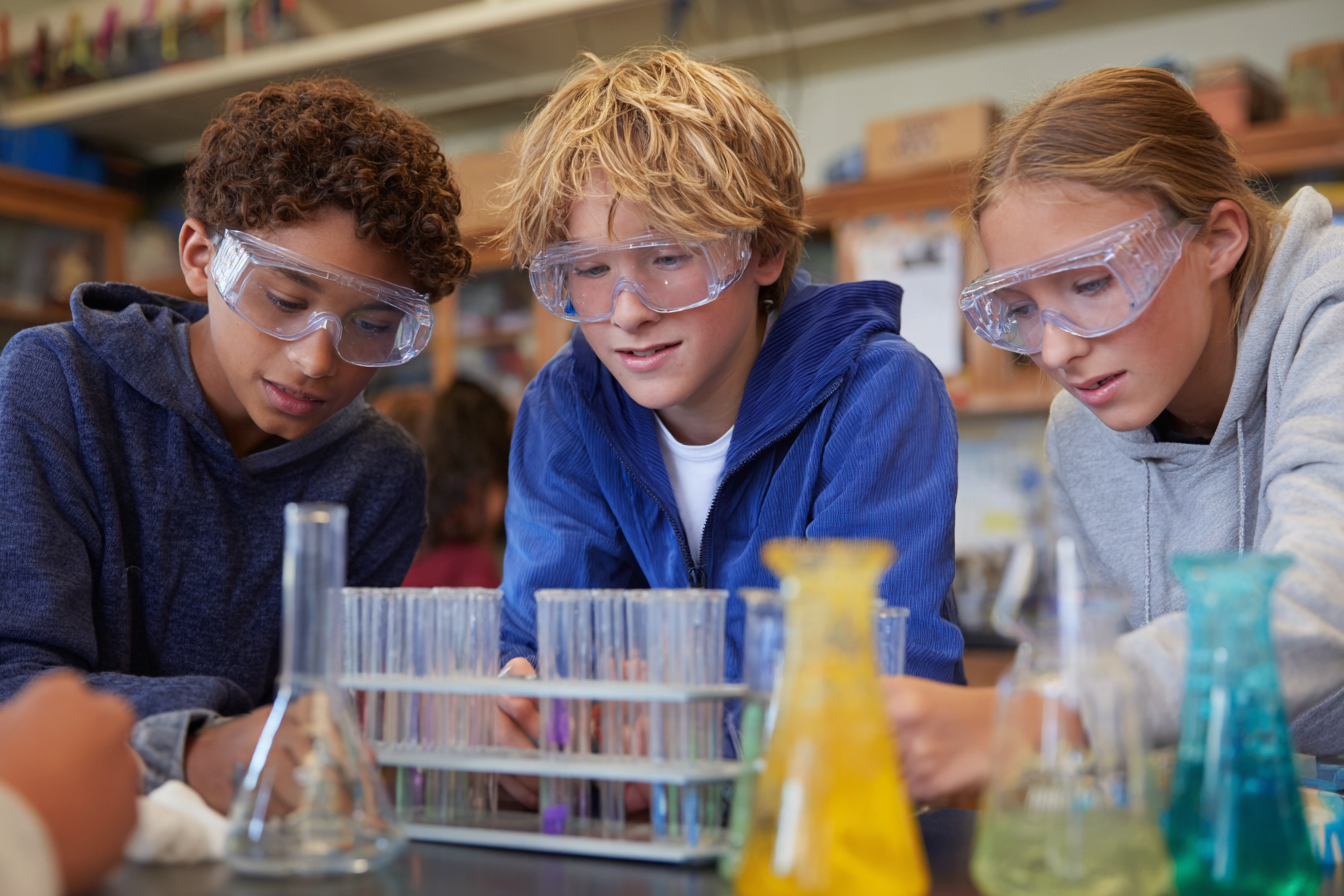
Focus: Engage students in a middle school forensic chemistry investigation where they act as scientists analyzing residues, unknown substances, and reaction evidence to solve a staged classroom mystery. Students rotate through evidence stations, compare physical and chemical properties, carry out safe tests, organize findings in data tables, and use CER writing and scientific communication to defend the most likely explanation.
Grade Level: 6-8
Subject Area: Science • ELA/Writing • Inquiry/Skills
Total Unit Duration: 1 core lesson with 2 optional extension lessons
I. Introduction
Students become forensic chemists in a classroom mystery where science—not guessing—solves the case. In this lesson, students investigate a staged “crime scene” by examining unknown powders, residue samples, and recorded clues using structured observation and safe chemical testing. As they move through evidence stations, they collect data about color, texture, solubility, reaction evidence, and other observable properties, then compare those findings to known samples. The lesson gives students a highly engaging mystery format while still requiring rigorous scientific reasoning, controlled testing, and evidence-based argument writing.
Essential Questions
- How do chemists use observations, tests, and data to identify unknown substances?
- What evidence helps us decide whether a chemical reaction has occurred?
- Why is it important to use a controlled procedure instead of guessing or rushing to conclusions?
- How can scientists use claims, evidence, and reasoning to explain what most likely happened?
- How do chemistry and forensic science help people solve real-world problems?
II. Objectives and Standards
Learning Objectives — Students will be able to:
- Observe and record physical properties of unknown substances and residues using precise scientific language.
- Carry out a multistep testing procedure safely and consistently at evidence stations.
- Compare how substances behave before and after interactions to decide whether a chemical reaction occurred.
- Use data from multiple tests to identify or narrow down possible unknown substances.
- Develop a claim about the most likely explanation for the classroom mystery and support it with evidence from collected data.
- Communicate findings through a written case report or oral defense using appropriate scientific vocabulary and argument structure.
Standards Alignment
- MS-PS1-2
- Analyze and interpret data on the properties of substances before and after substances interact to determine if a chemical reaction has occurred.
- MS-PS1-3
- Gather and make sense of information to describe that synthetic materials come from natural resources and impact society.
- RST.6-8.3
- Follow precisely a multistep procedure when carrying out experiments, taking measurements, or performing technical tasks.
- WHST.6-8.1
- Write arguments focused on discipline-specific content using claims, relevant evidence, and clear reasoning.
Success Criteria — Student Language
- I can carefully observe and describe evidence samples using scientific words.
- I can follow a multistep lab procedure safely and accurately.
- I can use test results to decide whether a chemical reaction happened.
- I can compare unknown samples to known materials using data instead of guesses.
- I can write or explain a clear claim about the mystery and support it with evidence and reasoning.