Lesson Plan (Grades 6-8): Disaster Map Lab - Tracking Wildfires, Floods, and Storm Patterns with Real Data
Middle school students analyze maps, data, and texts on natural hazards to identify patterns, compare regions, and design evidence-based disaster preparedness solutions.

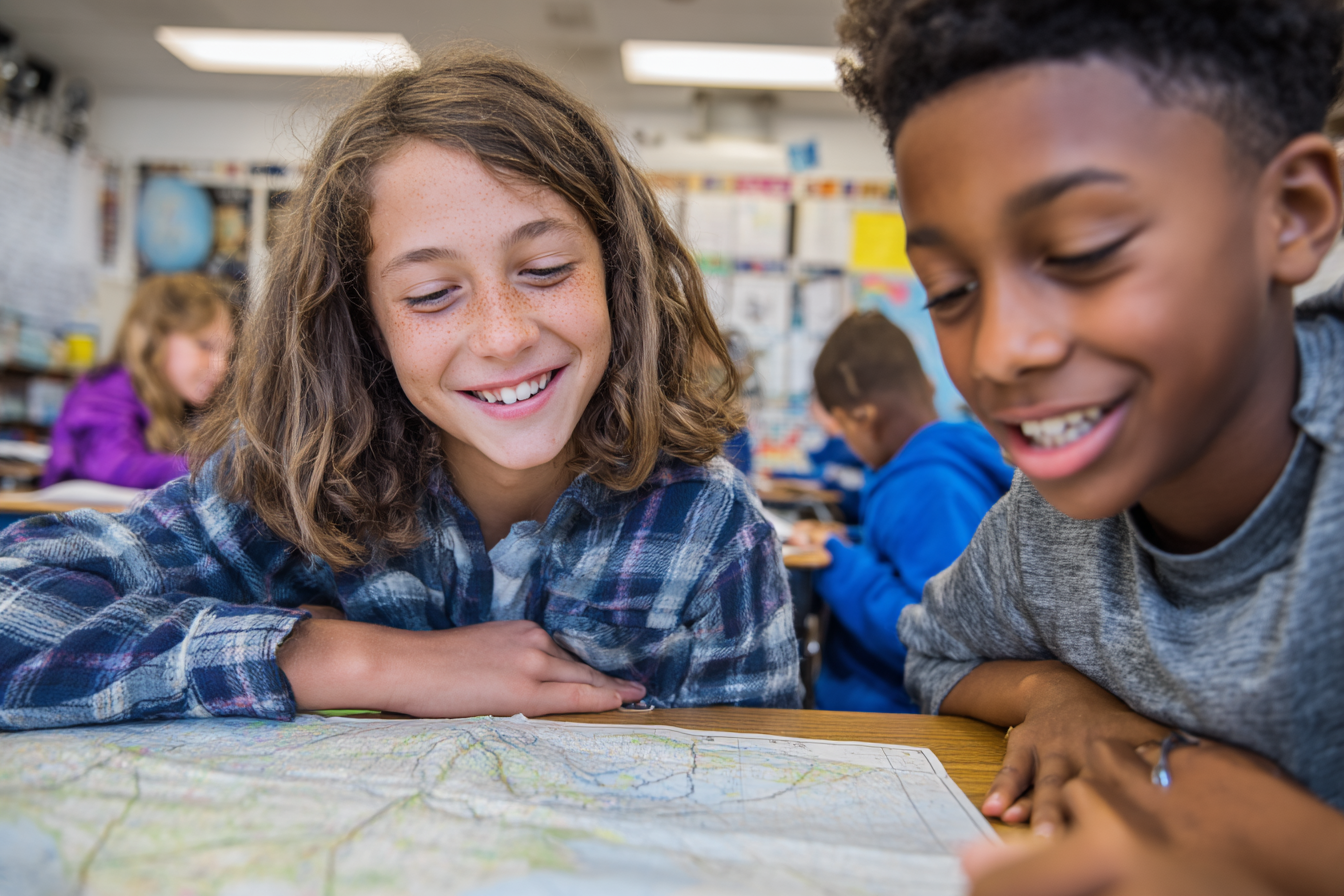
Focus: Engage students in a cross-curricular geography and science data-analysis investigation where they examine real or classroom-adapted maps, datasets, and informational texts about wildfires, floods, storms, and other natural hazards in order to identify patterns, compare regions, and propose practical preparedness solutions.
Grade Level: 6-8
Subject Area: Science • Geography • ELA • Inquiry/Skills
Total Unit Duration: 1 core lesson with 2 optional extension lessons
I. Introduction
Students become hazard analysts in a hands-on Disaster Map Lab where they investigate how and why certain places face greater risk from wildfires, floods, hurricanes, drought, or other natural hazards. Instead of just reading about disasters, students work like real-world planners and scientists by studying maps, charts, regional data, and short informational texts to identify geographic and environmental patterns. As they compare regions, they consider both natural factors (climate, landforms, vegetation, rainfall, storm paths) and human factors (settlement patterns, land use, roads, communication systems, infrastructure) that influence risk. The lesson is highly visual and analytical, culminating in a practical product such as a preparedness briefing, regional recommendation poster, or map-based presentation.
Essential Questions
- What patterns can we find in wildfire, flood, storm, or drought data?
- How do environmental conditions and human decisions increase or reduce disaster risk?
- How can maps, charts, and texts work together to help us understand natural hazards?
- Why do some places need different preparedness strategies than others?
- How can communities use data to make smarter decisions about safety and planning?
II. Objectives and Standards
Learning Objectives — Students will be able to:
- Read and interpret maps, charts, and datasets related to natural hazards.
- Identify patterns in hazard data and compare risk across two or more regions.
- Explain how environmental factors and human settlement patterns affect disaster risk.
- Integrate information from visual data and informational text to draw evidence-based conclusions.
- Propose a realistic preparedness recommendation for a region based on analyzed data.
- Communicate findings through a written or visual product such as a briefing, poster, or presentation.
Standards Alignment
- MS-ESS3-2
- Analyze and interpret data on natural hazards to forecast future catastrophic events and inform the development of technologies to mitigate their effects.
- C3 Framework D2.Geo.7.6-8
- Explain how changes in transportation and communication technology influence human settlement.
- C3 Framework D2.Geo.11.6-8
- Explain how the relationship between humans and environments extends or contracts spatial patterns of settlement.
- CCSS.ELA-LITERACY.RI.6.7 / RI.7.7 / RI.8.7
- Integrate information presented in different media or formats (such as visually and quantitatively) as well as in words to develop a coherent understanding of a topic or issue.
Success Criteria — Student Language
- I can read a disaster map or dataset and explain what it shows.
- I can find patterns in hazard data and compare regions.
- I can explain how people and the environment both affect disaster risk.
- I can use information from maps, texts, and charts together instead of relying on just one source.
- I can create a recommendation that helps a community prepare based on evidence from the data.