Lesson Plan (Grades K-2): Playground Physics Push Lab - Motion, Force, and Outdoor Measurement Fun
Investigate pushes, pulls, motion, direction, and measurement in K-2 science with hands-on object tests and evidence-based observations.

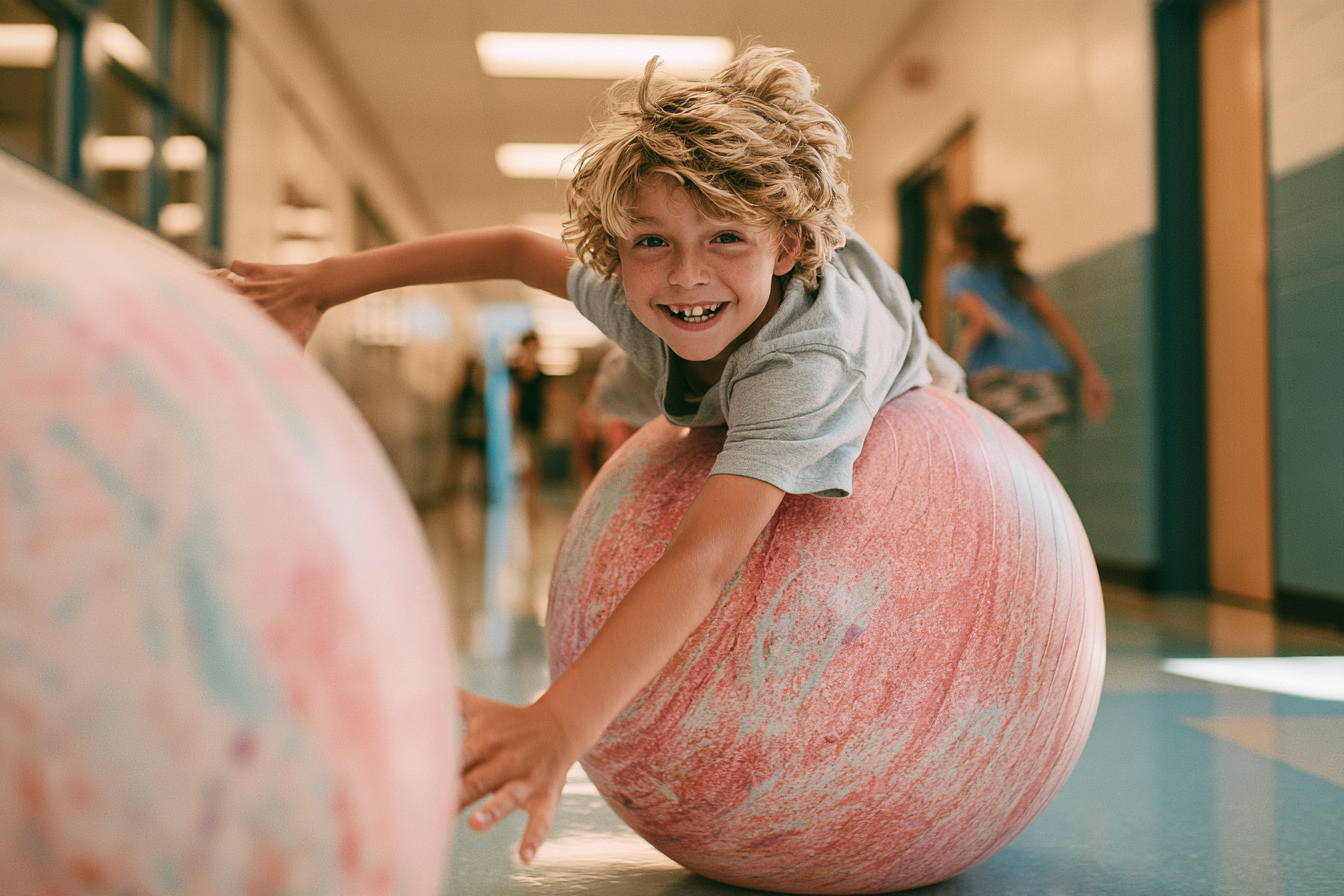
Focus: Engage students in an active science and measurement investigation where they test how different strengths and directions of pushes and pulls affect the motion of balls, toy vehicles, or other safe objects. Students compare how far objects travel, order distances, and measure movement using nonstandard or standard tools while making simple evidence-based observations.
Grade Level: K-2
Subject Area: Science/Physical Science • Math/Measurement • Speaking & Listening • Inquiry/Skills
Total Unit Duration: 1 core lesson with 2 optional extension lessons
I. Introduction
Students become playground physicists in a Push Lab where movement becomes something they can test, measure, and explain. In the core lesson, students investigate what happens when they give the same object a gentle push, a stronger push, or a push in a different direction. They observe how the object moves and compare how far it travels.
The lesson is active and playful, but the science stays central. Students make predictions, conduct fair tests, measure distances, and talk about evidence. Younger students can compare distances using words such as farther, shorter, and longer, while older students can use rulers, meter sticks, or measuring tapes to record actual lengths.
Essential Questions
- How does the strength of a push affect how an object moves?
- How does changing the direction of a push affect motion?
- How can we compare how far different objects travel?
- What measurement tools can help us describe motion?
- How can observations help us explain what happened during an investigation?
II. Objectives and Standards
Learning Objectives — Students will be able to:
- Plan and conduct a simple investigation involving different strengths or directions of pushes.
- Observe and describe how a push changes an object’s motion.
- Compare distances traveled using words such as farther, shorter, longer, and closest.
- Measure motion using nonstandard units or standard measurement tools, depending on grade level.
- Record simple investigation results using drawings, numbers, or words.
- Explain a pattern they noticed using evidence from the investigation.
Standards Alignment
- NGSS K-PS2-1
- Plan and conduct an investigation to compare the effects of different strengths or different directions of pushes and pulls on the motion of an object.
- NGSS K-PS2-2
- Analyze data to determine if a design solution works as intended to change the speed or direction of an object with a push or pull.
- CCSS.MATH.CONTENT.1.MD.A.1
- Order three objects by length; compare the lengths of two objects indirectly by using a third object.
- CCSS.MATH.CONTENT.1.MD.A.2
- Express the length of an object as a whole number of length units by laying multiple copies of a shorter object end to end.
- CCSS.MATH.CONTENT.2.MD.A.1
- Measure the length of an object by selecting and using appropriate tools such as rulers, yardsticks, meter sticks, and measuring tapes.
- CCSS.MATH.CONTENT.2.MD.A.4
- Measure to determine how much longer one object is than another, expressing the length difference in terms of a standard unit.
- CCSS.ELA-LITERACY.SL.K.1 / SL.1.1 / SL.2.1
- Participate in collaborative conversations with diverse partners about kindergarten through grade 2 topics and texts with peers and adults.
Success Criteria — Student Language
- I can test what happens when I push an object.
- I can compare a gentle push and a stronger push.
- I can tell which object traveled farther or shorter distances.
- I can measure how far an object moved.
- I can explain what I noticed using evidence from my test.