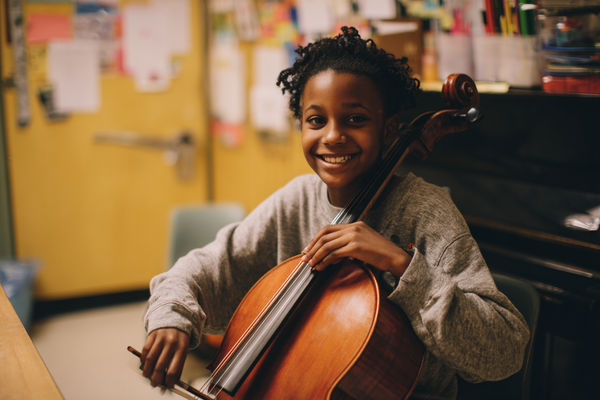
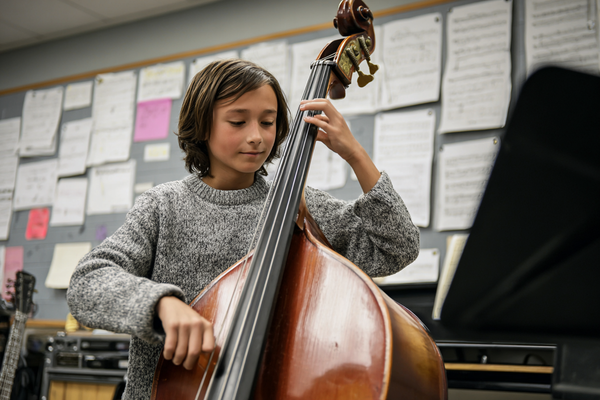
Paid-members only Grade 6 Orchestra Units Unit Plan 28 (Grade 6 Orchestra): Expressive Improvisation Grade 6 orchestra unit on expressive improvisation using limited pitch sets, dynamics, tempo, and bowing to communicate emotion through short melodies.
Paid-members only Grade 6 Orchestra Units Unit Plan 27 (Grade 6 Orchestra): Ensemble Performance Perform Grade 6 orchestra repertoire with steady tempo, unified bowing, and characteristic tone while building rehearsal etiquette, conductor focus, and reflective skills for ensemble success.
Paid-members only Grade 6 Orchestra Units Unit Plan 26 (Grade 6 Orchestra): Musical Storytelling Composition Create and perform a Grade 6 orchestra piece that tells a story using tempo, dynamics, bowing, and contour, with students explaining their expressive choices.
Paid-members only Grade 6 Orchestra Units Unit Plan 25 (Grade 6 Orchestra): Authentic Style Choices Grade 6 orchestra unit performing with authentic style, using context to shape tempo, bowing, dynamics, tone, and character through rehearsal and reflection.
Paid-members only Grade 6 Orchestra Units Unit Plan 24 (Grade 6 Orchestra): Music in Context—Culture & History Grade 6 orchestra unit exploring cultural and historical context to guide tempo, dynamics, articulation, tone color, and style through listening, research, and a “Music in Context Snapshot.”
Paid-members only Grade 6 Orchestra Units Unit Plan 23 (Grade 6 Orchestra): Identity & Goals as a String Player Grade 6 orchestra unit linking student interests to goals, habits, and identity to build reflective, motivated string players and ensemble contributors.
Paid-members only Grade 6 Orchestra Units Unit Plan 22 (Grade 6 Orchestra): Evaluate Like a Musician Evaluate orchestra performances with criteria for intonation, rhythm, tone, bow unity, and expression, citing musical evidence to justify ratings.
Paid-members only Grade 6 Orchestra Units Unit Plan 21 (Grade 6 Orchestra): Compare Two Performances Compare two string performances for tempo, dynamics, bowing clarity, tone, and ensemble unity, citing evidence to justify the stronger interpretation.
Paid-members only Grade 6 Orchestra Units Unit Plan 20 (Grade 6 Orchestra): Tone Color—Strings, Strings, Strings Grade 6 orchestra unit explores tone color through string choice, bow placement, and instrument roles to shape musical character and expression.
Paid-members only Grade 6 Orchestra Units Unit Plan 19 (Grade 6 Orchestra): Elements & Form in Repertoire Grade 6 orchestra unit teaches students to identify rhythm, melody, tempo, dynamics, and AB/ABA form through listening and score mapping skills.
Paid-members only Grade 6 Orchestra Units Unit Plan 18 (Grade 6 Orchestra): Sharing Created Music Grade 6 orchestra students perform a final original piece, using tempo, dynamics, bowing, and phrasing to express intent, then reflect and explain choices.
Paid-members only Grade 6 Orchestra Units Unit Plan 17 (Grade 6 Orchestra): Rehearsing for Unity Grade 6 orchestra unit teaches rehearsal strategies to improve ensemble timing, bow alignment, and accuracy using feedback and recordings for growth.
Paid-members only Grade 6 Orchestra Units Unit Plan 16 (Grade 6 Orchestra): Interpretation Tools—Bowing, Tone, Dynamics Demonstrate how bowing, dynamics, and tone shape string interpretation by performing contrasting styles and comparing recordings using clear music vocabulary.
Paid-members only Grade 6 Orchestra Units Unit Plan 15 (Grade 6 Orchestra): Revision Studio—Playability & Intonation Revise and refine Grade 6 orchestra compositions using feedback to improve playability, bow control, and intonation, then perform and explain the changes in clear notation.
Paid-members only Grade 6 Orchestra Units Unit Plan 14 (Grade 6 Orchestra): Notation & Bowing Marks Grade 6 orchestra students notate melodies with accurate pitch, rhythm, dynamics, and bowings, creating clear, performable scores that communicate expression.
Paid-members only Grade 6 Orchestra Units Unit Plan 13 (Grade 6 Orchestra): Form in Action—AB & ABA Grade 6 orchestra unit teaches AB, ABA, and call-response form, helping students organize melodies with contrast, repetition, and expressive intent.
Paid-members only Grade 6 Orchestra Units Unit Plan 12 (Grade 6 Orchestra): Motive Building—Compose a Melody Compose an 8-measure Grade 6 orchestra melody using stepwise motion, repetition, and a strong tonic ending—building motives and phrasing in key and meter.
Paid-members only Grade 6 Orchestra Units Unit Plan 11 (Grade 6 Orchestra): Improvisation—Pitch Sets & Mood Grade 6 orchestra unit builds improvisation skills using pitch sets and rhythm to create mood-based melodies with steady beat and expression.
Paid-members only Grade 6 Orchestra Units Unit Plan 10 (Grade 6 Orchestra): Key & Finger Pattern Fluency Grade 6 orchestra unit builds key-reading fluency through scales and finger patterns, helping students play common string keys with steady tempo.
Paid-members only Grade 6 Orchestra Units Unit Plan 9 (Grade 6 Orchestra): Early Performance Check Grade 6 orchestra unit builds steady tempo, intonation, unified bowing, and rehearsal etiquette through a focused ensemble performance check.
Paid-members only Grade 6 Orchestra Units Unit Plan 8 (Grade 6 Orchestra): Feedback Loops—Record, Listen, Improve Grade 6 orchestra unit uses recordings and feedback to set goals and improve tone, intonation, rhythm accuracy, and ensemble unity.
Paid-members only Grade 6 Orchestra Units Unit Plan 7 (Grade 6 Orchestra): Dynamics & Phrasing Grade 6 orchestra unit develops expressive playing through dynamics, phrasing, and articulation—linking bow speed/weight, tempo feel, and tone color to interpretation and musical character.
Paid-members only Grade 6 Orchestra Units Unit Plan 6 (Grade 6 Orchestra): Bowing Unity & Tone Color Grade 6 orchestra unit builds unified bowing, tone color, and ensemble blend by matching bow direction, placement, and speed for expressive sound.
Paid-members only Grade 6 Orchestra Units Unit Plan 5 (Grade 6 Orchestra): Counting & Ensemble Timing Grade 6 orchestra unit builds internal pulse and counting skills, helping students achieve clean entrances, exits, and ensemble timing while recognizing simple AB/ABA form.
Paid-members only Grade 6 Orchestra Units Unit Plan 4 (Grade 6 Orchestra): Reading Upgrade—Rhythms & Slurs Grade 6 orchestra unit builds rhythm-reading and slur skills by practicing eighth-note patterns, simple ties/dots, and legato bowing in standard notation with steady metronome tempo, helping students transfer clapping and counting into accurate, together playing.