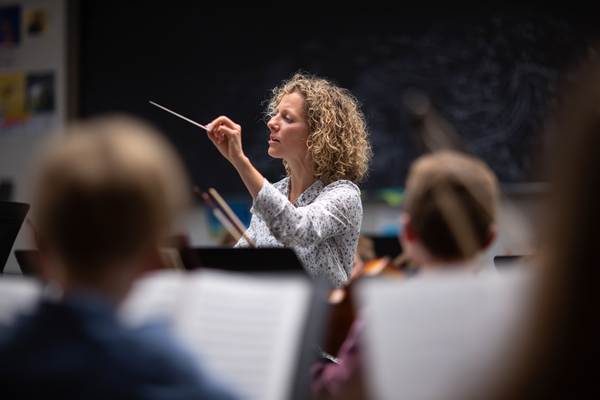
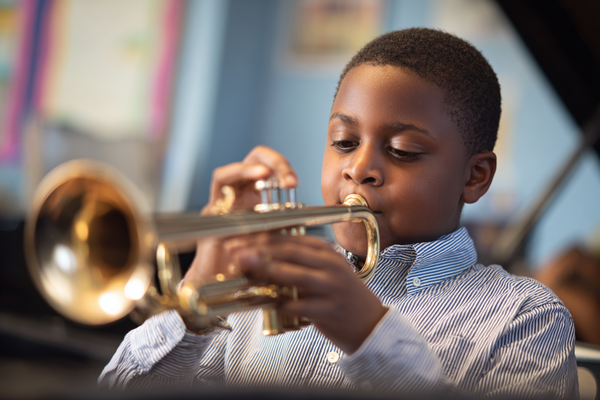
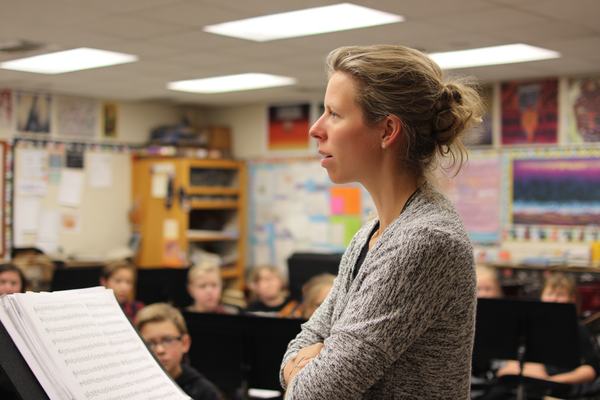
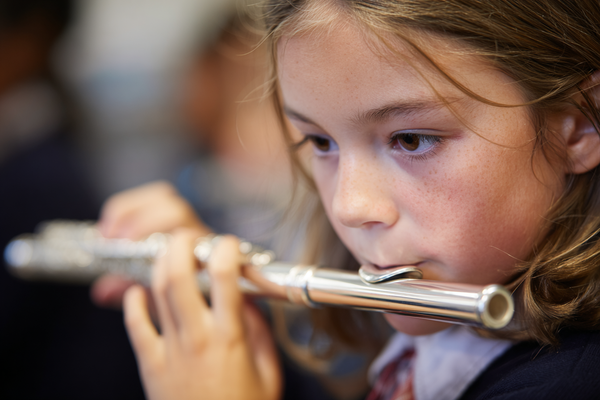
Paid-members only Grade 5 Band Units Unit Plan 35 (Grade 5 Band): Final Performance Grade 5 band students present a culminating performance demonstrating growth in tone, rhythm, steady beat, ensemble skills, and concert etiquette.
Paid-members only Grade 5 Band Units Unit Plan 34 (Grade 5 Band): Final Performance Prep Grade 5 band students refine concert music using feedback and focused rehearsal to improve tone, rhythm, and ensemble precision for performance.
Paid-members only Grade 5 Band Units Unit Plan 33 (Grade 5 Band): Purposeful Music Choices Choose the right Grade 5 band music for concerts, pep rallies, and ceremonies by matching tempo, dynamics, and tone color to the event’s purpose—helping students explain repertoire choices that build school spirit, honor traditions, and connect to the community.
Paid-members only Grade 5 Band Units Unit Plan 32 (Grade 5 Band): Evaluating Our Band Evaluate Grade 5 band progress with a student-friendly rubric so learners give evidence-based feedback, set goals, and improve steady beat, notes, tone, and ensemble togetherness.
Paid-members only Grade 5 Band Units Unit Plan 31 (Grade 5 Band): Independent Practice Skills Grade 5 band students build independent practice skills using slow practice, chunking, and repetition to improve accuracy, confidence, and musical growth.
Paid-members only Grade 5 Band Units Unit Plan 30 (Grade 5 Band): Tone & Technique Check Grade 5 band students refine tone, posture, and technique through focused warm-ups and repertoire to build clearer sound and confident performance habits.
Paid-members only Grade 5 Band Units Unit Plan 29 (Grade 5 Band): Sight-Reading Basics Grade 5 band students build confidence sight-reading unfamiliar music using rhythm, counting, and ensemble strategies to play steadily without stopping.
Paid-members only Grade 5 Band Units Unit Plan 28 (Grade 5 Band): Expressive Playing Help Grade 5 band students use dynamics, tempo, and articulation to communicate mood and musical ideas through expressive practice, listening activities, and performance reflection.
Parent Tips Parent Tips: Bedtime to Bell Time—Sleep & Morning Routines That Make School Easier Create calmer school mornings with bedtime routines, tech limits, and launchpad prep that reduce stress and help kids arrive ready to learn.
Paid-members only 6-8 Lesson Plans Lesson Plan (Grades 6-8): Code-Your-Own Calculator Students in grades 6–8 design and code a digital calculator, applying arithmetic, logic, and UI design to build reliable, interactive math tools.
Paid-members only Grade 5 Band Units Unit Plan 27 (Grade 5 Band): Ensemble Performance Grade 5 band students perform ensemble music with steady beat, correct notes, and focused etiquette, building teamwork, listening skills, and confident group performance.
Paid-members only Grade 5 Band Units Unit Plan 26 (Grade 5 Band): Rehearsing for Accuracy Grade 5 band students use rehearsal strategies and teacher feedback to improve note and rhythm accuracy, building confident, focused ensemble performance skills.
Paid-members only Grade 5 Band Units Unit Plan 25 (Grade 5 Band): Style & Character Grade 5 band students apply dynamics and articulation to match style and character, improving expressive playing beyond notes and rhythms together.
Paid-members only Grade 5 Band Units Unit Plan 24 (Grade 5 Band): Personal Musical Goals Reflect on Grade 5 band growth with student-friendly checklists and goal-setting prompts that celebrate progress, connect instrument choice to interests, and build realistic action steps for continued improvement.
Paid-members only Grade 5 Band Units Unit Plan 23 (Grade 5 Band): Music in School & Community Grade 5 band students explore how band music supports school and community events, explaining where it’s used and why it matters.
Paid-members only Grade 5 Band Units Unit Plan 22 (Grade 5 Band): Evaluating Performances Grade 5 band students evaluate performances using simple criteria and evidence, then apply clear feedback to improve individual and ensemble playing.
Paid-members only Grade 5 Band Units Unit Plan 21 (Grade 5 Band): Identifying Musical Elements Grade 5 band students identify beat, rhythm, pitch, tempo, and dynamics through listening, movement, and simple notation to describe music clearly.
Paid-members only Grade 5 Band Units Unit Plan 20 (Grade 5 Band): Sharing Music Ideas Grade 5 band students perform original music and explain how tempo and dynamics communicate mood, helping audiences understand their musical ideas.
Paid-members only Grade 5 Band Units Unit Plan 19 (Grade 5 Band): Revising Music Grade 5 band students revise their own music using teacher feedback, improving accuracy, playability, and expression through thoughtful musical revisions.
Paid-members only Grade 5 Band Units Unit Plan 18 (Grade 5 Band): Notating Music Grade 5 band students learn to notate rhythms, pitches, and dynamics, turning musical ideas into clear written music others can read and perform.
Paid-members only Grade 5 Band Units Unit Plan 17 (Grade 5 Band): Organizing Musical Ideas Grade 5 band students arrange rhythms and melodies into AB and call-and-response forms, creating short pieces with repetition, contrast, and clear endings.
Paid-members only Grade 5 Band Units Unit Plan 16 (Grade 5 Band): Creating Simple Melodies Grade 5 band students create simple melodies using limited notes, repeated patterns, and stepwise motion, composing and performing short phrases with a clear home note.
Paid-members only Grade 5 Band Units Unit Plan 15 (Grade 5 Band): Improvising Rhythms Help Grade 5 band students improvise 4-beat rhythmic patterns with a steady beat using simple note values, call-and-response, and mood prompts while building confidence and creativity.
Paid-members only Grade 5 Band Units Unit Plan 14 (Grade 5 Band): Comparing Performances Compare two performances of the same piece as Grade 5 band students analyze tempo, dynamics, mood, and sound differences using listening evidence.
Paid-members only Grade 5 Band Units Unit Plan 13 (Grade 5 Band): Instrument Families & Sound Grade 5 band unit exploring woodwind, brass, and percussion families, listening for tone color, and describing how instruments shape musical character.