Unit Plan 36 (Grade 3 Library): Celebration of Reading, Inquiry, and Library Growth
Celebrate Grade 3 library growth with an end-of-year unit on favorite books, inquiry, reflection, and respectful community that honors every learner’s journey.

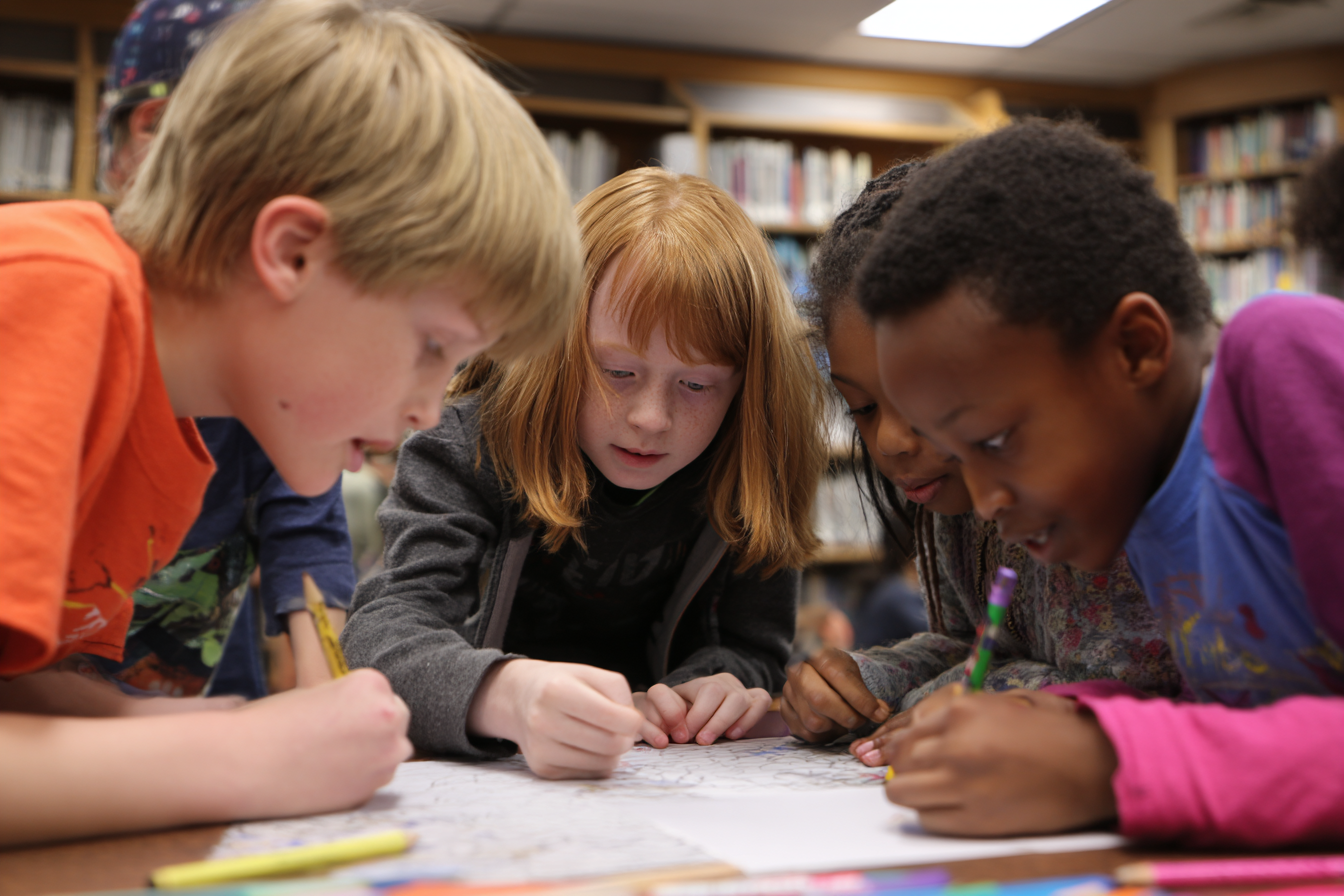
Focus: Celebrate students’ growth by revisiting favorite books, favorite inquiry experiences, and favorite ways of learning in library. Students reflect on what they learned about books, research, discussion, and themselves while participating in joyful, respectful end-of-year library experiences.
Grade Level: 3
Subject Area: Library (Reflection • Reading/Inquiry • Community Celebration)
Total Unit Duration: 1–3 weeks, 50–60 minutes per session
I. Introduction
This final unit gives Grade 3 students a joyful chance to look back on a year of reading, inquiry, discussion, and growth in library. The librarian can revisit favorite books, favorite topics, favorite projects, and favorite ways of learning while helping students notice how much more independent and thoughtful they have become. Students reflect on books they loved, questions they explored, ways they learned from others, and how their reading and learning identities have grown. The tone of the unit should be celebratory and encouraging while also helping students understand that different readers and learners may have different favorites, different interpretations, and different strengths. This unit honors the many ways students have grown as readers, thinkers, researchers, and members of the library community.
Essential Questions
- What were some of my favorite books, inquiry experiences, and learning moments in library this year?
- How have I grown as a reader, thinker, and library learner?
- Why is it important to remember that different readers may have different favorites and different interpretations?
- How can I participate respectfully while celebrating my own growth and the growth of others?
II. Objectives and Standards
Learning Objectives — Students will be able to:
- Ask meaningful questions about stories, information, images, and topics introduced in library.
- Recognize that readers and learners may interpret texts differently and choose different books or topics, and that all belong in the library.
- Use reading, discussion, writing, drawing, building, technology, or presentation to explore and respond to ideas from library lessons.
- Participate respectfully in reading, listening, discussing, viewing, creating, and sharing in the library.
- Reflect on favorite books, favorite inquiry experiences, and favorite ways of learning in library.
- (Optional Sessions) Deepen reflection and celebration through student-choice activities, sharing, and final library growth responses.
Standards Alignment — 3rd Grade (AASL-based Custom)
- L:S1.3a — Ask meaningful questions about stories, information, images, and topics introduced in library.
- Example: A student asks, “How did people send messages before phones?” during a nonfiction unit.
- L:S2.3c — Recognize that readers and learners may interpret texts differently and choose different books or topics, and that all belong in the library.
- Example: A student understands that two readers can have different favorite characters or different opinions about the same book.
- L:S5.3a — Use reading, discussion, writing, drawing, building, technology, or presentation to explore and respond to ideas from library lessons.
- Example: A student writes a short response or creates a visual project about a story or informational topic.
- L:S6.3c — Participate respectfully in reading, listening, discussing, viewing, creating, and sharing in the library.
- Example: A student listens to others during discussion, contributes appropriately, and shares work in a respectful way.
Success Criteria — Student Language
- I can reflect on my favorite books, topics, and library experiences.
- I can ask meaningful questions about books, topics, or learning from this year.
- I can understand that different readers may have different favorites and ideas.
- I can respond to my learning through discussion, writing, drawing, or another clear format.
- I can participate respectfully while celebrating my own growth and the growth of others.
III. Materials and Resources
Tasks & Tools (teacher acquires/curates)
- Celebration and reflection materials:
- A favorite class read-aloud from earlier in the year or a final read-aloud that invites reflection and joy
- Favorite book displays, genre baskets, past inquiry topics, old anchor charts, or sample library projects from the year
- “My Library Favorites” organizer
- “How I Grew in Library” reflection sheet
- Student choice materials:
- Choice stations such as:
- favorite book revisit
- favorite inquiry topic revisit
- drawing or writing a library memory
- sharing a favorite learning activity
- simple build or create station connected to past library work
- Sticky notes, pencils, markers, drawing paper, clipboards, and optional digital response tools
- Choice stations such as:
- Discussion and sharing supports:
- Anchor chart with stems such as:
- “One of my favorite books was…”
- “One question I still have is…”
- “This made me think about…”
- “Someone else might choose something different because…”
- “One way I grew was…”
- Anchor chart with stems such as:
- Visual supports:
- Anchor charts for respectful discussion, library growth, and different reader preferences
- Display space for student reflections or celebration responses
Preparation
- Gather familiar books, topics, activities, and inquiry materials from earlier units so students can reflect concretely on the year.
- Create anchor charts:
- “Celebration of Reading, Inquiry, and Library Growth”
- “My Favorite Library Experiences”
- “Different Readers, Different Favorites”
- “How I Grew This Year”
- Prepare one teacher model showing how to reflect on a favorite book or inquiry experience while also naming growth and asking a meaningful question.
Common Misconceptions to Surface
- “Celebration just means naming what was fun.” → Celebration can also include noticing growth, effort, learning, and new strengths.
- “If someone else has a different favorite book or topic, one of us is wrong.” → Different readers and learners can choose different favorites and all still belong in the library.
- “Reflection means only looking backward.” → Reflection can also help students notice what they want to keep wondering about or try next.
- “A short response cannot show much thought.” → A short response can still be thoughtful when it includes a clear favorite, a question, or an example of growth.
Key Terms (highlight in lessons) favorite, question, growth, reader, learner, inquiry, interpretation, celebration, respectful, reflection
IV. Lesson Procedure
(Each session follows: Welcome/Focus → Mini-Lesson/Shared Reading → Work Time → Discussion/Sharing → Reflect → Check-Out. Timing for a 50–60 minute library class.)
Session 1 — Celebrating Favorite Books, Questions, and Growth (Core Session — Addresses All Standards: L:S1.3a, L:S2.3c, L:S5.3a, L:S6.3c)
- Welcome/Focus (5–8 min)
- Ask: “What are some favorite books, topics, or library moments you still remember from this year?”
- Invite students to think about how those favorites connect to reading, inquiry, discussion, and learning.
- Explain that today students will celebrate the year while also reflecting on questions they asked, ideas they explored, and ways they grew.
- Mini-Lesson/Shared Reading (10–15 min)
- Read a favorite class text or share a final read-aloud with strong reflection potential.
- Model a response such as:
- “One reason this stands out to me is…”
- “One question this still makes me wonder is…”
- “Someone else might think something different, and that belongs too.”
- “One way this reminds me of my growth in library is…”
- Explicitly connect the lesson to the standards by showing students how to ask meaningful questions, recognize different reader responses, respond through discussion or writing, and listen respectfully.
- Work Time (15–20 min)
- Students complete a “My Library Favorites” organizer with prompts such as:
- favorite book
- favorite topic or inquiry experience
- one meaningful question I asked or still have
- one way I grew as a reader or learner
- Students may add a drawing, short written response, or simple visual chart.
- The librarian circulates and prompts students to support their favorites with details and to notice that classmates may choose different books or topics.
- Students complete a “My Library Favorites” organizer with prompts such as:
- Discussion/Sharing (8–10 min)
- Students share one favorite and one growth reflection with a partner or small group.
- Ask prompts such as:
- “Why was that a favorite for you?”
- “What question did that book or topic make you ask?”
- “Why might another student choose something different?”
- “What helps us share different favorites respectfully?”
- Reinforce that celebration includes both joy and thoughtful listening.
- Reflect (3–5 min)
- Students complete one or both prompts:
- “One favorite part of library this year was ___.”
- “One way I grew was ___.”
- Students complete one or both prompts:
- Check-Out (3–5 min)
- Give brief, standards-based feedback such as:
- “You asked thoughtful questions and reflected meaningfully on your year.”
- “You recognized that different readers may have different favorites and ideas.”
- “You participated respectfully while celebrating learning.”
- Give brief, standards-based feedback such as:
Optional Session 2 — Student Choice Celebration Stations (Extension — Deepen L:S1.3a, L:S2.3c, L:S5.3a, L:S6.3c)
- Welcome/Focus (5–7 min)
- Review the chart “My Favorite Library Experiences.”
- Ask: “How can different activities help us celebrate different parts of our year in library?”
- Mini-Lesson/Shared Reading (8–12 min)
- Introduce celebration stations and explain what students should do at each one.
- Possible stations include:
- Favorite Book Revisit — students browse and revisit a favorite title, then write or draw one question or idea it still gives them
- Favorite Inquiry Revisit — students look at a topic they enjoyed and name one thing they learned and one question they still have
- Favorite Learning Activity — students revisit drawing, building, discussing, or creating and explain why that way of learning worked for them
- Different Readers, Different Favorites — students compare favorite genres, books, or topics and talk about why readers choose differently
- Emphasize respectful participation, thoughtful questions, and flexible response choices.
- Work Time (15–20 min)
- Students rotate through selected stations or choose two or three based on interest.
- At each station, they complete a short response using writing, drawing, discussion, or another simple format.
- The librarian prompts students to connect their responses to questions, preferences, and growth, not just to surface-level likes.
- Discussion/Sharing (8–10 min)
- Students share one station response and one thing they noticed about classmates’ different favorites or ideas.
- Encourage prompts such as:
- “I chose this because…”
- “This still makes me wonder…”
- “Someone else chose something different because…”
- Reinforce that student choice helps reveal both individuality and growth.
- Reflect (3–5 min)
- Students respond:
- “One station I enjoyed most was ___.”
- “One thing it helped me remember or notice was ___.”
- Students respond:
- Check-Out (3–5 min)
- Give standards-based feedback only, such as:
- “You used student choice to reflect in a thoughtful way.”
- “You respected different favorites and different reader responses.”
- “You responded to library ideas through meaningful activities.”
- Give standards-based feedback only, such as:
Optional Session 3 — Sharing Our Library Growth and Final Reflections (Extension — Solidify L:S1.3a, L:S2.3c, L:S5.3a, L:S6.3c)
- Welcome/Focus (5–7 min)
- Ask: “What do you want to remember most about your year in library?”
- Explain that students will create and share a short final reflection on reading, inquiry, discussion, and personal growth.
- Mini-Lesson/Shared Reading (8–12 min)
- Model a final reflection response such as:
- a mini poster
- a “what I learned in library” page
- a simple oral share with notes
- a visual chart of favorites, questions, and growth
- Show how the response should include:
- one favorite reading or inquiry experience
- one meaningful question or idea from the year
- one way the student grew
- one respectful acknowledgment that other students may choose or think differently
- Model a final reflection response such as:
- Work Time (15–20 min)
- Students create a short final celebration response using writing, drawing, discussion notes, or another simple approved format.
- They include:
- a favorite book, topic, or experience
- one question, idea, or reflection connected to it
- one example of growth as a library learner
- The librarian supports students in keeping responses clear, positive, and connected to the standards rather than only decorative.
- Discussion/Sharing (8–10 min)
- Students share their final reflections with a partner, small group, or class.
- Encourage listeners to notice both what the student valued most and how the student has changed as a reader and learner.
- Highlight that the class grew in many different ways and that those differences strengthen the library community.
- Reflect (3–5 min)
- Final reflection prompt:
- “One thing I want to remember about library this year is ___.”
- “One way I will keep growing is ___.”
- Final reflection prompt:
- Check-Out (3–5 min)
- Give brief, standards-based feedback such as:
- “You celebrated your year with thoughtful questions, reflections, and examples of growth.”
- “You recognized that different readers and learners may have different favorites and ideas.”
- “You shared and listened respectfully during this final celebration.”
- Give brief, standards-based feedback such as:
V. Differentiation and Accommodations
Advanced Learners
- Encourage students to explain why a favorite book or inquiry experience mattered to them beyond simple enjoyment.
- Invite students to compare how their questions or interpretations changed across the year.
- Ask students to include one next-step goal for how they want to keep growing as a reader or learner.
Targeted Support
- Provide sentence stems such as:
- “My favorite book/topic was…”
- “One question I asked or still have is…”
- “I grew by…”
- “Someone else might choose…”
- Use visual supports with familiar books, topics, and activities to make reflection more concrete.
- Offer guided small-group discussion before independent response work.
Multilingual Learners
- Provide visuals and word supports for favorite, question, growth, reader, learner, inquiry, interpretation, celebration, respectful, reflection.
- Allow oral rehearsal before written or visual responses.
- Encourage pointing to books, topic cards, or project samples while explaining ideas.
- Use repeated modeled examples of reflective celebration language.
IEP/504 & Accessibility
- Break the reflection into smaller steps: choose a favorite, name a question, give an example of growth, share respectfully.
- Offer drawing, verbal response, or sentence-completion options instead of longer written reflections when needed.
- Use familiar visuals, simplified organizers, and clearly labeled stations to support success.
- Provide extra time and teacher check-ins during reflection and sharing.
VI. Assessment and Evaluation
Formative Checks (each session)
- Session 1 — Students begin celebrating favorite books, topics, and learning while connecting those experiences to questions and growth.
- Optional Session 2 — Students deepen reflection through student-choice activities that revisit different parts of the year.
- Optional Session 3 — Students create and share a final celebration response that shows reading, inquiry, and library growth.
Summative — Celebration of Reading, Inquiry, and Library Growth Reflection & Response (0–2 per criterion, total 10)
- Meaningful Questions About Stories, Information, Images, and Topics (L:S1.3a)
- 2: Student asks or reflects on meaningful questions connected to books, topics, images, or learning experiences from the year.
- 1: Student identifies a question or wonder, but it is broad or only partly connected.
- 0: Student shows little meaningful questioning or reflection.
- Recognition of Different Reader Interpretations and Choices (L:S2.3c)
- 2: Student clearly recognizes that readers and learners may choose different books or topics and think about them differently, and shows respect for those differences.
- 1: Student shows some awareness of different preferences or interpretations, but explanation is limited.
- 0: Student shows little awareness of or respect for different reader responses and choices.
- Use of Reading, Discussion, Writing, Drawing, Building, Technology, or Presentation (L:S5.3a)
- 2: Student uses one or more response methods meaningfully to explore and celebrate ideas from library lessons.
- 1: Student uses a response method, but the work is basic or uneven.
- 0: Student shows little meaningful use of a response method to communicate reflection.
- Respectful Participation in Reading, Listening, Discussing, Viewing, Creating, and Sharing (L:S6.3c)
- 2: Student participates respectfully in reading, listening, discussing, viewing, creating, and sharing during celebration activities.
- 1: Student is generally respectful but may need reminders or support.
- 0: Student struggles to participate respectfully during reflection and celebration activities.
- Reflection on Reading, Inquiry, and Library Growth
- 2: Student clearly reflects on favorite experiences and explains one or more meaningful ways they grew as an independent library learner.
- 1: Student identifies favorites or growth, but reflection is limited or unclear.
- 0: Student provides little meaningful reflection on the year.
Feedback Protocol (TAG)
- Tell one strength (e.g., “You celebrated your year thoughtfully by naming favorite books and inquiry experiences while clearly showing how you grew as a library learner.”).
- Ask one question (e.g., “Which library experience do you think helped you grow the most, and why?”).
- Give one suggestion (e.g., “Next time, try adding one more specific detail or question so your reflection shows even more of your thinking.”).
VII. Reflection and Extension
Reflection Prompts
- What were your favorite books, inquiry experiences, and ways of learning in library this year?
- How have you grown as a reader, thinker, and independent library learner?
- Why is it important to remember that different readers may have different favorites and ideas?
- What is one thing from library you want to carry with you into the future?
Extensions
- Favorite Book Display: Create a class display of favorite books or topics with one-sentence student explanations about why each choice mattered.
- Library Growth Gallery: Invite students to share drawings, short reflections, or mini posters showing one way they grew as readers, thinkers, or library learners.
- Cross-Curricular Link: Connect to end-of-year classroom reflection by asking students how library helped them grow in questioning, discussion, research, or independent learning across subjects.
Standards Trace — When Each Standard Is Addressed
- L:S1.3a — Session 1 (asking and reflecting on meaningful questions about books and topics), Optional Session 2 (questioning through celebration stations), Optional Session 3 (including a meaningful question or wonder in the final reflection).
- L:S2.3c — Session 1 (recognizing that classmates may have different favorites and interpretations), Optional Session 2 (comparing different reader choices through student-choice stations), Optional Session 3 (respectfully acknowledging different books, topics, and responses during final sharing).
- L:S5.3a — Session 1 (using discussion, writing, or drawing to reflect), Optional Session 2 (responding through multiple celebration activities), Optional Session 3 (creating a final reflection product or presentation).
- L:S6.3c — Session 1 (respectful discussion and sharing), Optional Session 2 (respectful participation during student-choice stations), Optional Session 3 (respectful listening, creating, and final celebration sharing).