Unit Plan 5 (Grade 4 Library): Asking Questions That Lead to Learning
Explore a Grade 4 library unit on purposeful questions that build deeper reading, inquiry, discussion, and evidence-based understanding.

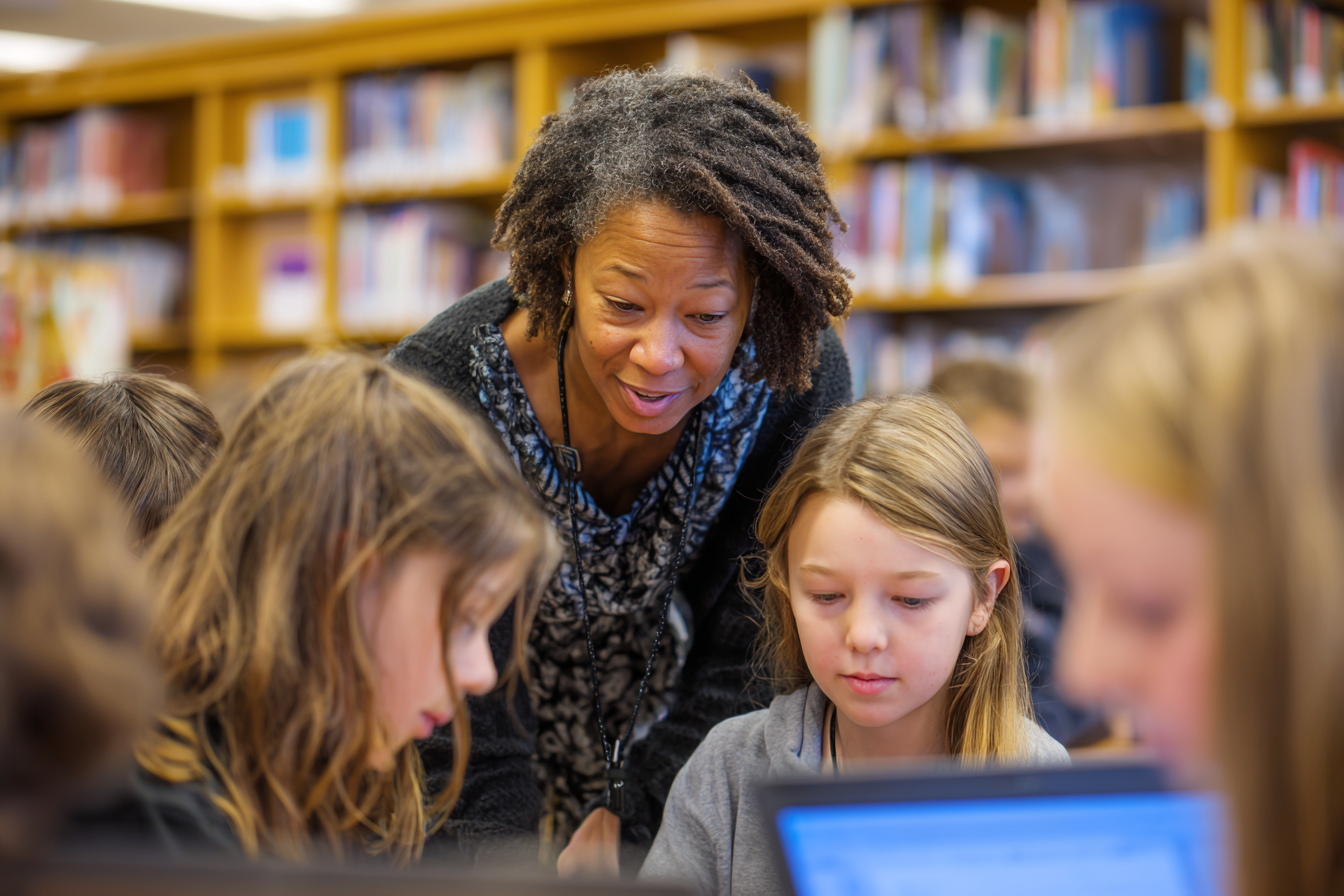
Focus: Teach students how strong questions lead to deeper reading, inquiry, and understanding. Students learn to tell the difference between a simple question and a purposeful one, then practice generating, revising, and using questions to guide reading, discussion, and information gathering with library resources.
Grade Level: 4
Subject Area: Library (Inquiry • Reading • Discussion/Communication)
Total Unit Duration: 1–3 weeks, 50–60 minutes per session
I. Introduction
This unit helps Grade 4 students understand that good learning often begins with a question. Instead of stopping with quick or surface-level questions, students practice asking questions that can guide reading, inquiry, discussion, and resource use. Through shared texts, images, and topic exploration, students learn how to generate purposeful questions, revise them to make them stronger, and use books, text features, images, discussion, and simple search tools to build understanding. They also practice sharing what they notice, predict, and conclude using evidence from what they read or observe.
Essential Questions
- What makes a question strong enough to lead to real learning?
- How can purposeful questions guide my reading, inquiry, and discussion?
- What tools in books and other library resources help me answer questions and build understanding?
- How can I share what I notice, predict, and conclude after exploring a question?
II. Objectives and Standards
Learning Objectives — Students will be able to:
- Identify the difference between a surface-level question and a purposeful question.
- Generate questions about a story, topic, image, or media source introduced in library.
- Revise simple questions so they are clearer and more useful for reading or inquiry.
- Use books, text features, images, discussion, and simple search tools to gather information connected to a question.
- Share observations, predictions, connections, and supported conclusions based on what they learned.
- (Optional Sessions) Sort questions by type, pursue one question more deeply, and strengthen discussion and response habits connected to inquiry.
Standards Alignment — 4th Grade (AASL-based Custom)
- L:S1.4a — Ask purposeful questions about stories, information, media, images, and topics introduced in library.
- Example: A student asks, “What causes volcanoes to erupt, and why do some erupt more often than others?” during a nonfiction topic study.
- L:S1.4b — Use books, text features, images, discussion, and simple search tools to gather information and build understanding.
- Example: A student uses headings, captions, a glossary, and a table of contents to locate information about weather patterns.
- L:S1.4c — Share observations, predictions, text-based connections, and supported conclusions about stories and topics.
- Example: A student explains, “I think the main character changed because the dialogue and actions at the end are very different from the beginning.”
Success Criteria — Student Language
- I can tell the difference between a simple question and a purposeful question.
- I can ask questions that help me learn more about a story, image, topic, or source.
- I can use books, text features, images, discussion, or simple search tools to help answer my question.
- I can share what I noticed, predicted, or learned using evidence from a source.
- I can revise a question to make it stronger and more useful for inquiry.