Unit Plan 3 (Grade 4 Library): Listening Closely and Responding with Evidence
Help Grade 4 students use evidence in library discussions by supporting ideas with details, listening closely, and participating respectfully in thoughtful conversations.

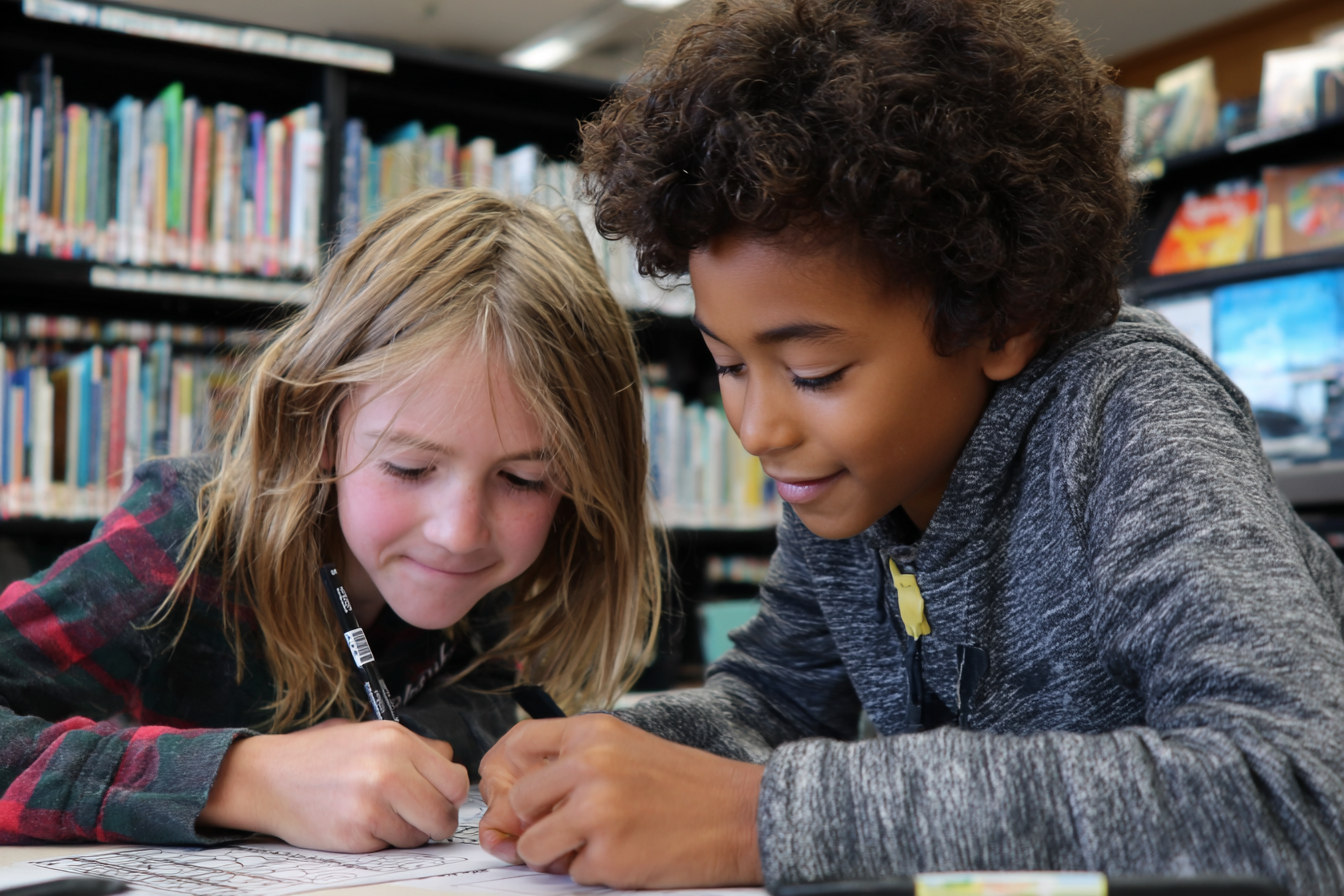
Focus: Build strong discussion habits by helping students respond to stories, images, and informational sources with specific evidence. Students practice moving beyond quick reactions to explain their thinking using details, patterns, and text-based support, while participating respectfully in conversations that help group learning grow.
Grade Level: 4
Subject Area: Library (Reading • Discussion • Inquiry/Communication)
Total Unit Duration: 1–3 weeks, 50–60 minutes per session
I. Introduction
This unit helps Grade 4 students become stronger listeners, thinkers, and discussion partners in the library. Instead of stopping at comments like “I liked it” or “That was interesting,” students learn to explain why they think something by using details from a story, image, or informational source. Through read-alouds, turn-and-talk, discussion stems, and short written responses, students practice making observations, predictions, connections, and supported conclusions. The goal is to help students participate in accountable talk that moves beyond simple reactions and supports deeper understanding.
Essential Questions
- What does it mean to listen closely during a read-aloud, discussion, or viewing activity?
- How can I support my ideas with evidence from a story, image, or source?
- What are some ways I can help a discussion move forward for the whole group?
- What does respectful, thoughtful participation look and sound like in Grade 4 Library?
II. Objectives and Standards
Learning Objectives — Students will be able to:
- Share observations, predictions, text-based connections, and supported conclusions about stories and topics.
- Use discussion stems and source details to explain their thinking more clearly.
- Participate in shared discussions in ways that help move group thinking and learning forward.
- Listen actively and respond respectfully to classmates during partner, small-group, and whole-class discussion.
- Write a short response after a shared reading or viewing experience that includes both an idea and supporting evidence.
- (Optional Sessions) Deepen evidence-based talk through additional discussion practice, stronger written responses, and more intentional group discussion moves.
Standards Alignment — 4th Grade (AASL-based Custom)
- L:S1.4c — Share observations, predictions, text-based connections, and supported conclusions about stories and topics.
- Example: A student explains, “I think the main character changed because the dialogue and actions at the end are very different from the beginning.”
- L:S3.4c — Participate in shared discussions and projects in ways that help move group thinking, decision-making, and learning forward.
- Example: A student asks a clarifying question during group planning and helps the group decide which information is most important to include.
- L:S6.4c — Participate respectfully in reading, listening, discussing, viewing, creating, and sharing in the library.
- Example: A student contributes to discussion, listens actively, and responds appropriately during partner, small-group, and whole-class learning.
Success Criteria — Student Language
- I can share an idea about a story, image, or topic and support it with details.
- I can use sentence stems like “I think ___ because ___” or “I noticed ___, which makes me think ___.”
- I can help my group think by asking questions, building on ideas, or pointing to important details.
- I can listen respectfully and respond appropriately during discussion.
- I can write a short response that includes both my idea and the evidence that supports it.