Unit Plan 1 (Grade 4 PE): Routines, Safety, & Game Expectations
Grade 4 PE unit builds safety, spacing, sportsmanship, and game routines through dynamic warm-ups and Advanced Fitness Tag for a strong start to the year.

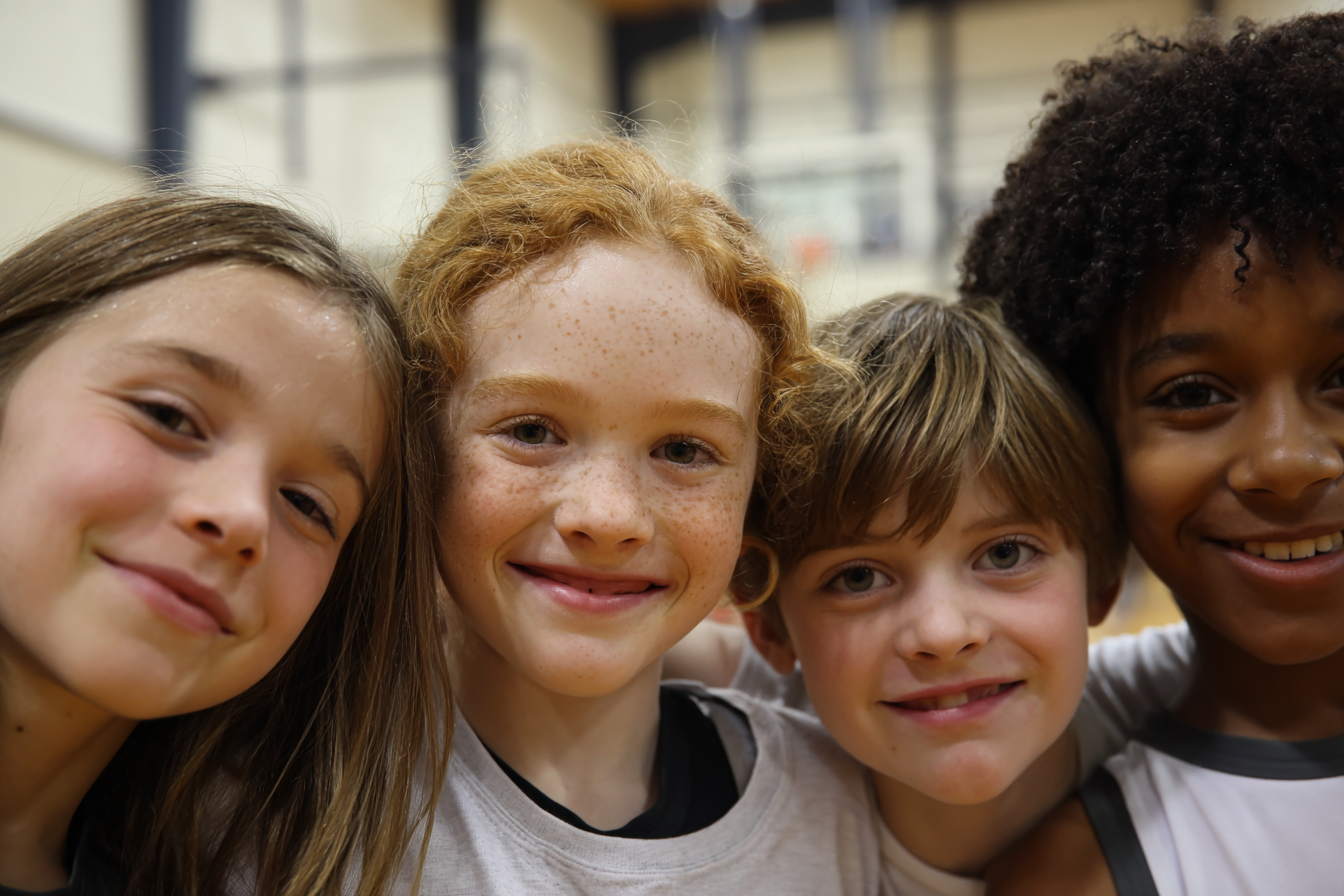
Focus: Establish clear rules, boundaries, and equipment safety routines while building expectations for effort, sportsmanship, and safe movement in dynamic games.
Grade Level: 4
Subject Area: Physical Education (Movement Foundations • Game Behavior • Safety & Sportsmanship)
Total Unit Duration: 1 core session + 2 optional sessions (1–3 weeks), 50–60 minutes per session
I. Introduction
Students begin the year by learning that a successful PE class depends on more than just playing games. It also depends on understanding routines, moving safely in shared space, listening for signals, respecting boundaries, and treating classmates with good sportsmanship. In this unit, students practice a dynamic warm-up in lanes using jogging, side shuffling, and backpedaling while learning how to maintain safe spacing and respond quickly to directions. They then apply those expectations in Advanced Fitness Tag, a fast-moving game in which students rotate tagger roles and respond to whistle commands that change the action. Throughout the unit, students build the habits that will make future PE games safer, smoother, and more enjoyable for everyone.
Essential Questions
- Why do rules, boundaries, and safety routines matter in PE?
- How can I move quickly while still controlling my body and respecting others’ space?
- What does strong sportsmanship look like during a fast and competitive game?
- How can following routines help PE class feel more fun, fair, and active?
II. Objectives and Standards
Learning Objectives — Students will be able to:
- Perform locomotor skills with control while changing speed and direction in warm-ups and tag games.
- Use personal and general space safely by spreading out, avoiding collisions, and responding to crowding.
- Follow PE rules, boundary expectations, start/stop signals, and equipment procedures consistently.
- Demonstrate self-control and positive sportsmanship during tagging games and class routines.
- Reflect on which PE activities feel enjoyable and explain why active games can be fun and satisfying.
Standards Alignment — 4th Grade (SHAPE America-based custom)
- PE:S1.4a – Locomotor Skills in Dynamic Games Perform locomotor skills (run, hop, jump, leap, slide, gallop, skip) with control and efficiency while changing speed and direction in game situations.
- Example: Students use controlled sprinting, stopping, and quick changes of direction during tag, invasion games, or chasing/fleeing activities.
- PE:S2.4a – Space Awareness & Positioning Use personal and general space effectively by moving to open areas, avoiding overcrowded zones, and maintaining safe distances in games.
- Example: In small-sided games, students spread out instead of clustering around the ball, making it easier to receive passes.
- PE:S4.4a – Consistent Rule-Following & Safety Consistently follow game rules, class procedures, and equipment safety guidelines without frequent reminders.
- Example: Students wait for the teacher’s signal to begin, respect boundaries, and use sticks, balls, and scooters safely.
- PE:S4.4c – Emotional Regulation & Sportsmanship Demonstrate self-control and positive sportsmanship by handling winning and losing respectfully, managing frustration, and encouraging others.
- Example: A student calmly accepts a referee’s call or a loss, shakes hands with the other team, and says “good game.”
- PE:S5.4a – Enjoyment & Preference for Activity Types Express enjoyment of various physical activities and identify personal favorites, explaining why they are fun or satisfying.
- Example: Students share that they enjoy basketball because they like teamwork and fast-paced play, or dance because of music and expression.
Success Criteria — Student Language
- I can move quickly and still stay in control of my body.
- I can use space safely and avoid running too close to others.
- I can follow the rules, boundaries, and whistle signals the right way.
- I can show good sportsmanship even when I get tagged or make a mistake.
- I can explain what kinds of PE activities I enjoy and why.
III. Materials and Resources
Tasks & Tools (teacher acquires/curates)
- General Equipment
- Cones to mark warm-up lanes, game boundaries, safe zones, and waiting spots.
- Pinnies or wristbands for taggers if desired.
- Whistle and visual stop/go signal.
- Whiteboard or poster with PE rules, signals, and sportsmanship reminders.
- Warm-Up Equipment
- Cones to create parallel movement lanes with enough room for safe travel.
- Optional floor spots showing start lines and return lines.
- Optional cue cards showing jog, side shuffle, backpedal, and freeze.
- Game/Activity Equipment
- Cones for large game boundaries.
- Pinnies, bands, or beanbags for rotating tagger identification if needed.
- Optional safe-zone markers or “home base” spots if a variation is used.
- Reflection & Assessment Tools
- Teacher checklist for movement control, spacing, rule-following, and sportsmanship.
- Quick exit slips or partner prompts.
- Optional class anchor chart for “What good PE behavior looks like.”
Preparation
- Mark several clear warm-up lanes so students can travel out and back without crossing into other groups.
- Create a game area large enough for safe movement during tag, with obvious boundaries.
- Decide on whistle commands for the unit, such as:
- 1 whistle: freeze
- 2 whistles: change direction
- 3 whistles: new tagger rotation or reset
- Post PE expectations clearly: listen first, move on signal, stay in bounds, tag softly, respect space, and encourage others.
- Plan simple tag-game modifications so the game can be made easier or more complex across the three sessions.
Common Misconceptions to Surface
- “Fast movement means I do not have to worry about control.” → Good movers can go fast and stay balanced and safe.
- “If the game gets crowded, I should just push through.” → Strong players look for open space instead of running into traffic.
- “Sportsmanship matters only after the game ends.” → Sportsmanship matters during mistakes, tags, calls, and every part of class.
- “Rules slow games down.” → Clear rules and signals actually help class stay safer and more active.
Key Terms (highlight in lessons) boundary, signal, spacing, control, sportsmanship, self-control, tagger, freeze, direction change, safe space, effort, routine
IV. Lesson Procedure
(Each lesson follows: Launch → Warm-up → Game/Activity → Reflect. Timing for a 50–60 minute block.)
Session 1 — Core Session: PE Routines, Lane Warm-Ups & Intro Advanced Fitness Tag
- Launch (5–7 min)
- Students gather in a central meeting area.
- Teacher explains that the first PE unit is about learning how class will work: signals, boundaries, safe movement, and sportsmanship.
- Review the meaning of start/stop signals and what students should do when they hear the whistle.
- Warm-up (12–15 min)
- Equipment: Cones for lanes, optional cue cards or floor spots.
- Set-Up:
- Create several long lanes with a start line and a return line.
- Students line up behind a lane start marker, spaced so each student can move safely.
- Teacher stands where all lanes can see and hear the cues.
- Procedure:
- Students travel down the lane and back using a teacher-called locomotor pattern:
- jog down / walk back
- side shuffle down / walk back
- backpedal down / walk back
- Teacher pauses between patterns to reinforce spacing, eyes forward, and staying in the lane.
- Add a few quick checks where students freeze and look around to see whether they are too close to someone else.
- End with a final round combining two movements, such as jog halfway and side shuffle back.
- Students travel down the lane and back using a teacher-called locomotor pattern:
- Rules:
- The warm-up is played in a go down the lane, return to the back of the line format, so only the next student begins when the teacher gives the signal or when the lane is clear.
- Students must stay in their own lane for the full length of the movement and may not cut across into another lane.
- On jog, students move forward under control; on side shuffle, they face sideways and do not cross feet; on backpedal, they keep eyes up and move carefully.
- If the teacher blows the whistle, all students freeze immediately and wait for the next direction.
- Game/Activity – Advanced Fitness Tag (20–25 min)
- Equipment: Cones for boundaries, pinnies or bands for taggers if desired.
- Set-Up:
- Mark a large rectangular game area with cones.
- Choose 2–4 starting taggers depending on class size.
- If using pinnies or wristbands, taggers wear them so all students can identify who is “it.”
- Review safe tagging: light touch on the shoulder or upper back only.
- Procedure:
- Taggers move through the space trying to tag runners.
- When a runner is tagged, they complete a quick fitness task, such as 3 jumping jacks or 3 fast feet steps, then rejoin the game.
- At teacher whistle signals, students respond with pre-taught commands such as:
- freeze
- change direction
- new taggers rotate in
- Teacher rotates taggers often so many students experience the role.
- Rules:
- The game is played as a continuous tag game inside the boundary, and students must stay in bounds at all times.
- Taggers may only use a light tag with one hand on the approved area; no pushing, grabbing, or repeated tagging.
- When tagged, a student must stop where they are, complete the assigned fitness task correctly, and then return to play right away.
- On 1 whistle, everyone freezes; on 2 whistles, everyone changes direction; on 3 whistles, current taggers go out and new taggers enter.
- Students should keep eyes up and move into open space instead of bunching in the middle.
- Reflect (5 min)
- Prompt: “What rule or routine helped the class stay safest and most active today?”
Optional Session 2 — Stronger Spacing, Faster Reactions & Sportsmanship Practice
- Launch (5–7 min)
- Review the signals and game routines from Session 1.
- Ask: “What happens when students forget spacing or get upset during a fast game?”
- Warm-up (12–15 min)
- Equipment: Same lane setup with cones and optional cue cards.
- Set-Up:
- Use the same lane structure from Session 1.
- Add one or two teacher cues that require a faster response, such as switching movements mid-lane.
- Procedure:
- Students continue practicing lane travel with jog, side shuffle, and backpedal.
- Teacher now gives quick mid-lane changes such as:
- start jogging, then side shuffle at halfway
- backpedal halfway, then freeze and return
- Students practice adjusting speed and direction while keeping spacing.
- Rules:
- The warm-up still uses the lane-by-lane travel and return system, and students may start only when the lane is open and the signal is given.
- If the teacher changes the movement mid-lane, students switch immediately while staying in control and inside their lane.
- Students should maintain enough space so they do not catch the person in front of them.
- All freeze signals still require instant stopping and listening.
- Game/Activity – Advanced Fitness Tag with Sportsmanship Emphasis (20–25 min)
- Equipment: Same game boundary and tagger markers.
- Set-Up:
- Use the same large tag area.
- Add a quick sportsmanship reminder before play, such as how to respond if tagged, if a call feels unfair, or if a student has to wait for the next tagger turn.
- Procedure:
- Students play Advanced Fitness Tag again.
- Teacher increases challenge by changing taggers more often or using more frequent whistle cues.
- Pause briefly to discuss examples of good self-control and encouragement.
- Students practice saying simple positive responses such as “good tag,” “my turn next,” or “I’m back in.”
- Rules:
- The game remains continuous, and tagged students complete the class-assigned fitness task before rejoining.
- Students must respond respectfully when tagged and may not argue about safe, light tags unless the teacher asks for a reset.
- Taggers must rotate out immediately when signaled so the next group can enter.
- Students who are out as taggers or waiting for a role change should stay ready and watch the game, not become distracted.
- Encouraging classmates and staying calm after mistakes are expected parts of the game.
- Reflect (5 min)
- Prompt: “What did good sportsmanship look like during the game today?”
Optional Session 3 — Independent Routines, Quick Response & Favorite Activity Reflection
- Launch (5–7 min)
- Explain that today students will show how well they understand PE routines with less teacher support.
- Review that the goal is to move safely, follow signals quickly, and reflect on what kinds of activities feel fun and satisfying.
- Warm-up (12–15 min)
- Equipment: Same lane setup.
- Set-Up:
- Use the same lanes, but now students should know the lane pattern and return routine more independently.
- Teacher may invite a student helper to call one movement round if ready.
- Procedure:
- Students complete the lane warm-up using the familiar locomotor patterns.
- Teacher may add a final mixed round where students perform two or three changes in one trip.
- Students are expected to manage spacing and line order with minimal reminders.
- Rules:
- Warm-up is still played in the same lane travel / return to line format, and students must show they understand the routine independently.
- Student helpers may call a teacher-approved movement, but everyone still follows teacher safety signals first.
- Students must keep the line organized, wait turns properly, and maintain safe spacing without needing constant reminders.
- The warm-up ends only when the teacher calls the final freeze and reset.
- Game/Activity – Advanced Fitness Tag Showcase (20–25 min)
- Equipment: Same tag area and markers.
- Set-Up:
- Use the same game format students have learned.
- Teacher may allow student helpers to help identify new tagger groups or remind classmates of the whistle meanings.
- Review expectations for full effort, self-control, and encouraging others.
- Procedure:
- Students play longer rounds of Advanced Fitness Tag.
- Teacher watches for:
- safe movement in open space
- immediate response to whistle signals
- safe tags
- calm behavior
- active effort
- End with a short cooldown walk or standing reflection near the boundary.
- Rules:
- Students must play the game using all previously learned rules: stay in bounds, tag lightly, do the fitness task when tagged, and respond correctly to whistle commands.
- Student helpers, if used, may remind classmates about routines but may not change the rules of the game.
- Players should continue moving with effort and avoid hiding at the boundary or refusing to engage.
- Students must show that they can handle winning, tagging others, or being tagged with good self-control.
- Reflect (5–7 min)
- Prompt: “What kind of PE activity feels most fun to you so far, and what makes it enjoyable?”
- Optional second prompt: “How do rules and routines help games stay fun instead of chaotic?”
V. Differentiation and Accommodations
Advanced Learners
- Challenge students to show sharper changes of direction without losing control.
- Invite them to help model strong spacing and safe movement in the tag game.
- Ask them to explain why certain PE activities feel more enjoyable or satisfying to them.
Targeted Support
- Use wider lanes or shorter lane distances.
- Reduce the number of starting taggers or slow the game with more frequent whistle resets.
- Give repeated cues such as “eyes up,” “stay in your lane,” and “move to open space.”
- Pair students with supportive peers for line routines and signal understanding.
Multilingual Learners
- Post visuals for jog, shuffle, backpedal, freeze, tagger, boundary, and sportsmanship.
- Demonstrate each warm-up movement and whistle signal physically before play begins.
- Allow brief partner talk or gesture response during reflection.
- Use repeated action-based cues during transitions.
IEP/504 & Accessibility
- Modify lane distance, speed expectations, or fitness task demands as needed.
- Allow alternative movement choices such as fast walk instead of jog when appropriate.
- Offer supportive roles like signal helper or boundary checker if temporary reduced intensity is needed.
- Keep boundaries and routines visually clear and predictable.
VI. Assessment and Evaluation
Formative Checks (daily)
- Session 1 — Students begin using lanes safely, respond to whistle signals, and understand the basic rules of Advanced Fitness Tag.
- Optional Session 2 — Students improve spacing, reaction speed, and sportsmanship during game play.
- Optional Session 3 — Students follow routines more independently and reflect more clearly on what makes activities enjoyable.
Summative — Routines, Safety, & Game Expectations Checklist (0–2 per criterion, total 10)
- Locomotor Control in Dynamic Games (PE:S1.4a)
- 2: Consistently moves with control and efficiency while changing speed and direction in warm-ups and tag games.
- 1: Usually moves effectively, but control or transitions are sometimes inconsistent.
- 0: Frequently struggles to move safely or change direction with control.
- Space Awareness & Positioning (PE:S2.4a)
- 2: Regularly uses open space well, avoids overcrowding, and maintains safe distance from others.
- 1: Sometimes uses space effectively, but crowding or spacing mistakes still happen.
- 0: Rarely uses space safely or purposefully.
- Rule-Following & Safety (PE:S4.4a)
- 2: Consistently follows signals, boundaries, and safety rules with minimal reminders.
- 1: Usually follows rules, but occasionally needs reminders.
- 0: Frequently needs reminders about rules, boundaries, or safety.
- Emotional Regulation & Sportsmanship (PE:S4.4c)
- 2: Handles tagging, mistakes, and competitive moments with self-control and positive sportsmanship.
- 1: Usually stays respectful, but reactions are sometimes inconsistent.
- 0: Frequently struggles to respond calmly or respectfully.
- Enjoyment & Activity Preference Reflection (PE:S5.4a)
- 2: Clearly identifies enjoyable PE activities and explains why they feel fun or satisfying.
- 1: Identifies a preferred activity, but explanation is basic or incomplete.
- 0: Rarely reflects clearly on activity enjoyment or preference.
Feedback Protocol (TAG)
- Tell one strength (e.g., “You followed every whistle cue quickly and still stayed in control of your movement.”).
- Ask one question (e.g., “What helped you stay calmer when you got tagged?”).
- Give one suggestion (e.g., “Next time, try moving toward open space sooner so you do not get trapped near other runners.”).
VII. Reflection and Extension
Reflection Prompts
- Which routine helped PE feel safest and most organized?
- What does strong sportsmanship look like in a tag game?
- Which activity in this unit felt most fun or satisfying to you, and why?
- How do rules and signals help everyone stay active?
Extensions
- Class Rules Poster: Students help create a poster showing the most important PE routines and safety reminders.
- Signal Practice: Students act out what each whistle or cue means during a quick review game.
- Favorite Activity Share: Students explain which PE game or movement pattern they hope to do more of and why.
Standards Trace — When Each Standard Is Addressed
- PE:S1.4a — Core Session and Optional Sessions 2–3 (lane warm-ups and Advanced Fitness Tag movement patterns).
- PE:S2.4a — Core Session and Optional Sessions 2–3 (using lanes correctly, spreading out in tag, and avoiding crowding).
- PE:S4.4a — Core Session and Optional Sessions 2–3 (signals, boundaries, tagging rules, and equipment/game safety).
- PE:S4.4c — Optional Sessions 2–3, with support in Core Session (handling tagging, mistakes, and competition with self-control).
- PE:S5.4a — Optional Session 3, with support in Core Session and Optional Session 2 (reflecting on enjoyable activities and preferences).