Unit Plan 1 (Grade 5 Band): Band Basics & Expectations
Beginner Grade 5 band unit introducing rehearsal routines, instrument care, ensemble etiquette, and goal-setting to build focus, responsibility, and teamwork.

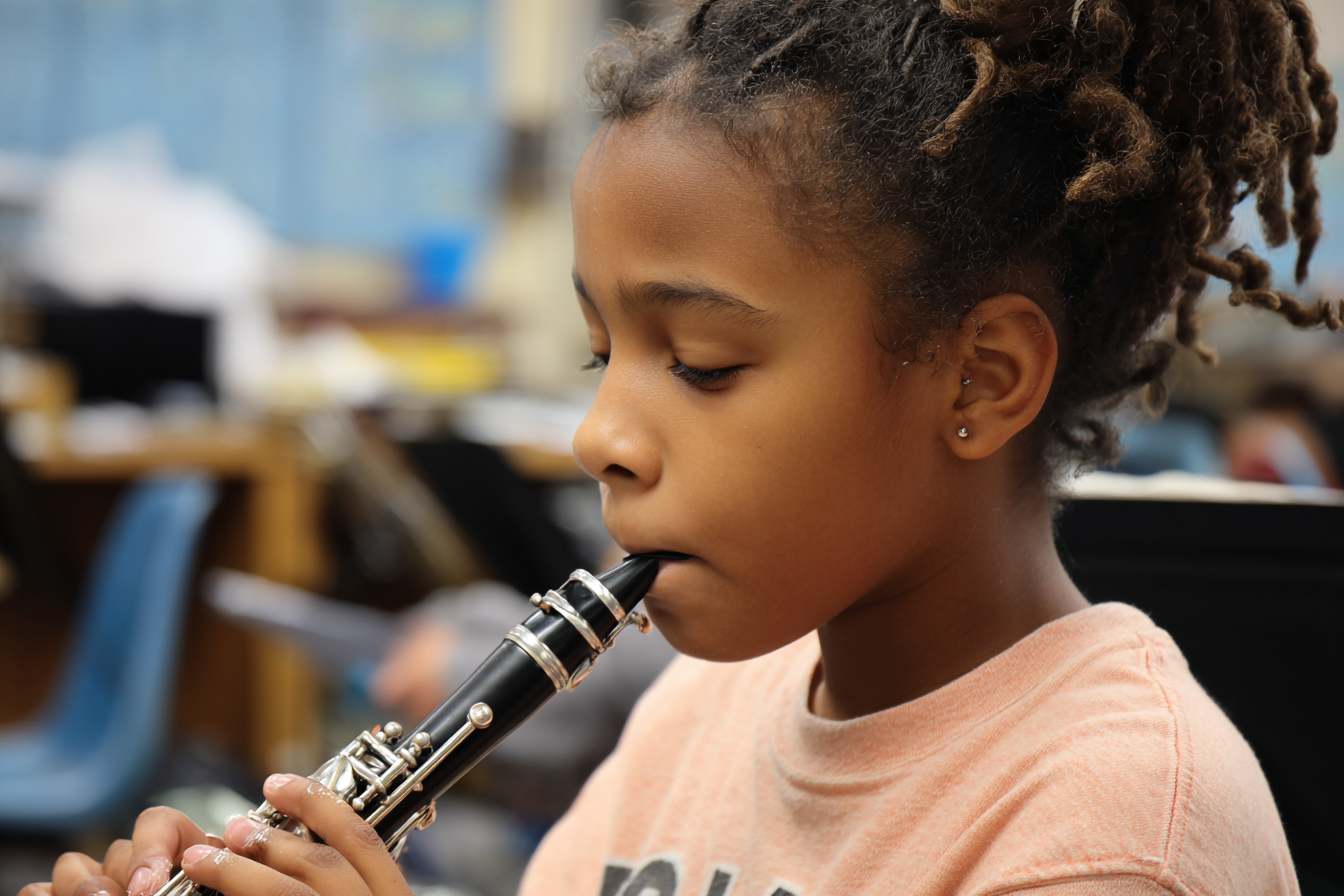
Focus: Introduce rehearsal routines, instrument care, and ensemble behavior for beginning band.
Grade Level: 5
Subject Area: Band (Performing • Presenting • Reflecting)
Total Unit Duration: 5 sessions (1–2 weeks), 30 minutes per session
I. Introduction
In this opening unit, students learn what it means to be part of a band ensemble. They practice rehearsal routines (entering, setting up, watching the conductor), learn basics of instrument care and safety, and explore expectations for focus, listening, and respect. Students also reflect on why they chose their instrument and set a simple personal goal for growth, connecting their interests to their role in the band.
Essential Questions
- What does it mean to show good rehearsal and performance etiquette in band?
- How do instrument care and setup habits help us sound better and avoid problems?
- How do my interests and goals influence the way I participate and grow as a band musician?
- Why is it important for every member to show focus and responsibility in an ensemble?
II. Objectives and Standards
Learning Objectives — Students will be able to:
- Demonstrate basic rehearsal routines: entering quietly, setting up, sitting in ready position, and watching the conductor.
- Show appropriate rehearsal etiquette, including tracking rests, following cues, and collaborating respectfully with peers.
- Identify at least two ways to care for their instrument (assembly, storage, cleaning) that protect it and support good sound.
- Describe why they chose their instrument and state at least one personal goal for improvement in band.
- Explain how following band expectations and pursuing personal goals help the whole ensemble succeed.
Standards Alignment — 5th Grade Band (custom, NAfME-style)
- BD:Pr6.5b — Demonstrate appropriate rehearsal and performance etiquette (focus, tracking rests, following conductor cues, respectful collaboration).
- Example: Students sit ready, watch the conductor, and enter together on cue.
- BD:Cn10.5a — Describe how personal interests and goals influence instrument choice and musical growth.
- Example: Students explain why they chose their instrument and set one goal for improvement.
Success Criteria — Student Language
- I can enter, set up, and sit ready for rehearsal, watching the conductor and staying focused.
- I can track rests and cues so I know when to play and when to stay silent.
- I can explain two ways to take care of my instrument so it stays in good shape.
- I can say why I chose my instrument and name at least one goal I have for band this year.
- I can show respectful behavior that helps our band sound and work better together.
III. Materials and Resources
Tasks & Tools (teacher acquires/curates)
- Classroom band seating plan and rehearsal space with chairs and music stands.
- Beginning band method book or printed exercises with simple long tones, echo patterns, or first-note songs.
- Instruments and cases for each student; basic care supplies (swabs, valve oil, cork grease, mallet/stick storage).
- Simple rehearsal expectations chart (“Enter • Set Up • Ready Position • Eyes on Conductor • Quiet Listening”).
- Instrument care mini-charts or posters for each family (woodwinds, brass, percussion).
- Short reflection sheet or journal page for “Why I Chose My Instrument” and “My Band Goal.”
- Anchor charts:
- “Band Routines” (Enter → Set Up → Tune/Ready → Rehearse → Put Away).
- “Band Etiquette” (Listen, Watch, Respect, Participate).
Preparation
- Arrange the room with clear traffic flow for entering and exiting with instruments.
- Create and post Band Routines and Band Etiquette charts where all can see.
- Prepare a short verbal script or slide outlining expectations for rehearsal behavior.
- Group students by instrument family for brief care demonstrations (if possible).
- Copy reflection/goal sheets for each student.
Common Misconceptions to Surface
- “Band is just about playing notes; routines don’t matter.” → Routines and etiquette are what make ensemble playing possible.
- “Only the teacher is responsible for making rehearsal go well.” → Every band member’s focus and behavior affect the rehearsal.
- “Instruments can handle rough treatment.” → Instruments are delicate tools that need careful handling to sound good and last.
- “Goals are only for advanced players.” → Simple personal goals help every musician grow, especially beginners.
Key Terms (highlight in lessons) rehearsal, etiquette, ensemble, conductor, cue, ready position, rest, instrument care, assembly, storage, goal, growth, focus, respect
IV. Lesson Procedure
(Each session follows: Launch → Explore → Discuss → Reflect. Timing for a 30-minute block.)
Note: Because Grade 5 Band typically meets two times per week, all standards are fully addressed in Sessions 1 and 2. Optional Sessions 3–5 extend and reinforce these skills.
Session 1 — Band Routines & Etiquette Foundations (Pr6.5b • Cn10.5a)
- Launch (5–7 min)
- Teacher greets students at the door and models quiet entering with instruments.
- Ask: “What do you think good band behavior looks and sounds like?” Record a few ideas and connect them to the posted Band Etiquette chart.
- Explore (15–18 min)
- Demonstrate the full Band Routine: entering, setting up stands, placing cases, and sitting in ready position (feet flat, instrument set, eyes forward).
- Students practice the routine several times:
- “Enter and Set Up” drill with a short time limit (low-pressure).
- Practice watching the conductor while silently echoing simple conducting patterns (e.g., 4-beat pattern).
- Introduce rest tracking: point to a short exercise and model counting silently while following the conductor’s cues.
- Discuss (3–5 min)
- Ask: “What made our routine smooth? What made it messy?”
- Highlight how watching, listening, and staying quiet help everyone succeed (BD:Pr6.5b).
- Reflect (2–3 min)
- Quick check: thumbs up/side/down for “I know what to do when I walk into band now.”
- Students share one etiquette promise: “In band, I will always __.”
Session 2 — Instrument Care & Personal Band Goals (Pr6.5b • Cn10.5a)
- Launch (4–6 min)
- Ask: “What might happen if we don’t take care of our instruments?” Collect a few responses.
- Explain: “Today we’ll learn how to care for our instruments and set our first band goals.”
- Explore (18–20 min)
- Brief instrument care demonstration by family (woodwinds, brass, percussion):
- Safe assembly/disassembly basics.
- One or two key care routines (e.g., swab, valve oil, proper mallet storage).
- How this relates to sound quality and avoiding repairs.
- Students complete a quick Instrument Care & Goals sheet:
- “Two ways I will care for my instrument are __ and __.”
- “I chose my instrument because __.”
- “My first band goal is __ (e.g., clear tone, strong posture, counting rests).”
- Brief instrument care demonstration by family (woodwinds, brass, percussion):
- Discuss (3–4 min)
- Invite a few students to share their goals and why they matter.
- Connect back to etiquette: caring for the instrument and pursuing goals show respect for the ensemble (BD:Pr6.5b + BD:Cn10.5a).
- Reflect (2–3 min)
- Exit ticket: “One way I will show I am serious about band is __.”
Optional Session 3 — Routines Drill & First Sounds
- Launch (4–5 min)
- Quick “Band Routine Challenge”: see if students can enter, set up, and sit ready within a reasonable time while staying quiet and focused.
- Explore (18–20 min)
- Short breathing or stick-control warm-up (air exercises, air band, or pad work).
- Practice a simple call-and-response exercise using first sounds (or mouthpiece/air only if not yet playing full notes), emphasizing:
- Watching conductor cues for start/stop.
- Tracking rests between patterns.
- Teacher circulates to remind students of instrument care and hand position.
- Discuss (3–4 min)
- Ask: “What helped you know when to play and when to stay silent?”
- Reinforce that good routines and etiquette make first sounds more organized and musical.
- Reflect (2–3 min)
- Partner share: “One thing I did better today in my band behavior or instrument care was __.”
Optional Session 4 — Goal Check-In & Ensemble Listening
- Launch (4–5 min)
- Ask students to silently think about the goal they wrote in Session 2.
- Prompt: “Hold up fingers (1–3) to show how close you feel to your goal so far.”
- Explore (18–20 min)
- Short warm-up focusing on posture, breathing, and ready position.
- Play a simple unison line or echo pattern from the method book. Emphasize:
- Watching the conductor for tempo and cutoffs.
- Listening across the ensemble for togetherness.
- Pause between repetitions to ask: “Did we start together? Did we end together? How was our focus?”
- Discuss (3–4 min)
- Small-group talk: “Which band habits helped us play together? Which habits do we still need to practice?”
- Connect habits back to personal goals and ensemble success.
- Reflect (2–3 min)
- Students add one line to their goal sheet: “I made progress on my goal when I __.”
Optional Session 5 — Band Basics Mini-Performance
- Launch (4–5 min)
- Explain: “Today we’ll show what we’ve learned about band basics in a short mini-performance for ourselves or a neighboring class if available.”
- Explore (18–20 min)
- Students run through a simple warm-up and short piece/exercise as if it were a performance.
- Focus on:
- Entering and setting up quietly.
- Ready position before playing.
- Watching conductor cues, tracking rests, and staying respectful between selections.
- Optionally invite a small audience (another class or staff) to observe routines and first sounds.
- Discuss (3–4 min)
- Ask: “What did we do that made us look and sound like a real band?”
- Chart a few class strengths (e.g., “Good silent setup,” “Watching the conductor,” “Careful instrument handling”).
- Reflect (2–3 min)
- Quick exit slip or verbal share: “One band basic I will keep doing every rehearsal is __.”
V. Differentiation and Accommodations
Advanced Learners
- Assign advanced students roles as row leaders to model entering, setting up stands, and showing ready position.
- Have them help peers with instrument assembly and basic care under teacher supervision.
- Ask advanced learners to set an additional stretch goal (e.g., counting rests for the whole band, modeling posture) and reflect on their leadership.
Targeted Support
- Provide visual cue cards for steps in the band routine (Enter → Set Up → Ready → Watch).
- Use checklists on stands for students who need reminders (“1. Sit tall, 2. Feet flat, 3. Eyes on conductor”).
- Offer additional guided practice with instrument assembly and case storage for students who are unsure.
- Allow students to practice routines in small groups before joining full-band drills.
Multilingual Learners
- Pair key words with pictures on anchor charts (e.g., picture of a conductor, ear for listening, instrument case for care).
- Use simple sentence frames for goals and reflections:
- “I chose my instrument because __.”
- “My band goal is to __.”
- “I show good band behavior when I __.”
- Encourage brief partner conversations before writing reflections to rehearse language.
IEP/504 & Accessibility
- Provide structured seating (assigned seats near conductor or peers who can model).
- Offer extra time for instrument setup and checklist supports for each step.
- Allow alternative participation roles when needed (e.g., counting rests with hands, shadow-playing while building stamina or confidence).
- Use enlarged charts and clearly posted visuals to support attention and memory.
VI. Assessment and Evaluation
Formative Checks (daily)
- Session 1 — Teacher observation checklist: students can enter, set up, and sit ready with growing independence; students begin tracking rests and cues.
- Session 2 — Instrument care demonstrations and goal sheets show students can name at least two care routines and identify a personal band goal.
- Optional Session 3 — Routines and first sounds show improved focus, rest tracking, and response to conductor cues.
- Optional Session 4 — Ensemble warm-ups and discussion indicate students can connect habits and goals to playing together successfully.
- Optional Session 5 — Mini-performance behaviors (entry, setup, focus, exit) demonstrate application of BD:Pr6.5b in a performance-like setting.
Summative — Band Basics & Expectations Check (0–2 per criterion, total 10)
- Rehearsal Etiquette & Focus (Pr6.5b)
- 2: Consistently enters, sets up, and sits in ready position; watches the conductor, stays quiet when appropriate, and collaborates respectfully.
- 1: Usually follows routines and etiquette with some reminders; occasional lapses in focus or talking.
- 0: Frequently ignores routines or expectations; behavior often disrupts rehearsal.
- Tracking Rests & Cues (Pr6.5b)
- 2: Reliably tracks rests and conductor cues, entering and cutting off at the correct times.
- 1: Sometimes loses track of rests or cues but recovers with reminders; occasional early/late entrances.
- 0: Often unsure of when to play or remain silent; entrances and cutoffs are frequently incorrect.
- Instrument Care & Handling
- 2: Demonstrates safe handling and can name and apply at least two care routines (assembly, cleaning, storage) consistently.
- 1: Shows some understanding of care routines but needs reminders to apply them correctly.
- 0: Mishandles the instrument or neglects care routines, risking damage or poor function.
- Personal Goals & Reflection (Cn10.5a)
- 2: Clearly explains why they chose their instrument and states at least one specific, meaningful band goal; reflects on why it matters.
- 1: Provides a basic reason for instrument choice and a general goal with limited detail.
- 0: Cannot explain instrument choice or goal in a meaningful way.
- Connection to Ensemble Success (Pr6.5b • Cn10.5a)
- 2: Explains how their behavior and goals affect the whole band (e.g., “If I watch the conductor, our section can stay together.”).
- 1: Recognizes that their behavior matters but gives only a simple or incomplete explanation.
- 0: Shows little awareness of how their actions influence the ensemble.
Feedback Protocol (TAG)
- Tell one strength (e.g., “You always sit in ready position and watch the conductor right away.”).
- Ask one question (e.g., “How could you improve your instrument care even more at home or before class?”).
- Give one suggestion (e.g., “Try circling your rest measures so you remember to count instead of talk.”).
VII. Reflection and Extension
Reflection Prompts
- What is one band routine you are proud of mastering, and how does it help rehearsal?
- How does taking care of your instrument show respect for your music and your band?
- Why did you choose your instrument, and how does that choice connect to your personality or interests?
- How will following band expectations help you reach your goal this year?
Extensions
- Band Expectations Poster: Students design small posters or digital slides explaining one band expectation and why it matters.
- Instrument Care Checklist: Students create a personal care checklist to keep in their case for home and school use.
- Goal-Setting Conference: Short one-on-one or small-group conferences where students share their goals and strategies with the teacher.
Standards Trace — When Each Standard Is Addressed
- BD:Pr6.5b — Sessions 1–2 (core), Optional Sessions 3–5 (extension)
- Session 1: Students practice and refine band routines (entering, setting up, ready position) and rehearsal etiquette (quiet listening, watching the conductor, respectful collaboration).
- Session 2: Continued emphasis on rehearsal behavior, especially as students engage in instrument care demonstrations and share goals respectfully.
- Optional Session 3: Routines drill and first sounds require students to track rests and cues and maintain focus while playing.
- Optional Session 4: Ensemble warm-ups and listening exercises reinforce focused behavior, watching the conductor, and supportive collaboration.
- Optional Session 5: Mini-performance provides a performance-like context for applying rehearsal and performance etiquette from entry to exit.
- BD:Cn10.5a — Sessions 1–2 (core), Optional Sessions 4–5 (extension)
- Session 1: Class discussion about what good band behavior looks like begins connecting personal choices to band culture.
- Session 2: Students explicitly explain why they chose their instrument and set at least one personal band goal, describing how it will help their growth.
- Optional Session 4: Goal check-in and reflections prompt students to connect daily habits and ensemble experiences to their personal goals.
- Optional Session 5: Students reflect on which band basics they will carry forward, reinforcing the link between personal responsibility, instrument choice, and ongoing musical growth.