Unit Plan 12 (Grade 5 Band): Ensemble Balance
Grade 5 band unit focused on listening across the ensemble and adjusting volume and tone to create balanced, clear, and confident group sound.

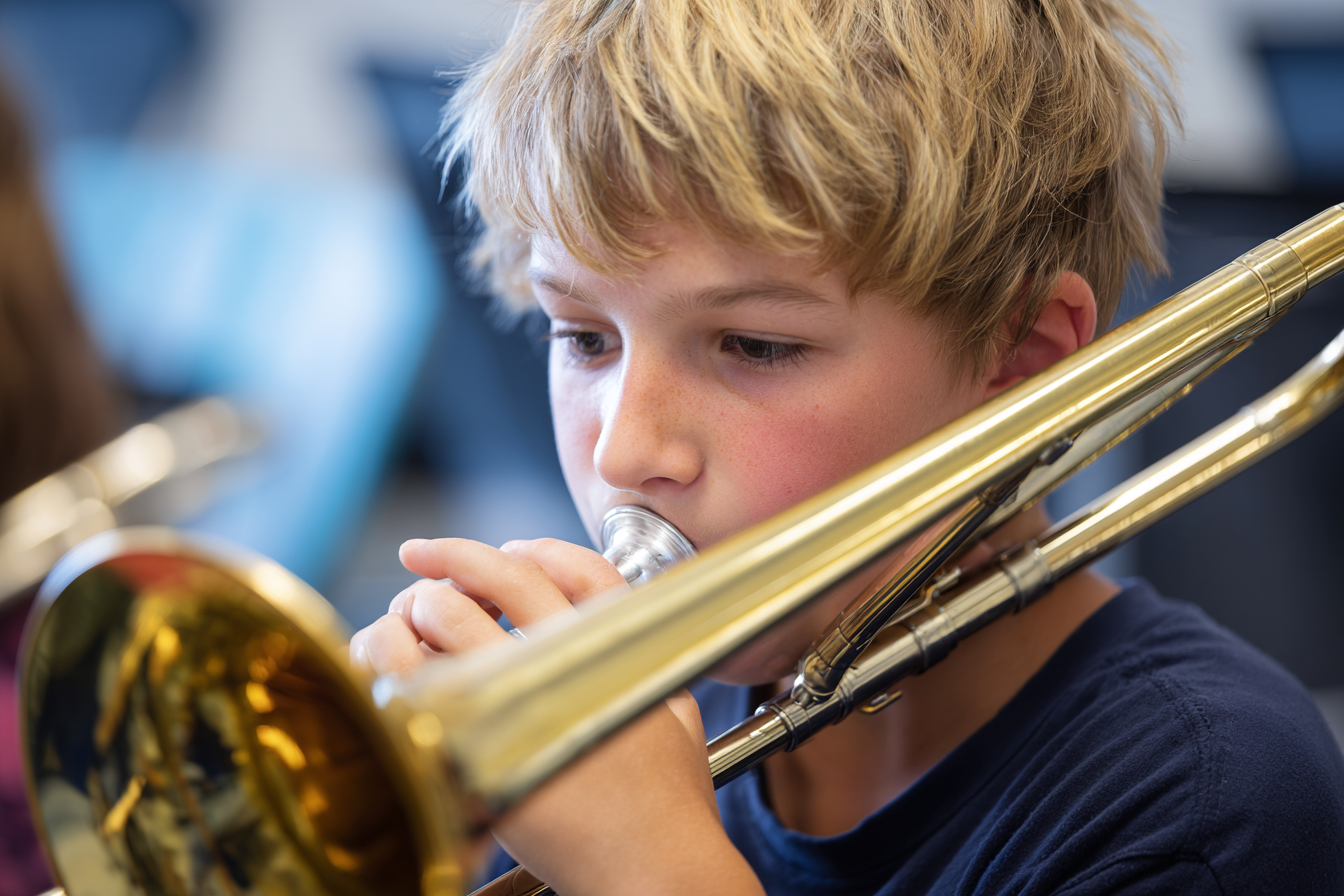
Focus: Learn to listen across the ensemble and adjust volume and tone so that band parts are balanced and clear.
Grade Level: 5
Subject Area: Band (Performing • Presenting • Reflecting)
Total Unit Duration: 5 sessions (1–2 weeks), 30 minutes per session
I. Introduction
In this unit, students learn what it means to make the band sound balanced—not too loud in one section and too soft in another. They practice listening across the ensemble, adjusting their own volume and tone, and using simple rehearsal strategies (slow practice, repeating small sections) to improve balance. Through whole-group and section work, students begin to understand that good band sound is a team effort, and everyone must listen and adjust to help the melody and important parts come through clearly.
Essential Questions
- What does it mean for a band to sound balanced, and why is balance important?
- How can I listen across the ensemble and decide if I should play softer, louder, or stay the same?
- How do rehearsal strategies like slow practice and repeating small sections help us improve ensemble balance?
- What is my responsibility as a band member to help the group sound clear and not “too loud” or “too soft”?
II. Objectives and Standards
Learning Objectives — Students will be able to:
- Explain in simple terms what ensemble balance means (no one part drowning out the others).
- Use listening skills to decide whether they should play softer or louder to match the group.
- Apply teacher-guided rehearsal strategies (slow practice, counting, repeating small chunks) to help fix balance issues in short passages.
- Follow conductor cues (hands for softer/louder) to adjust volume in real time while playing.
- Reflect on one way they personally can improve band balance (e.g., watching, listening, adjusting their dynamic).
Standards Alignment — 5th Grade Band (custom, NAfME-style)
- BD:Pr5.5a — Use teacher-guided rehearsal strategies (counting, slow practice, repeating small sections) to improve accuracy.
- Example: Students “chunk” a tricky measure, practice slowly, and then connect it back.
Success Criteria — Student Language
- I can describe what balance means in our band (no one part is too loud).
- I can listen to other players and decide if I should play softer or louder.
- I can use slow practice and repeating small chunks to help our balance and accuracy get better.
- I can follow the conductor’s cues to change my volume while playing.
- I can name at least one way I helped our band sound more balanced.