Unit Plan 21 (Grade 5 Band): Identifying Musical Elements
Grade 5 band students identify beat, rhythm, pitch, tempo, and dynamics through listening, movement, and simple notation to describe music clearly.

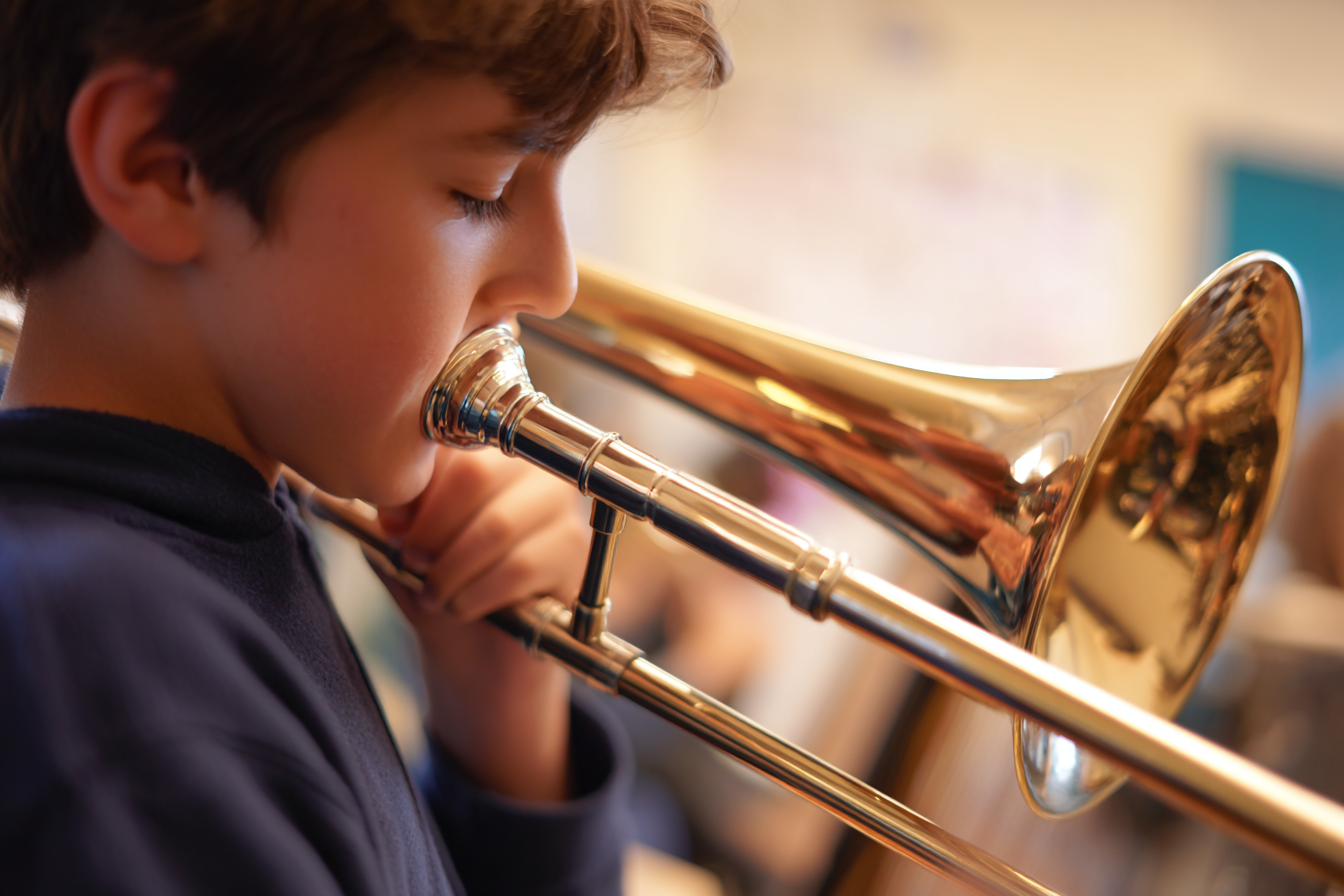
Focus: Help students identify beat, rhythm, pitch, tempo, and dynamics in beginning band music through listening, movement, and simple notation.
Grade Level: 5
Subject Area: Band (Performance • Response • Connections)
Total Unit Duration: 1–2 weeks (5 sessions, 30 minutes per session)
I. Introduction
In this unit, students become “music detectives” who listen carefully for the building blocks of band music: beat, rhythm, pitch, tempo, and dynamics. Through echo-clap games, call-and-response playing, and guided listening to short band excerpts, they learn to name what they hear and see in the music. Students connect these elements to how a piece feels (calm vs. energetic, high vs. low) and practice using simple music vocabulary to describe what is happening in a piece.
Essential Questions
- How do beat, rhythm, pitch, tempo, and dynamics work together to create band music?
- How can I use music words to describe what I hear when I listen to a piece?
- How does changing one element (like tempo or dynamics) change the character or mood of the music?
II. Objectives and Standards
Learning Objectives — Students will be able to:
- Identify steady beat and rhythm patterns in beginning band music using movement (tapping, clapping) and simple notation.
- Point out when pitch moves higher, lower, or stays the same in a short musical example.
- Use basic terms like fast/slow (tempo) and loud/soft (dynamics) to describe differences between two performances or sections of a piece.
- Complete a simple Musical Elements Listening Log that labels beat, rhythm, pitch, tempo, and dynamics in a short band excerpt.
- Explain, in student-friendly language, how changing one element (such as dynamics or tempo) changes how the music feels.
Standards Alignment — Grade 5 Band (custom, NAfME-style)
- BD:Re7.5a — Identify basic musical elements (beat, rhythm, pitch, dynamics, tempo) in band music.
- Example: Students identify whether a piece is fast or slow and loud or soft.
Success Criteria — Student Language
- I can find and keep a steady beat by clapping, tapping, or moving.
- I can tell the difference between beat (the steady pulse) and rhythm (the pattern of long and short notes).
- I can describe pitch as going higher, lower, or staying the same in a short melody.
- I can say whether music is fast or slow and loud or soft, and use words like beat, rhythm, pitch, tempo, dynamics to explain my ideas.
- I can fill out a listening log that labels musical elements in a piece we hear in class.