Unit Plan 29 (Grade 5 Band): Sight-Reading Basics
Grade 5 band students build confidence sight-reading unfamiliar music using rhythm, counting, and ensemble strategies to play steadily without stopping.

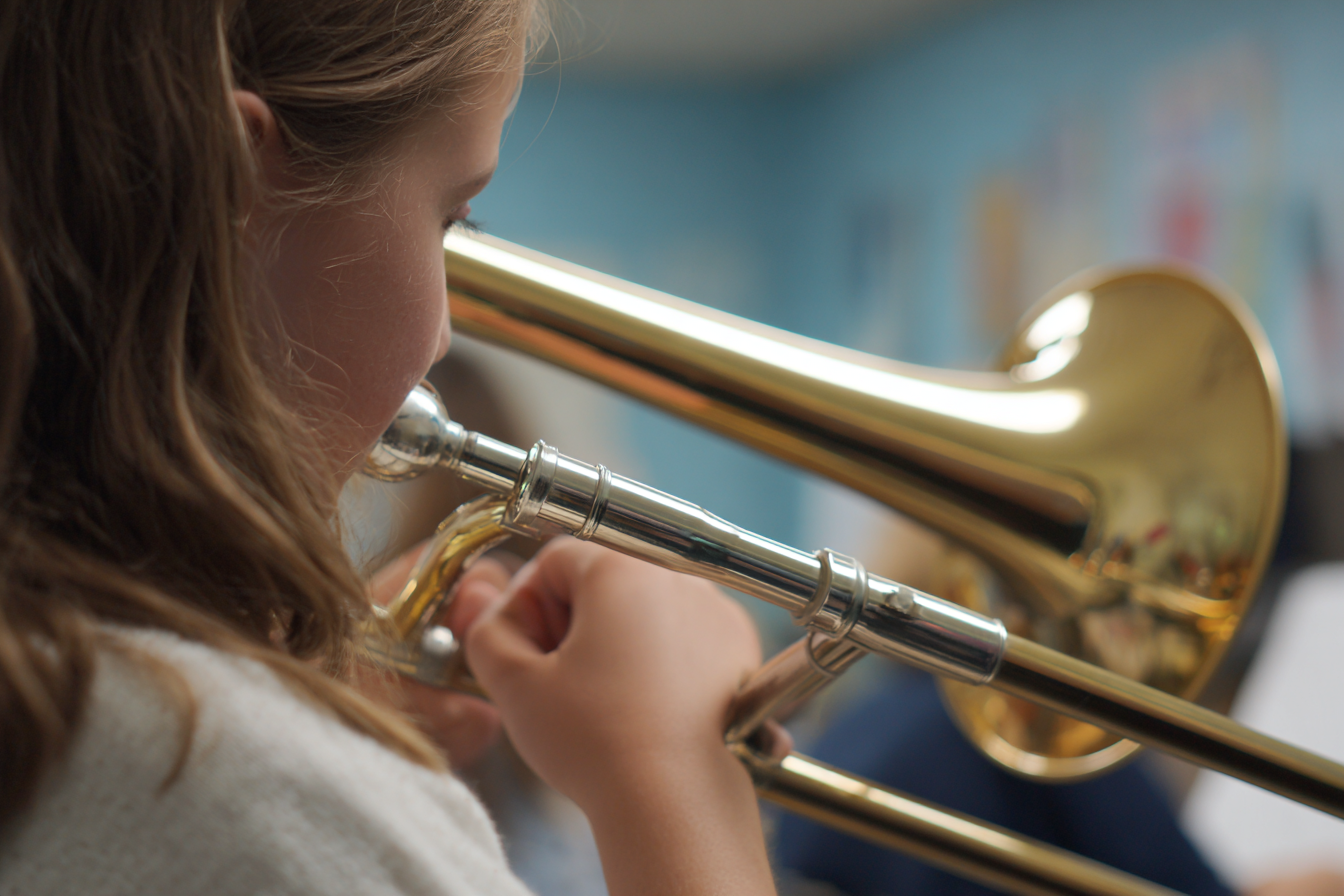
Focus: Read and perform short, unfamiliar music with confidence using simple sight-reading strategies.
Grade Level: 5
Subject Area: Band (Performing • Responding • Connecting)
Total Unit Duration: 1–2 weeks, 30 minutes per session
I. Introduction
In this unit, students learn how to approach new band music they have never played before. They practice using a simple sight-reading checklist (look at the clef, key, time signature, first note, and rhythms) and learn to clap, count, and “air-play” before performing. The focus is on keeping a steady beat, staying with the ensemble, and not stopping when mistakes happen, building confidence and readiness for future music.
Essential Questions
- How can I quickly understand a new line of music before I play it?
- What strategies help me keep a steady beat and stay with the group while sight-reading?
- Why is it okay to make mistakes during sight-reading as long as I recover and keep going?
II. Objectives and Standards
Learning Objectives — Students will be able to:
- Use a simple sight-reading checklist to scan title, clef, time signature, key signature (if present), first note, and tricky rhythms before playing.
- Clap and count short, unfamiliar rhythm patterns (4–8 beats) with a steady beat.
- Sight-read short 4–8 measure exercises using simple rhythms (quarter notes, eighth notes, rests) and stepwise motion at a steady tempo.
- Use at least two strategies (counting in, air-playing, circling tricky spots, watching the conductor) while sight-reading.
- Reflect on their sight-reading experience, naming one strength and one strategy to improve next time.
Standards Alignment — Grade 5 Band (custom, NAfME-style)
- BD:Pr4.5b — Read and perform beginning band music using standard notation with simple rhythms, basic note patterns, and steady tempo.
- Example: Students perform a 4-measure line with quarter notes, rests, and stepwise motion.
Success Criteria — Student-Friendly Language
- I can look at a new line of music and quickly find the time signature, starting note, and tricky rhythms.
- I can clap and count a short rhythm from an unfamiliar example with a steady beat.
- I can play through a short sight-reading line without stopping, even if I make a mistake.
- I can use at least two sight-reading strategies (like counting in or air-playing) before and during playing.
- I can explain what went well and what I want to improve in my sight-reading.