Unit Plan 25 (Grade 8 Orchestra): Authentic Style Performance
Grade 8 orchestra unit builds authentic style performance by linking context to tempo, bowing, phrasing, dynamics, and tone for expressive interpretation.

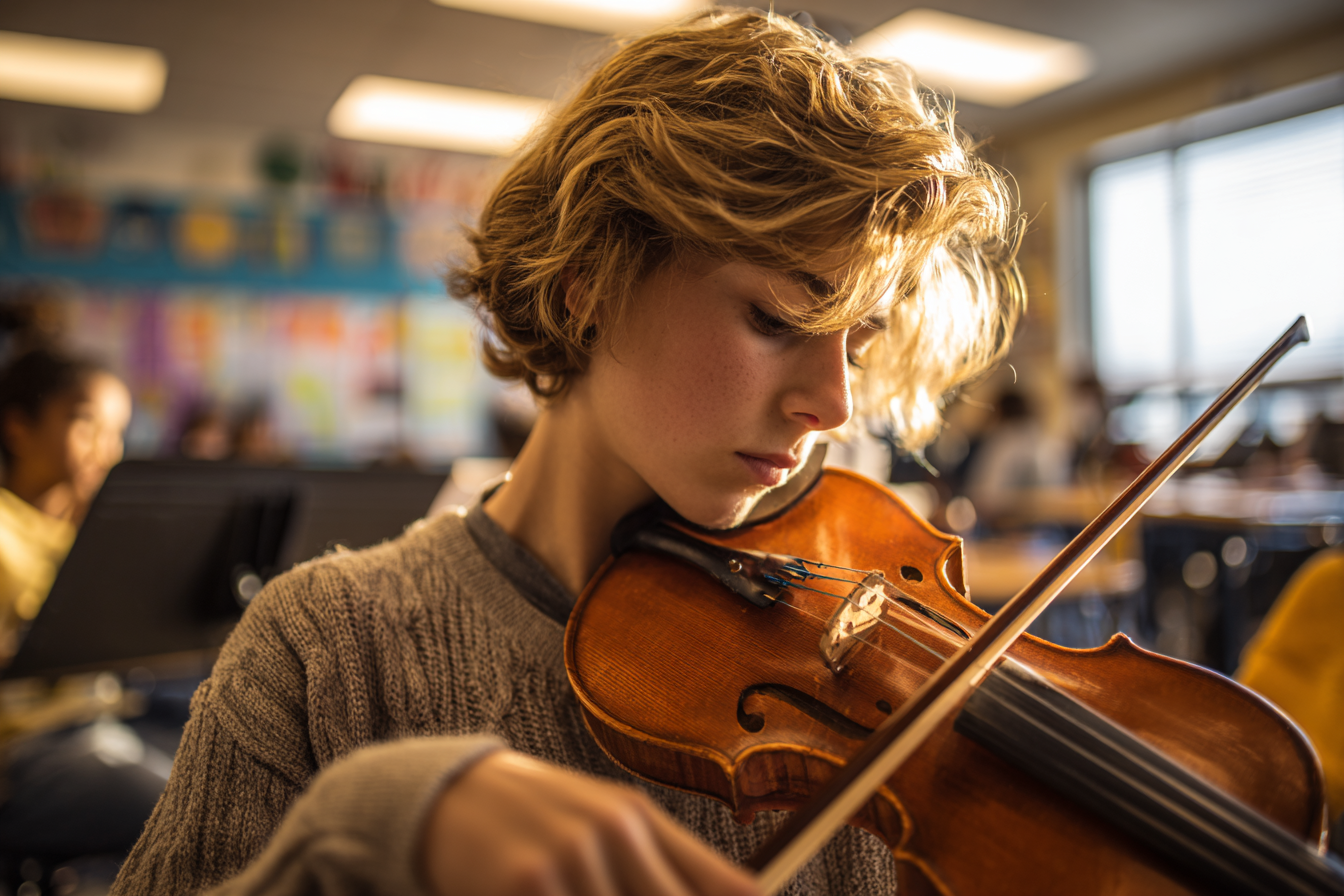
Focus: Perform orchestra repertoire using style choices (dynamics, tempo, bowing articulation, phrasing, tone color) that are informed by cultural/historical context, and explain how those choices shape interpretation.
Grade Level: 8
Subject Area: Orchestra (Performing • Interpreting • Connecting)
Total Unit Duration: 5 sessions (one week), 50–60 minutes per session
I. Introduction
In this unit, Grade 8 orchestra students move from talking about style and context to actually performing with authentic style. Using one or two focus pieces from current repertoire, they review key contextual information (time period, place, purpose, cultural tradition) and experiment with how dynamics, tempo, bowing articulation, phrasing, tone color, and vibrato can bring that context to life. Through sectional work, recording, and guided feedback, students refine a performance that feels stylistically appropriate and expressive. By the end, they will present an Authentic Style Performance and briefly explain how their context-informed choices shape the interpretation.
Essential Questions
- What does it mean to perform a piece in an authentic style, not just “play the notes”?
- How do dynamics, tempo, bowing articulation, phrasing, and tone color work together to express a piece’s style and character?
- How does understanding a piece’s cultural and historical context help us choose appropriate performance practices?
- What is the relationship between personal expression and respect for style and tradition in performance?
- How can we use recordings and feedback to check whether our style choices match the music’s context and intent?
II. Objectives and Standards
Learning Objectives — Students will be able to:
- Describe key style characteristics (e.g., light Baroque dance, singing Romantic line, folk dance feel) for a selected piece based on its context.
- Explain how dynamics, tempo, bowing articulation, phrasing, and tone color shape interpretation and style in the focus piece.
- Rehearse and adjust style elements (e.g., bow length, weight, vibrato, tempo flexibility) to align with the piece’s cultural/historical context.
- Perform a selected excerpt or piece with consistent, context-informed style as part of the ensemble.
- Provide a brief verbal or written explanation of at least two style decisions and how they connect to the piece’s context.
Standards Alignment — Grade 8 Orchestra (custom, NAfME-style)
- OR:Pr4.8c — Explain and demonstrate how dynamics, tempo, bowing articulation, phrasing, and tone color shape interpretation and style in string music.
- Example: Students perform a passage using different bow placements (near fingerboard vs. nearer bridge) and describe the expressive effect.
- OR:Cn11.8a — Explain how string music reflects cultural, historical, and social contexts and how context informs performance practice and interpretation.
- Example: Students research a dance form or historical era and explain how it influences bowing style and tempo choices.
Success Criteria — Student Language
- I can describe the style of our focus piece (e.g., dance-like, lyrical, solemn, folk-inspired) using context clues.
- I can explain how dynamics, tempo, bowing articulation, phrasing, and tone color should sound in this style.
- I can adjust my own playing (bow, left hand, vibrato, sound) to match the desired style.
- I can perform an excerpt consistently in that style with my section and ensemble.
- I can explain at least two performance choices we made and how they relate to the piece’s context.