Unit Plan 28 (Grade 8 Orchestra): Expressive Improvisation in Style
Grade 8 orchestra unit develops expressive improvisation using scales, phrasing, dynamics, and style-appropriate bowing to shape intentional musical ideas.

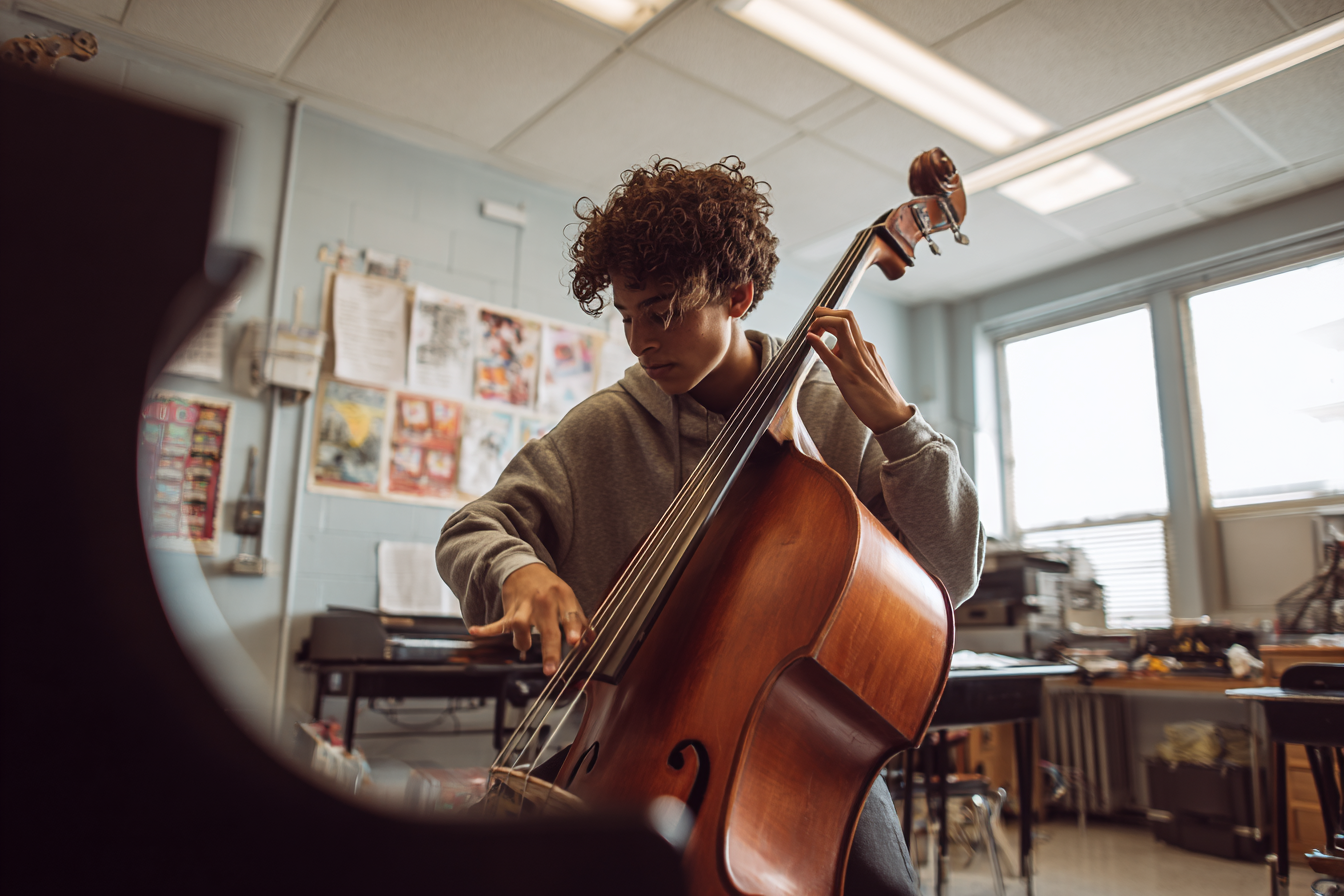
Focus: Improvise string phrases with clear beginning–peak–ending and style-appropriate articulations/bowing, using dynamics, tempo, and tone color to communicate expressive intent in a chosen style.
Grade Level: 8
Subject Area: Orchestra (Creating • Performing • Interpreting)
Total Unit Duration: 5 sessions (one week), 50–60 minutes per session
I. Introduction
In this unit, Grade 8 orchestra students build on their technique and style knowledge to become expressive improvisers. Working within familiar keys, finger patterns, and grooves, they experiment with rhythmic and melodic ideas that fit a given style (e.g., lyrical, dance-like, folk/fiddle, cinematic). Students learn to shape phrases with a clear beginning, build, and ending, while using dynamics, bowing articulation, tempo feel, and tone color to match the style and mood. By the end, they will create and perform short improvised solos or call-and-response phrases that sound intentional, stylistically appropriate, and expressive.
Essential Questions
- How can I improvise melodies and rhythms that fit a specific style or groove instead of sounding random?
- What makes a musical phrase feel complete, with a clear start, peak, and ending?
- How do dynamics, tempo, bowing articulation, phrasing, and tone color help my improvisation communicate expressive intent?
- How can I balance creative risk-taking with staying inside appropriate scales, finger patterns, and rhythms?
- In what ways does improvising help me become a more confident, expressive ensemble player?
II. Objectives and Standards
Learning Objectives — Students will be able to:
- Improvise short rhythmic and melodic ideas using appropriate scales/finger patterns for a given key and style.
- Create phrases with a clear beginning, peak, and ending, matching an expressive goal (e.g., calm, intense, playful).
- Use style-appropriate articulations and bowings (e.g., light detaché for dance, legato for lyrical, accented for groove-based styles).
- Adjust dynamics, tempo feel, and tone color while improvising to better communicate expressive intent.
- Perform a brief Expressive Improvisation in Style (solo or short feature) and explain how their musical choices fit the style and expressive goal.
Standards Alignment — Grade 8 Orchestra (custom, NAfME-style)
- OR:Cr1.8a — Improvise rhythmic and melodic ideas using appropriate scales/finger patterns and rhythms to match a given expressive goal or style, demonstrating purposeful phrasing.
- Example: Students improvise an 8–12 beat phrase in a major or minor scale with a clear beginning, peak, and ending.
- OR:Pr4.8c — Explain and demonstrate how dynamics, tempo, bowing articulation, phrasing, and tone color shape interpretation and style in string music.
- Example: Students perform a passage using different bow placements (near fingerboard vs. nearer bridge) and describe the expressive effect.
Success Criteria — Student Language
- I can improvise using a scale or finger pattern that fits the key and style we are playing.
- I can create short phrases that start, build, and end instead of just stopping suddenly.
- I can choose articulations and bowings that fit the style (e.g., light, bouncy, smooth, accented).
- I can change dynamics, tempo feel, and tone color on purpose to match my expressive idea.
- I can perform a short improvisation and explain why my musical choices fit the style and mood.