Unit Plan 23 (Grade 8 Orchestra): Growth, Identity & Leadership
Grade 8 orchestra students reflect on identity, goals, and leadership, connecting personal interests to musical growth and ensemble contributions through a clear action plan.

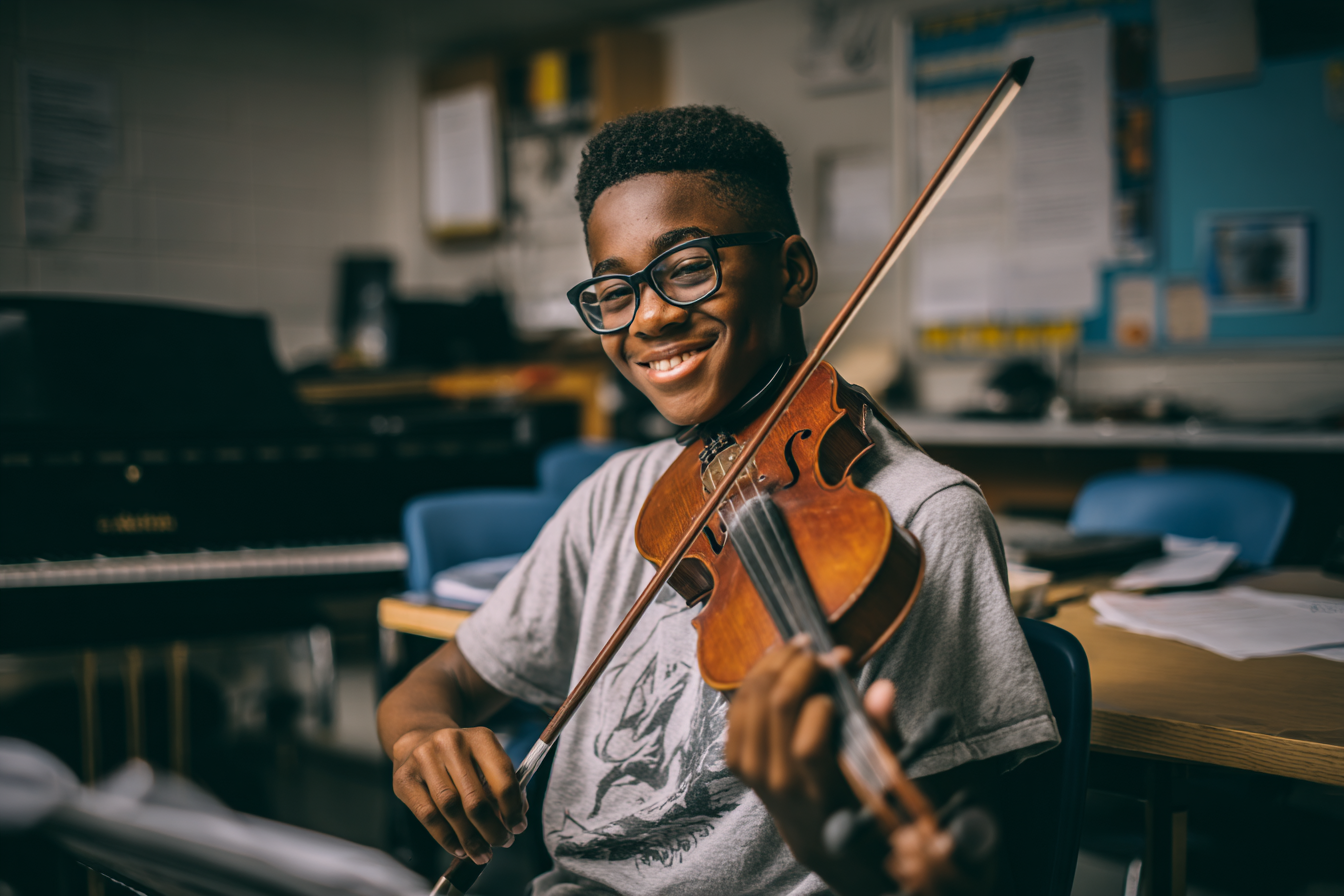
Focus: Connect personal interests, experiences, and goals to musical growth, leadership, and decision-making as a string musician, developing a clear vision for how students want to contribute to the ensemble and to their own future in music.
Grade Level: 8
Subject Area: Orchestra (Connecting • Reflecting • Leadership)
Total Unit Duration: 5 sessions (one week), 50–60 minutes per session
I. Introduction
In this unit, Grade 8 orchestra students step back from notes and rhythms to focus on who they are as musicians and leaders. They reflect on how their interests, experiences, and goals inside and outside orchestra shape the way they practice, perform, and participate in the ensemble. Through guided journaling, small-group discussions, and scenario work, students explore what kind of leader or role model they want to be (section leader, quiet role model, organizer, mentor) and how they can make intentional decisions about practice, behavior, and musical choices. By the end, each student creates a Growth, Identity & Leadership Plan that connects their personal story to concrete next steps in orchestra.
Essential Questions
- How have my interests and experiences (inside and outside music) shaped the kind of string musician I am becoming?
- What does leadership look like in an orchestra beyond just “being first chair”?
- How do my goals and values influence the way I practice, prepare, and participate in rehearsals and performances?
- What kinds of decisions do orchestra members make (musical, personal, social), and how can I make those decisions more intentionally?
- How can I create a personal plan that supports both my own growth and the success of the ensemble?
II. Objectives and Standards
Learning Objectives — Students will be able to:
- Reflect on their personal interests, experiences, and musical background to describe their current musical identity as a string player.
- Identify areas of musical growth (technique, reading, expression, leadership, confidence) and set at least two specific goals connected to those areas.
- Describe at least two leadership roles or behaviors that fit their personality (e.g., verbal leader, quiet role model, organizer, mentor) and how those can support the ensemble.
- Analyze decision-making scenarios (practice choices, rehearsal behavior, peer interactions) and explain how different choices lead to different outcomes for growth and leadership.
- Create a written or multimedia Growth, Identity & Leadership Plan that connects personal interests and experiences to clear goals and leadership commitments in orchestra.
Standards Alignment — Grade 8 Orchestra (custom, NAfME-style)
- OR:Cn10.8a — Describe how personal interests, experiences, and goals influence musical growth, leadership, and decision-making as a string musician.
- Example: Students set a goal (clean shifting, expressive phrasing, leadership) and explain how it supports future music plans.
Success Criteria — Student Language
- I can explain my musical story so far—how I started, what I enjoy, and what challenges I’ve faced.
- I can name specific goals for my playing and leadership (not just “get better”) and explain why they matter to me.
- I can describe the kind of leader or role model I want to be in orchestra and what that looks like in rehearsals.
- I can think through real-life decisions (practice, behavior, helping others) and choose options that support my growth and the ensemble.
- I can create a Growth, Identity & Leadership Plan that clearly connects my interests, experiences, and goals to how I will act in orchestra.