Unit Plan 5 (Grade 8 Orchestra): Independence in Parts & Entrances
Grade 8 orchestra students build independence by mastering long rests, precise entrances, and coordinated releases, using score analysis, cueing, and listening to maintain ensemble unity.

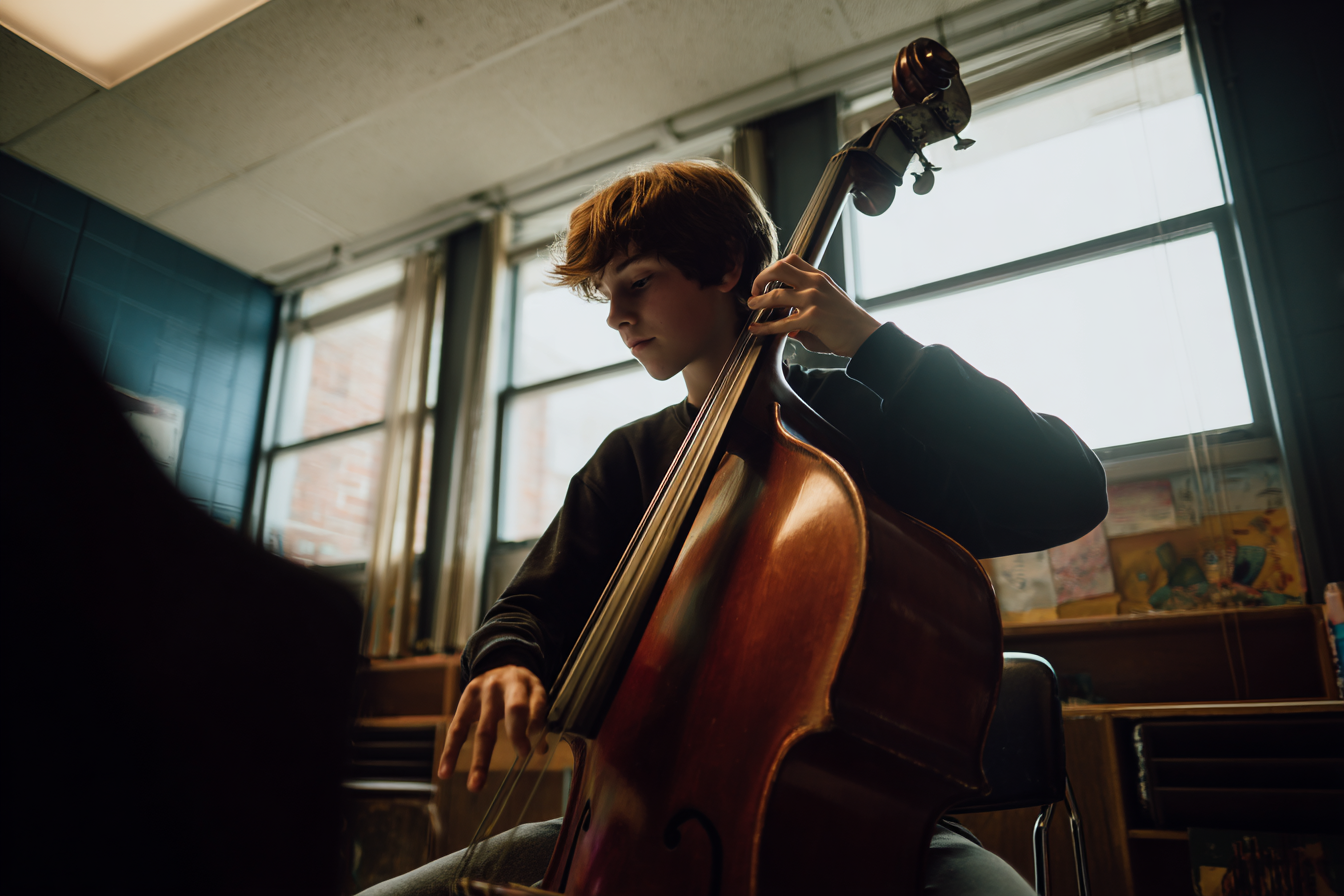
Focus: Develop independence with entrances, releases, and long rests so students can play more independent parts while maintaining strong ensemble unity and understanding how musical elements and form shape those moments.
Grade Level: 8
Subject Area: Orchestra (Performing • Rehearsing • Responding)
Total Unit Duration: 5 sessions (one week), 50–60 minutes per session
I. Introduction
In this unit, Grade 8 orchestra students focus on being reliable ensemble members who can track long rests, nail entrances, and coordinate releases without depending on others to carry them. They practice watching conductor and section cues, counting independently, and listening across the group so that entrances feel confident and together, not guessed. Students also analyze how form, texture, and dynamics shape entrances and releases, learning where their part supports contrast, unity, and tension/release in the music.
Essential Questions
- What does it mean to be independent in an orchestra part while still supporting ensemble unity?
- How can we reliably track long rests and find our entrances without getting lost?
- How do entrances, releases, and texture changes connect to the form and emotional shape of a piece?
- What rehearsal and performance etiquette (watching, listening, cueing, leading) helps our section stay together in tricky spots?
- How can we use the score and our parts to understand where and why our entrances matter in the music?
II. Objectives and Standards
Learning Objectives — Students will be able to:
- Demonstrate professional rehearsal etiquette by staying engaged during long rests, tracking the form, and being prepared for entrances and releases.
- Accurately perform independent entrances and releases (especially after rests) by combining counting, watching, and listening skills.
- Use cueing and leadership within their section (eye contact, breath cues, bow preparation) to support unified entrances and cutoffs.
- Analyze selected excerpts to determine how form (sections, phrases) and musical elements (dynamics, texture, harmony) create contrast, unity, and tension/release around their entrances.
- Create a simple “entrance map” or form diagram that shows where their section enters, drops out, and plays key roles in the piece.
- Show independence and leadership in a short Independence in Parts performance, demonstrating confident entrances, releases, and long rests while maintaining ensemble unity.
Standards Alignment — Grade 8 Orchestra (custom, NAfME-style)
- OR:Pr6.8b — Demonstrate professional rehearsal and performance etiquette, including leadership within sections, responsibility for independent parts, and support for ensemble success.
- Example: Students cue section entrances, track long rests, and adjust in real time to maintain ensemble unity.
- OR:Re7.8a — Analyze how musical elements and form function together in orchestra music to create contrast, unity, tension/release, and meaning.
- Example: Students explain how harmonic changes and dynamic shaping build intensity in a climax.
Success Criteria — Student Language
- I can stay mentally engaged during long rests and be ready for my entrance without needing someone else to nudge me.
- I can coordinate entrances and releases with my section by counting, watching, and listening carefully.
- I can explain how my part fits into the piece’s form (which section or phrase) and whether I’m playing melody, harmony, or background texture.
- I can show leadership etiquette (cues, eye contact, quiet focus) that helps my section stay together.
- I can create an entrance map or form diagram that shows where my section comes in and why those entrances matter musically.