Unit Plan 20 (Grade 8 Orchestra): Instrument Roles & Texture
Explore string orchestra texture by identifying instrument roles (melody, bass, harmony, countermelody) and how tone color, bowing, and string choice shape character and meaning.

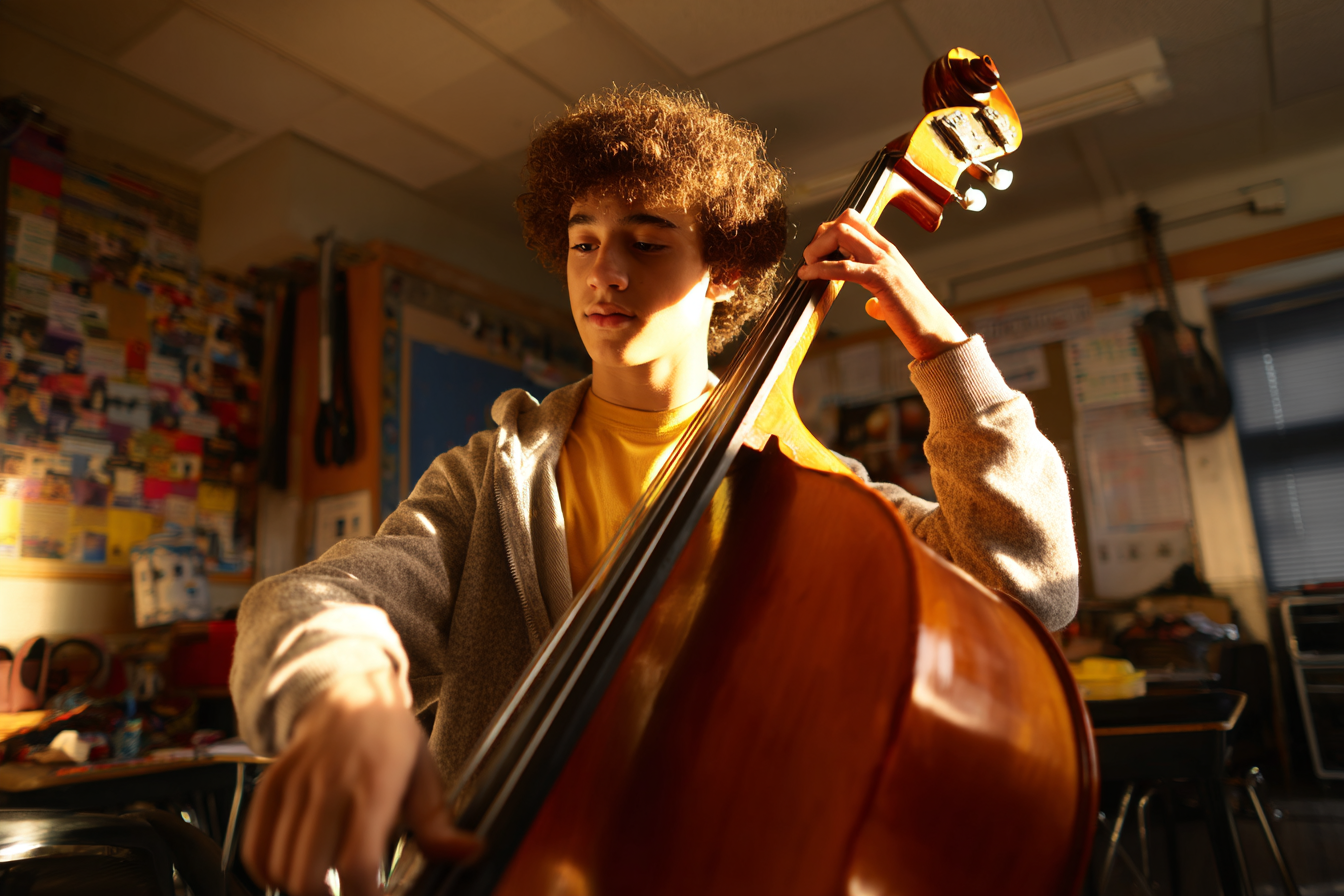
Focus: Analyze how instrument roles (melody, harmony, bass line, accompaniment, countermelody) and texture (unison, layered, homophonic, polyphonic) work together with tone color, bowing style, and string choice/position to shape musical character and meaning in string music.
Grade Level: 8
Subject Area: Orchestra (Responding • Analyzing • Interpreting)
Total Unit Duration: 5 sessions (one week), 50–60 minutes per session
I. Introduction
In this unit, Grade 8 orchestra students focus on who plays what and how those roles sound together. They learn to hear and see the difference between melody, bass line, inner harmonies, accompaniment patterns, and countermelodies, and how these roles create different textures in string music. Through listening, score study, and short performance experiments, students explore how tone color, bowing style, and string choice/position change the way a role feels and how the music’s character and meaning come across to the audience. By the end, students will create an Instrument Roles & Texture Map that explains how a piece’s sound “stack” shapes what we feel and understand.
Essential Questions
- How do instrument roles (melody, harmony, bass, accompaniment, countermelody) work together to shape the overall texture of a piece?
- In what ways do tone color, bowing style, and string choice/position change how a role (like the melody or bass line) feels to the listener?
- How can texture changes (unison vs. layered, thick vs. thin) build contrast, focus, or background “space” in string music?
- How does understanding our role and the texture around us help us perform with better balance, blend, and expression?
- How do instrument roles and texture contribute to the character and meaning of a piece (mood, story, energy)?
II. Objectives and Standards
Learning Objectives — Students will be able to:
- Identify instrument roles (melody, bass line, harmony/inner voices, accompaniment, countermelody) in recordings and scores of string orchestra music.
- Describe how different textures (unison, layered/octave, homophonic “tune + chords,” more polyphonic lines) affect the listener’s focus and the piece’s character.
- Explain how tone color, bowing style, and string choice/position change the way a role (e.g., melody in upper strings vs. lower strings) is perceived.
- Create an Instrument Roles & Texture Map for a repertoire excerpt, showing which sections carry which roles and how texture shifts over time.
- Present a brief analysis (written or spoken) explaining how instrument roles and texture in a chosen excerpt support its character and meaning.
Standards Alignment — Grade 8 Orchestra (custom, NAfME-style)
- OR:Re7.8b — Explain how tone color, bowing style, string choice/position, and instrument roles contribute to character and meaning in string music.
- Example: Students explain how melody in violins with tremolo accompaniment changes mood.
Success Criteria — Student Language
- I can point out which sections are playing melody, bass line, harmony, accompaniment, or countermelody in a piece.
- I can describe the texture (unison, layered, homophonic, more polyphonic) and how it changes over time.
- I can explain how tone color, bowing style, and string choice make a role sound more warm, intense, light, dark, or mysterious.
- I can create a clear Instrument Roles & Texture Map that shows how roles and texture are layered in an excerpt.
- I can explain how all of these choices work together to create the piece’s character and meaning for the listener.