Unit Plan 18 (Grade 8 Orchestra): Present Original Work
Perform Grade 8 student-composed orchestra works with accurate pitch/rhythm, refined tone, unified bowing, and a clear composer statement explaining tempo, dynamics, phrasing, and tone color.

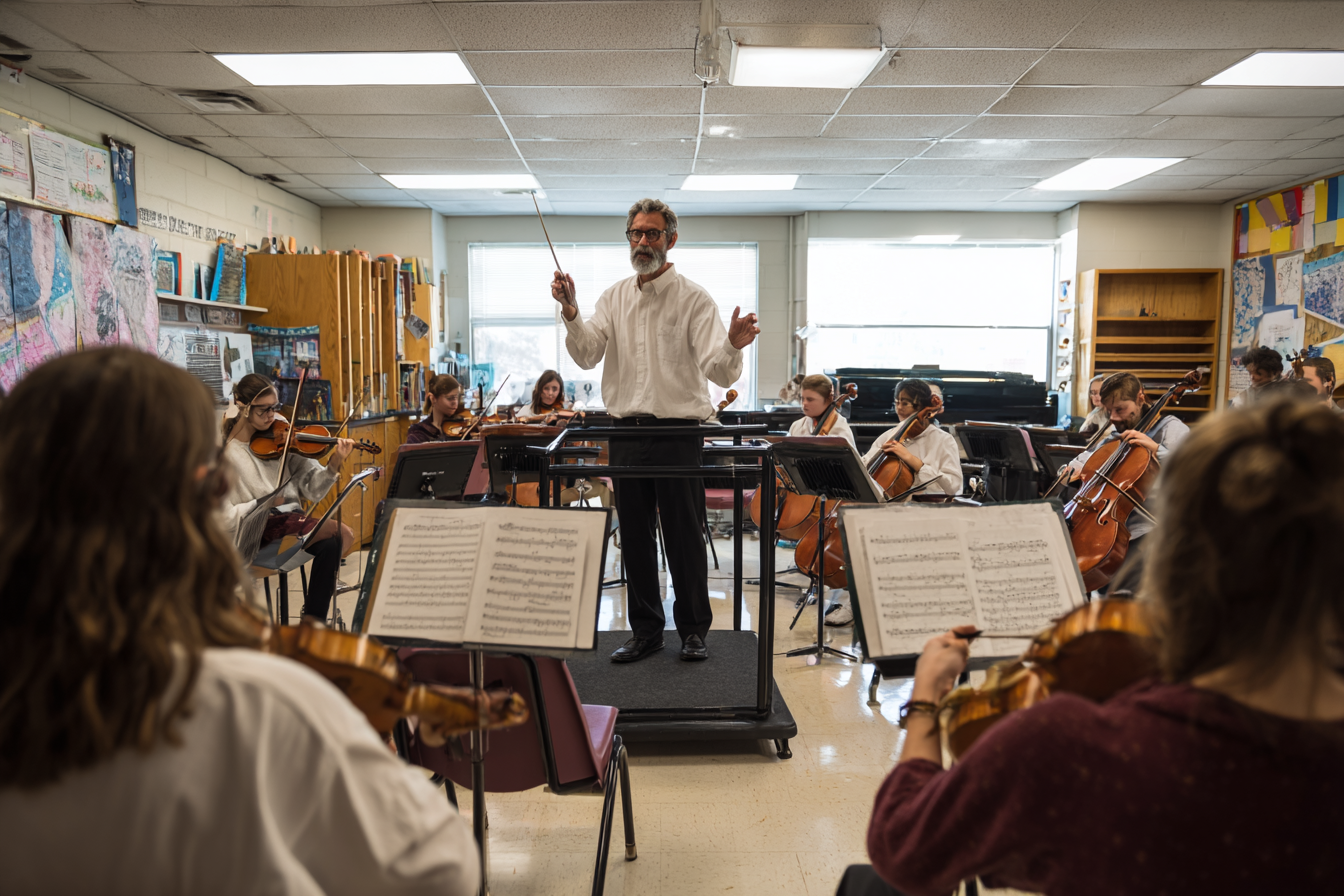
Focus: Perform final student-created works (compositions/arrangements) with accurate pitch/rhythm, refined tone, unified bowing, and clear expressive intent, then justify musical choices (tempo, dynamics, bowing, phrasing, tone color) for an audience.
Grade Level: 8
Subject Area: Orchestra (Creating • Performing • Responding)
Total Unit Duration: 5 sessions (one week), 50–60 minutes per session
I. Introduction
In this capstone unit, Grade 8 orchestra students bring their original music from earlier creating/revision units to the stage. They polish their pieces for performance-level accuracy and tone, rehearse with ensemble awareness, and prepare composer statements or program notes explaining how their musical choices communicate expressive intent. Through rehearsal, performance, and reflection, students experience the full cycle of composer–performer–audience, learning how to present their work confidently and talk about it like developing artists.
Essential Questions
- What does it mean to present an “ensemble-ready” original work in orchestra?
- How do choices in tempo, dynamics, bowings, phrasing, and tone color shape what the audience feels and understands?
- How can I perform my own or a peer’s piece with accuracy, unified bowing, balance, and expression?
- How do we clearly explain and justify our musical decisions to others (classmates, teacher, audience)?
- How does finishing and presenting an original work change the way we think about composers, performers, and interpretation?
II. Objectives and Standards
Learning Objectives — Students will be able to:
- Prepare an original piece or excerpt (solo, small ensemble, or full-orchestra part) for performance with accurate pitch and rhythm, refined tone, and unified bowing where applicable.
- Make intentional decisions about tempo, dynamics, phrasing, articulations, and tone color to support a clear expressive goal.
- Write a brief Composer Statement/Program Note explaining how their musical choices communicate a specific mood, story, or character.
- Perform their original work (or a peer’s) in a class performance setting, demonstrating performance etiquette, balance, and expressive intent.
- Reflect on audience and peer feedback to articulate what worked well and what they might revise in future compositions or performances.
Standards Alignment — Grade 8 Orchestra (custom, NAfME-style)
- OR:Cr3.8b — Present a final musical creation and justify how musical choices (tempo, dynamics, bowing, phrasing, tone color) communicate expressive intent to an audience.
- Example: Students perform their composition and explain how bow placement and crescendos increased intensity.
- OR:Pr6.8a — Perform orchestra music with accurate pitch and rhythm, refined tone, unified bowing, balance/blend, and expressive intent in an ensemble setting.
- Example: Students perform a three-part arrangement with strong dynamic contrast and consistent intonation.
Success Criteria — Student Language
- I can polish my original piece or part so it is accurate, in tune, and playable at performance tempo.
- I can choose tempo, dynamics, bowings, and phrasing that match the emotion or story I want to communicate.
- I can perform my piece (or a peer’s) with refined tone, unified bowing, and good balance in the ensemble.
- I can write or say a clear Composer Statement explaining how my musical choices support my expressive intent.
- I can respond to feedback and reflect on how I might improve or expand my original work in the future.